




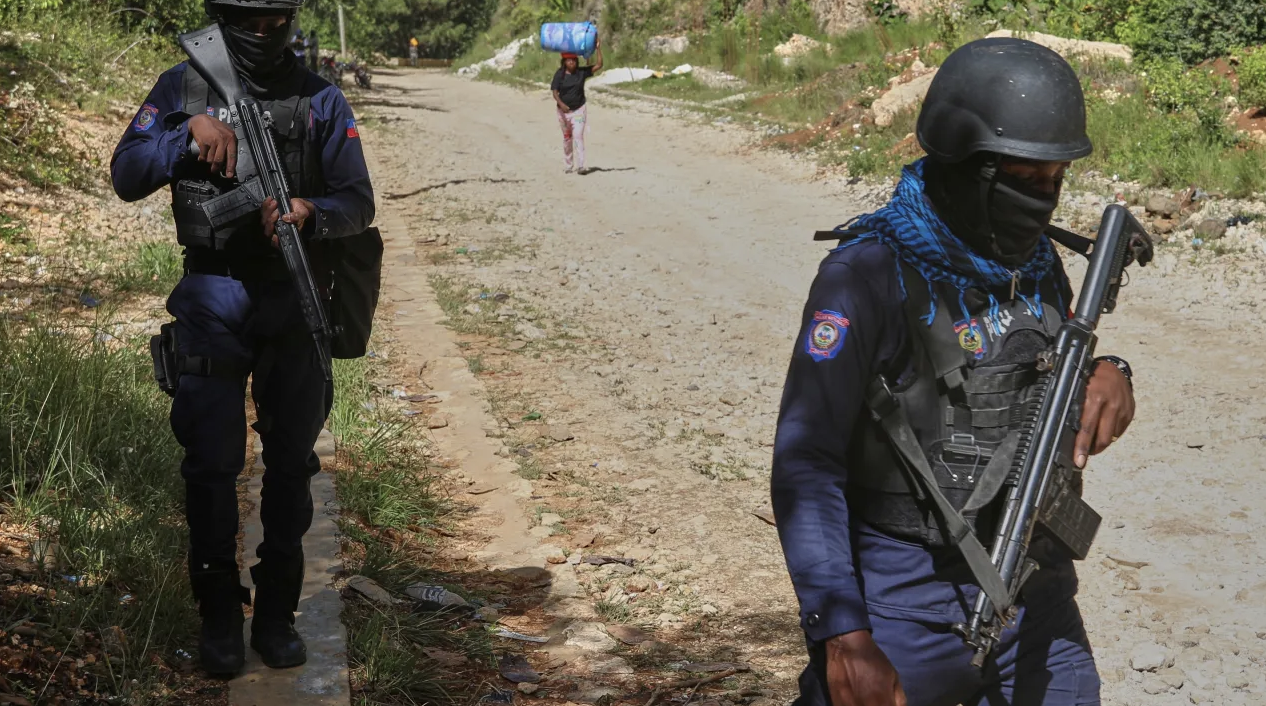
Haiti has formally requested the United Nations to extend the mandate of an international force that plays a crucial role in combatting violent gangs amid escalating unrest. The surge in violence jeopardizes community safety and complicates the organization of elections anticipated later this year.
Request for Renewed Support Amidst Growing Crisis
Foreign Minister Jean-Victor Généus emphasized the urgency of renewing the Gang Suppression Force (GSF) before its current authorization expires on September 30. His appeal follows an alarming trend of armed groups seizing control over significant portions of Port-au-Prince and extending their violent activities beyond the capital.
The GSF was established by the UN Security Council in October 2025 as a successor to the Multinational Security Support Mission (MSS) led by Kenya. The force has the capacity to expand to 5,500 personnel and possesses a mandate to collaborate with the Haitian National Police and the armed forces to conduct operations targeting gangs.
Despite the deployment of international security personnel, violence persists. Armed groups continue to dominate much of Port-au-Prince, with incidents such as a recent assault in Kenscoff resulting in numerous fatalities and over 50 reported kidnappings, as per accounts from Haitian officials and UN reports.
The ongoing security crisis has precipitated a humanitarian emergency, displacing nearly 1.5 million individuals and leading to over 3,000 reported homicides in the first half of 2026. Additionally, gang activities have infiltrated rural regions, where criminal tactics such as kidnappings and roadblocks have escalated.
The request for continued international assistance is especially pressing as Haiti prepares for elections in a context marked by prolonged political instability and insecurity. This atmosphere hampers not only the movement of people but also the delivery of essential services and the government’s authority throughout the country.
However, extending the mandate alone will not effectively address Haiti’s deep-seated security issues. The mission has encountered ongoing challenges related to personnel, equipment, funding, and overall operational capability. Consequently, Haitian authorities and their international partners are urged to ensure that any renewed mandate comes with the necessary resources and support to yield significant impact on the ground.
As the September 30 deadline approaches, discussions at the UN Security Council will be pivotal in determining the future of the international force and the extent of Haiti’s support to bolster its national security efforts.
Why It Matters: The outcome of the UN’s decision will significantly influence Haiti’s security landscape and the effective management of armed violence, which affects millions of residents. Ensuring adequate resources for the international force may help stabilize a nation grappling with unprecedented levels of insecurity and humanitarian distress.
