




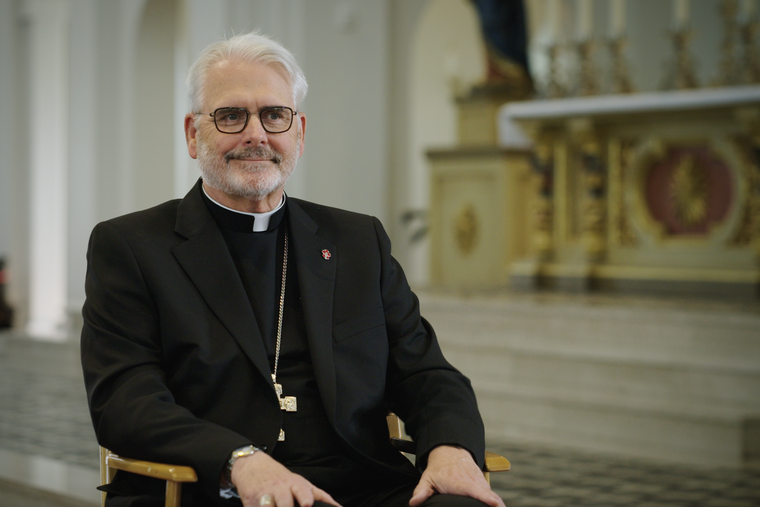
Archbishop Paul Coakley of Oklahoma City has formally urged President Donald Trump to halt the deportation of Haitians living in the United States, expressing concern over the increasing violence and instability in Haiti. In a letter addressed to President Trump, Coakley highlighted the severe humanitarian issues facing Haitians and called for a pause on enforced departures.
Archbishop Coakley Addresses Violence in Haiti
Archbishop Coakley, who is also the president of the United States Conference of Catholic Bishops (USCCB), raised alarm about the situation following a series of violent incidents in Haiti, particularly a brutal attack in Port-au-Prince in August that resulted in numerous deaths and injuries. Coakley noted that at least 47 individuals were killed, over 20 were injured, and more than 50 were kidnapped during this incident, which targeted displaced families taking refuge in a church.
In his letter, Archbishop Coakley asserted, “I very much wish this recent and tragic example of human life being extinguished, virtually with impunity, was an irregularity in Haiti. Unfortunately, it is not.” He urged the administration to refrain from deporting Haitians to a country that lacks sufficient systems to support their safe reintegration.
Coakley’s appeal marks an effort to draw attention to the ongoing humanitarian crisis in Haiti, emphasizing the moral responsibility of the United States to protect vulnerable populations. He indicated that the cessation of deportations should apply to those peacefully residing in the U.S., while also recognizing that individual cases could be reviewed as necessary to ensure justice and public safety.
The archbishop also echoed recent statements from Pope Leo XIII, who called for an end to violence in Haiti and expressed solidarity with its victims and their families. He reinforced the need for government authorities to prioritize the safety of Haitian citizens.
In addition to requesting an immediate pause on deportations, Archbishop Coakley advocated for comprehensive reform of the nation’s immigration laws, acknowledging the complexities surrounding immigration and the long-standing issues affecting Haiti. He stated, “What good is the immense wealth, prosperity, and influence with which we have been blessed as a nation if not used in service of our humanity?”
The White House has yet to respond to Archbishop Coakley’s letter or the requests made within it.
Why It Matters
This call to action from a high-ranking religious leader highlights the ongoing humanitarian crisis in Haiti and raises questions about the U.S. government’s role in global humanitarian efforts. Archbishop Coakley’s approach emphasizes the moral considerations involved in immigration policy, particularly concerning vulnerable populations facing dire circumstances in their home countries.

hi