




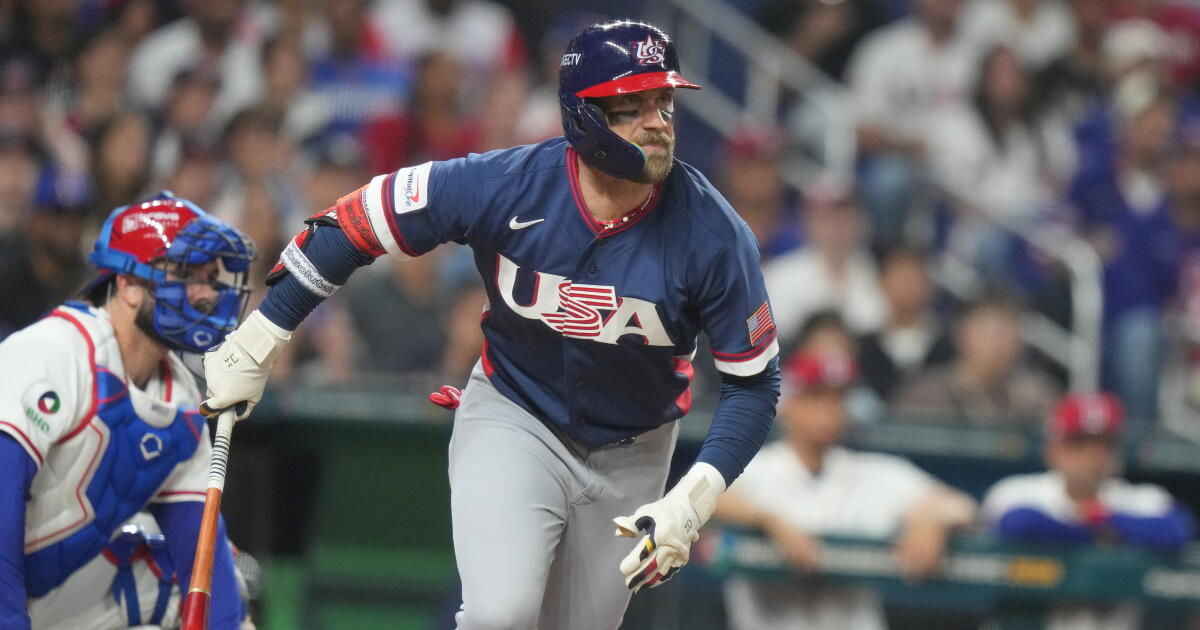
As the countdown to the 2028 Olympics in Los Angeles continues, Major League Baseball (MLB) is facing challenges in negotiating player participation, leaving athletes and fans questioning the future of baseball at the Games. With less than two years until the opening ceremony, dialogue between the league and the players’ union remains unresolved, prompting concerns about international representation and the potential impact on the sport’s growth.
Negotiations Halted Ahead of LA28
Star player Bryce Harper has voiced strong opposition to a proposal from the commissioner’s office, which requires suspended players to sit out two weeks if they opt not to participate in the Olympics. Harper emphasized the impracticality of such a rule, suggesting that absent key players, like Bobby Witt Jr., could hinder a team’s performance. He stated, “They’re not going to be able to win games without Bobby Witt,” reflecting a sentiment shared by many in the league.
The ongoing disagreement highlights the differing priorities of the MLB and the players’ union. The league insists on the right to impose sanctions for non-participation, while the union demands flexibility concerning conditions such as accommodations, ticketing, and marketing rights. Both sides echo desires to promote baseball on an international stage, yet substantive collaboration seems stymied by their disputes.
Complications were first unveiled during the All-Star Game, where league representatives indicated they were awaiting a counteroffer from the players’ union. As negotiations have progressed, no significant advancements have been made. Union chief Bruce Meyer warned that if the labor situation leads to a season interruption, participating in the Olympics could become unfeasible. He clarified that the union would like to secure an agreement regarding Olympic participation independently of overarching labor negotiations.
Attention is drawn to players like Shohei Ohtani and Kyle Schwarber, who have expressed eagerness to compete in the Olympics. Ohtani’s enthusiasm aligns with a growing sentiment among athletes that participation could enhance their standing and the sport’s global appeal. Tarik Skubal also recognized the importance of Olympic participation and challenged the necessity of punitive measures for players. “Just try to make that make sense. It doesn’t,” Skubal questioned, advocating for players’ choice based on their health and readiness.
While concerns over logistics and player welfare remain valid, industry experts suggest that with decisive action from both the MLB and union, these obstacles need not delay progress for two more years. The current window of opportunity is crucial for establishing an agreement that could pave the way for a vibrant, star-studded baseball competition at the 2028 Olympics.
Why It Matters: The successful inclusion of MLB players in the 2028 Olympics could not only elevate the global profile of baseball but also foster international relations and community building through sport. A timely agreement would depict a united front between owners and players, setting a positive precedent amid concerns about labor disputes potentially destabilizing the league.
