




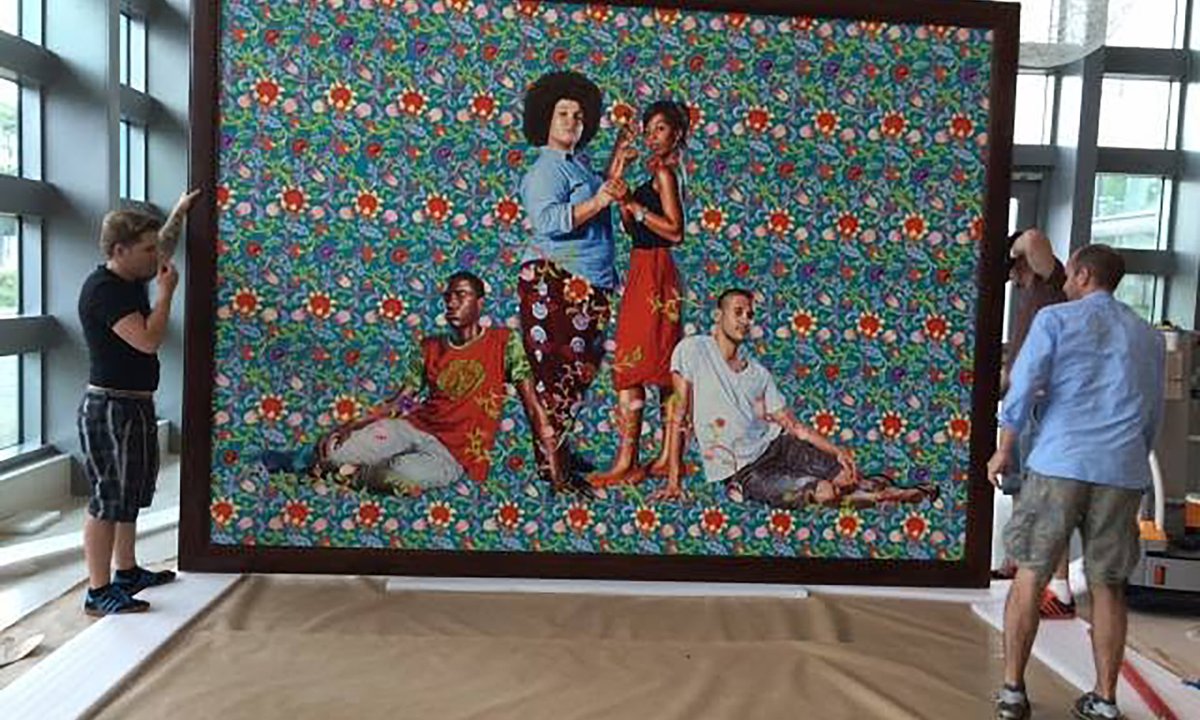
The U.S. Department of State has removed a prominent painting by artist Kehinde Wiley from the U.S. embassy in Santo Domingo, Dominican Republic. The painting, titled Young Artists After Siamesas 1960, was commissioned in 2015 and is described as embodying “globalist and woke ideologies” according to current U.S. Ambassador Leah Campos.
Discussions on Deaccessioning
A senior official from the State Department indicated that officials are examining the legal implications of potentially deaccessioning the artwork, which was funded through taxpayer dollars as part of the Art in Embassies program. The official stated, “The Department of State is in the process of discussions with legal representatives to ascertain whether the art can be sold,” adding that the goal would be to facilitate a sale if legally permissible.
Though specific objections to the painting were not detailed, the removal follows recent publicized allegations of sexual misconduct against Wiley, which he has denied. Concerns were also raised about Wiley’s past comments regarding works that portray Black women with decapitated heads of historical figures, which were described as “violent and racist” by the senior official. “We all serve at the pleasure of the president, and artists should not be exempt from scrutiny,” added the official.
Ambassador Campos asserted that the embassy’s representation should reflect “the beauty, strength and commitment to liberty of the United States of America and its people.” In an Instagram post documenting the painting’s removal, she emphasized a departure from “globalist and woke ideologies” toward an embrace of American patriotism.
The painting, an expansive work measuring over 12 feet wide and nearly 9 feet tall, features classically posed contemporary figures against an ornate backdrop. Wiley, who was previously awarded a Medal of Art for his contributions to the program, gained widespread recognition for his portrait of Barack Obama displayed in the National Portrait Gallery.
The State Department’s Art in Embassies initiative has been a part of U.S. cultural diplomacy since 1963. Under the current administration, this program has undergone scrutiny and reconfiguration, especially in light of critiques directed toward works deemed inconsistent with American values.
As discussions continue regarding the painting’s future, representatives from Wiley’s galleries have not provided immediate comments regarding the removal.
Why It Matters: This development highlights the nexus of politics, art, and cultural representation in diplomatic settings, as well as the ongoing debate surrounding artistic expression and its alignment with national identity within the current political climate.
