




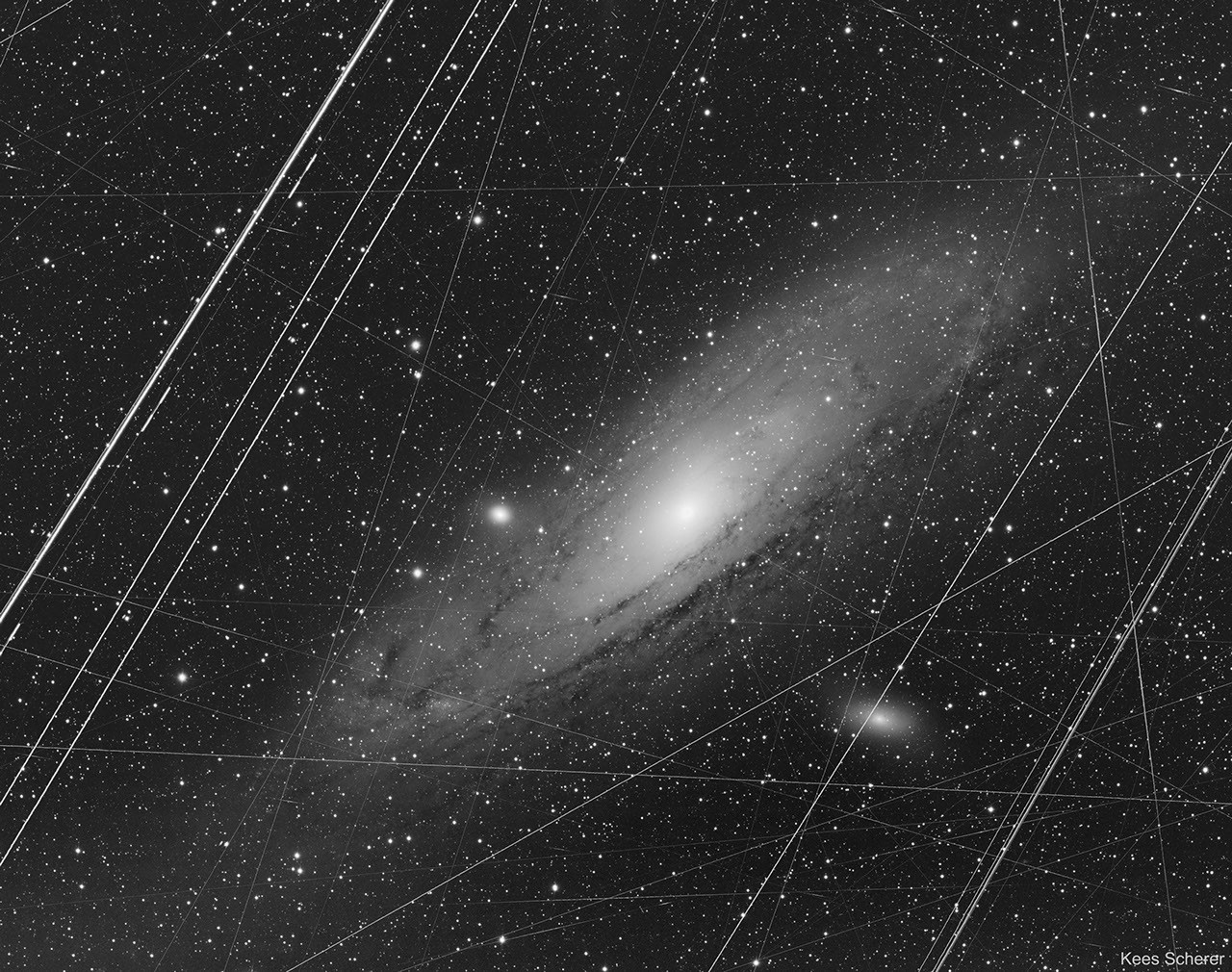
A recent astronomical feature highlights a before-and-after image comparison of the Andromeda galaxy, offering insights into how advanced imaging techniques can reveal more detail while reducing Earth-based visual artifacts.
Imaging Techniques Enhance Andromeda Visualization
The original image captured the Andromeda galaxy, located near our Milky Way, through a long exposure that included various imperfections, such as trails from airplanes and satellites, cosmic ray streaks, and sensor artifacts from the digital camera used. This image was taken in 2019 from a garden observatory in Portugal, combining 223 individual exposures, each lasting 300 seconds. The visible shortcomings of the image serve as a reminder of the challenges faced in astrophotography.
To create a clearer representation of the Andromeda galaxy, multiple image processing software tools were employed. While Photoshop was not directly used for the final adjustments, programs like Astro Pixel Processor, DeepSkyStacker, and PixInsight played a crucial role in minimizing the Earthly artifacts that can obscure the galactic features. This process aimed not to create a digital illusion but to more accurately reflect what the Andromeda galaxy truly looks like, free from distractions caused by the atmosphere and human activity.
This effort to enhance the visual quality of astronomical images underscores the ongoing advancements in astrophotography. By using sophisticated software, astronomers and enthusiasts can achieve a more true-to-life depiction of celestial objects, thereby enriching public understanding of the universe. Such initiatives not only show the beauty of the cosmos but also the technological capabilities of modern astronomy.
The Andromeda galaxy, also known as M31, remains a focal point of interest for both scientists and the public. Further exploration and imaging of this galactic neighbor provide valuable data regarding the formation and evolution of galaxies. As imaging technology continues to improve, our comprehension of the universe will certainly deepen.
Why It Matters
This project exemplifies the intersection of technology and astronomy, allowing for deeper insights into cosmic structures. Enhanced imaging techniques not only inform scientific research but also inspire public engagement with space exploration, fostering a greater appreciation for the complexities of our universe.
