




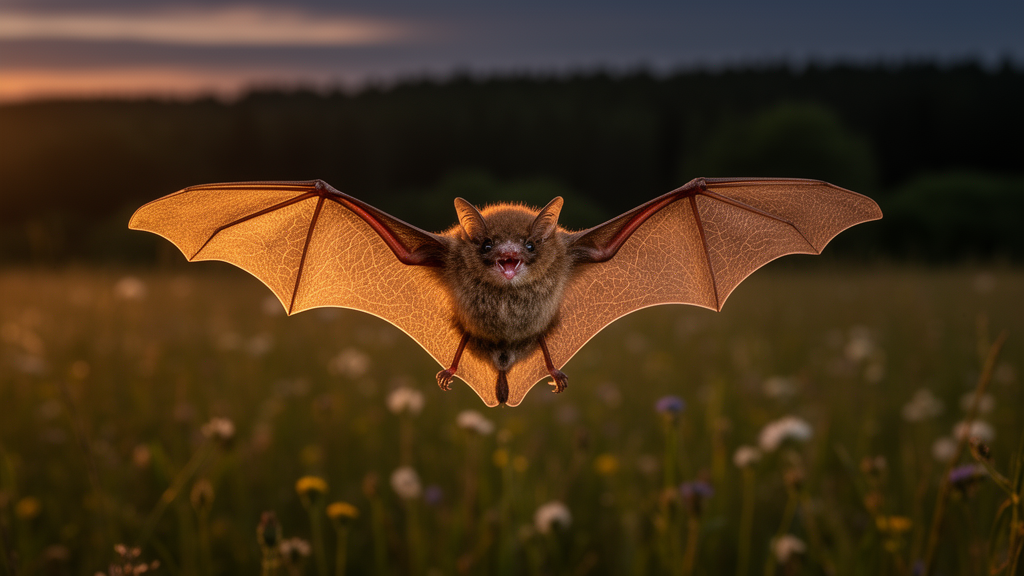
A recent study led by the international Bat1K consortium suggests that bats originated in Europe around 65 million years ago, overturning long-held theories about their evolutionary roots. The findings, published in the journal Nature, are based on a comprehensive genomic analysis and fossil record survey that include contributions from 137 researchers across 64 countries.
This extensive project represents the largest collection of high-quality bat genomes ever assembled, covering 103 species from all 21 recognized bat families. Researchers integrated genomic data with 44 fossilized bat specimens, allowing for a cohesive analysis of both living and extinct species. The team used advanced DNA sequencing and computational methods to trace bat evolution, providing new insights into the historical development of these unique mammals.
Senior author Professor Liliana M. Dávalos of Stony Brook University highlighted the innovative approach of combining fossil evidence with genomic data. This methodology enabled the researchers to accurately pinpoint the origins of bats, as well as when and where their ancestors appeared. The study reveals that after their emergence in Europe, bats migrated to Africa, creating an evolutionary hub from which they later expanded into Asia, the Americas, and Australia.
The research not only clarifies the geographic origins of bats but also revises the evolutionary relationships among different bat families. This new phylogenetic tree addresses longstanding questions about how various bat groups are connected and how their unique traits developed over time.
One notable conclusion concerns echolocation, a vital adaptation that allows most bats to navigate and hunt in darkness. The fossil species Vielasia was found to be located within the oldest branch of the bat family tree, indicating that echolocation capabilities existed before modern bats diversified.
The study also reconstructed the genome of the common ancestor of bats, providing a genomic map that outlines how this lineage of mammals evolved powered flight, advanced biosonar, and other significant traits. Understanding these genetic changes will aid researchers in further exploring the mechanisms behind longevity and disease resistance in bats, which may have implications for human health research.
Professor Sonja Vernes, Director of Bat1K at the University of St Andrews, emphasized the collaborative nature of this research, noting that discoveries previously considered unattainable became possible through extensive genomic analysis across bat families. The outcomes of this study not only redefine the evolutionary history of bats but also highlight their ecological significance, as bats play crucial roles in pollinating plants and controlling insect populations.
The Bat1K consortium’s findings mark a significant advancement in mammalian evolutionary studies, offering a foundation for future research in comparative biology, conservation, and biomedical fields.
