




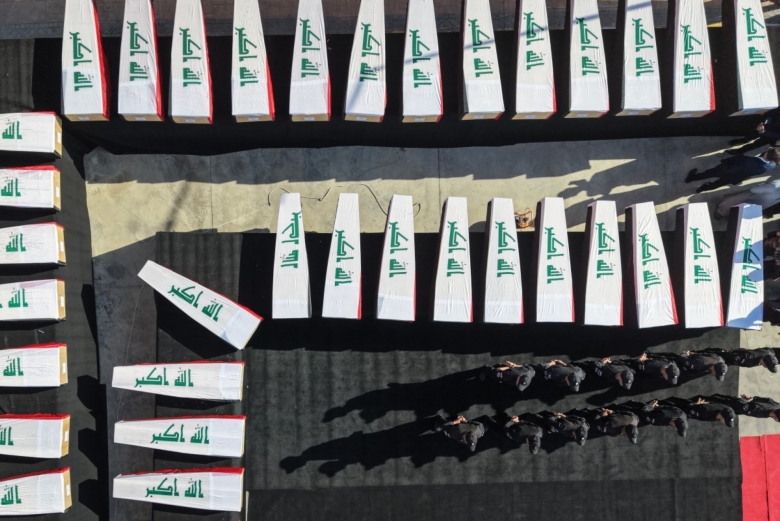
The Islamic State (IS) is reportedly intensifying its attacks in Iraq, particularly in regions deemed fragile, following the US-led coalition’s withdrawal at the end of September. Initial reports indicate a notable uptick in violence, especially in the territories linking the Kurdistan Region with the rest of the country.
The first significant attack occurred in Pirdi, a town on the Kirkuk-Erbil road, marking IS’s first urban infiltration and suicide attempt in years. Two assailants were confronted by Iraq’s Counterterrorism Service, which managed to neutralize one before the second detonated an explosive vest, resulting in civilian casualties when security personnel mistakenly identified two bystanders as terrorists.
Shortly thereafter, a Federal Police regiment faced a targeted assault near Hawija in Kirkuk province, featuring attackers armed with machine guns and sniper rifles. The following day saw the death of an Iraqi army brigadier general and a soldier due to a roadside bomb near Kirkuk, while an additional security patrol was attacked with a grenade. The Popular Mobilisation Forces’ 61st Brigade also reported heavy fire near Al-Barghaliya in Hawija district.
The series of attacks indicates a significant escalation in IS operations, which had decreased markedly over recent years. Despite assurances from Iraqi government and security officials, local residents expressed heightened concerns regarding the potential for further violence in the coming months.
The areas affected include parts of Diyala, Kirkuk, and Nineveh provinces, which locals refer to as “fragile regions.” These territories are marked by political disputes between Baghdad and the Kurdish autonomous government. Efforts by the international coalition to establish a cooperative political framework have historically fallen short. Joint brigades composed of Iraqi army and Peshmerga forces remain largely ineffective in maintaining security across these contested areas, allowing IS cells to resurge.
Ethnic and sectarian divisions have further complicated the security landscape, with extremist groups exploiting communal tensions in Diyala and Nineveh, particularly in Mosul, and among Kurdish, Arab, and Turkmen populations in Kirkuk.
The geographical context enhances these vulnerabilities; proximity to the Iranian and Syrian borders offers opportunities for both Iranian intervention and IS’s attempts to exploit regional instability.
Enhanced cooperation
In light of these developments, Iraqi authorities are reportedly enhancing cooperation among security forces. A source within the Kurdish Peshmerga stated that senior officials have instructed security agencies to prioritize collaboration over political disputes to bolster regional security.
Iraqi security analyst Walid al-Jalili noted that the unresolved status of disputed territories has become pressing, stating, “This issue can no longer be deferred, as it now has a direct bearing on Iraq’s national security and its internal social cohesion.”
