




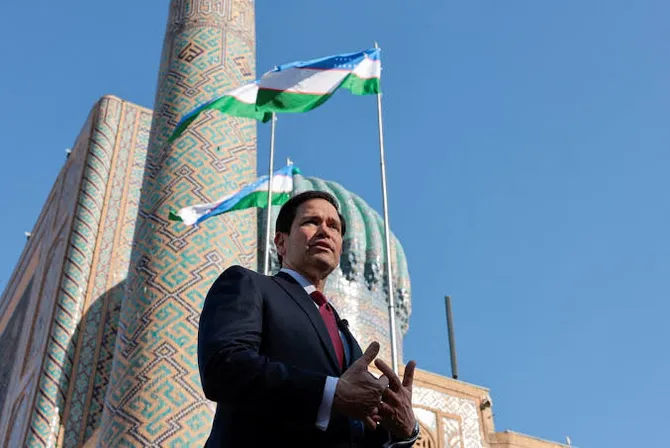
During a pivotal visit to Uzbekistan, U.S. Secretary of State Marco Rubio attended a C5+1 meeting in Samarkand, marking a significant diplomatic engagement with Central Asia. This multilateral discussion included representatives from all five Central Asian states, reflecting a shift in how Washington perceives the region—not merely as a post-Soviet outpost but as a vital geopolitical center of interest for multiple global powers, including Russia, China, and the European Union.
Rubio’s trip, however, is not characterized by an intent to dislodge Russia or China from Central Asia, which have historically strong ties with the region. While Russia maintains deep economic and humanitarian connections, and China serves as the largest trade partner for various Central Asian nations, the United States aims to enhance the region’s autonomy by not demanding a clear geopolitical alignment. Instead, U.S. strategies focus on investment, technology, and critical resources, broadening Central Asian countries’ options.
A key driver of U.S. interest lies in the region’s vast reserves of critical minerals such as uranium, copper, and rare earth elements essential for modern technology and energy systems. Washington seeks to diversify supply chains and lessen reliance on China, transforming Central Asia from merely an export market into a strategic economic link between the U.S., Europe, and the Indo-Pacific. Rubio’s visit was accompanied by a U.S. business delegation of over 200 representatives, highlighting a commercial focus in the emerging U.S. strategy rather than purely political rhetoric.
Uzbekistan: A Diplomatic Hub
The choice of Samarkand for the meeting is symbolically significant. Historically a major trade hub on the Silk Road, Uzbekistan is positioning itself once again as a central player in diplomacy and investment in the region. The country has actively enhanced its regional role, balancing relations with major powers like Russia, China, and the U.S. This strategy is crucial for Uzbekistan, which is seeking a diverse network of partnerships to promote stability and growth without relying solely on any one country.
During this visit, 54 agreements valued at approximately $12 billion were announced, covering various sectors from trade to technology. However, these figures represent potential projects rather than immediate investment influxes, dependent on future contract negotiations and the institutional frameworks established between the countries involved.
Uzbekistan’s involvement in the Artemis Accords, a U.S.-led initiative that outlines principles for peaceful space exploration, also underscores its intention to integrate into a U.S.-dominated technological and regulatory framework. This move signals Tashkent’s aspiration to participate in shaping future norms in space technologies while not completely severing its ties with other global partners.
Rubio’s discussions also emphasized the importance of developing the Middle Corridor, a transport route connecting Central Asia with European markets without significant dependence on Russia or Iran. Azerbaijan plays a critical role in this connectivity, serving as a bridge for trade and investment between Central Asia and global markets, enhancing its own strategic significance in the region.
Ultimately, Rubio’s visit reinforces the growing complexity of geopolitical relations within Central Asia. The region is opting for a balanced approach, avoiding exclusive ties to any single great power. For the U.S., the success of its renewed strategy will hinge on delivering tangible benefits through investment and infrastructure projects, thereby integrating effectively into Central Asia’s economic landscape.
