




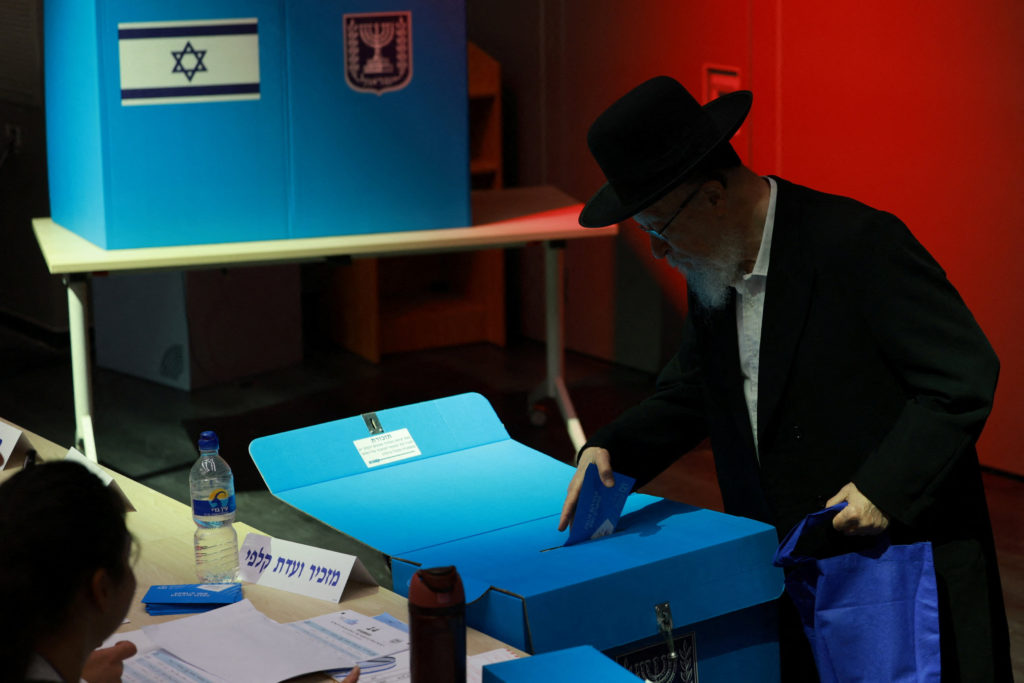
JERUSALEM — Israel’s election on Tuesday is seen as a critical moment for Prime Minister Benjamin Netanyahu, who faces stiff competition from former military chief of staff Gadi Eisenkot. Polls suggest a close contest between the two leaders, but voters in Israel cast ballots for political parties rather than individuals, making coalition building essential for majority control in the Knesset, Israel’s parliament.
The election comes on the heels of the October 7 Hamas-led attacks, which left 1,200 people dead and significant societal trauma in its wake. The security implications of that day have taken center stage in the campaigns, overshadowing discussions about the humanitarian situation in Gaza. About 68% of Jewish Israelis cite their views on the October 7 attacks as a key influence in their voting decisions, according to the Israel Democracy Institute.
Netanyahu has faced criticism over his government’s handling of security on that fateful day, as well as his policy to exempt ultra-Orthodox Jews from military service. In contrast, Eisenkot, who suffered personal losses in the conflict, has committed to ending these exemptions.
The election features over three dozen parties, with around a dozen expected to secure representation in parliament. Netanyahu, 77, leads the nationalistic Likud party, while Eisenkot, 66, heads the centrist Yashar party. Other notable candidates include former Prime Minister Naftali Bennett, who is running alongside Yair Lapid, and Itamar Ben-Gvir, Israel’s national security minister and leader of a far-right party.
Despite international attention on the Israeli-Palestinian conflict, domestic concerns have dominated the political landscape. No major candidates have proposed reviving the peace process, and public sentiment largely opposes the establishment of a Palestinian state. Meanwhile, Mansour Abbas, head of the Arab-led Ra’am party, is focusing his campaign on crime in Arab communities rather than broader political issues.
Following a surge in early voting, Netanyahu has urged his supporters to mobilize at the polls, emphasizing the importance of their participation in what he described as a battle for the future of the Jewish state. He asserted, “We can’t leave this battle in the hands of the left and the Arab parties.”
As regional tensions continue, the outcome of the election could significantly influence Israel’s international relations, particularly with the United States. Recent U.S. support for Netanyahu’s reelection has raised questions about future diplomatic interactions, especially in light of high-profile criticisms of Israel’s military actions in Gaza. The new government will face the challenge of repairing Israel’s standing in the global arena amid these ongoing controversies.
