




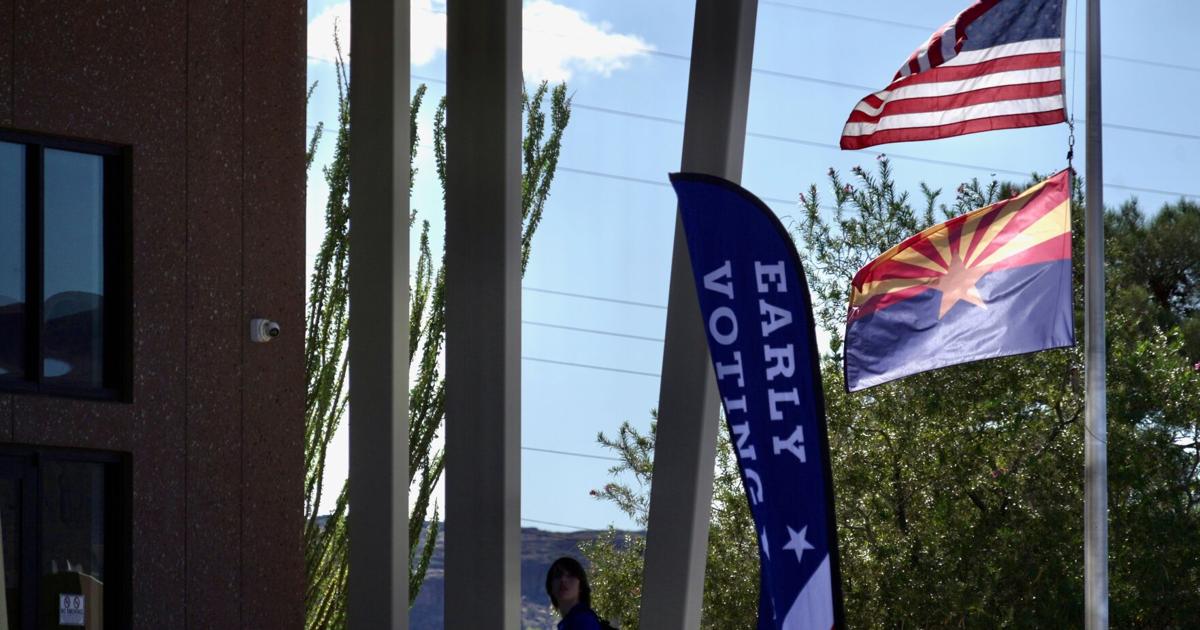
Arizona Governor Katie Hobbs is seeking re-election on Tuesday, facing a challenge from Republican Congressman Andy Biggs. Voters will also decide a variety of races, including congressional and state legislative contests that may influence both state and national political dynamics.
The governorship in Arizona represents a vital opportunity for Republicans, particularly in a midterm election landscape where the party in power often faces setbacks. The winner will have the chance to establish a political organization that may be significant in the 2028 presidential campaign, as Arizona is expected to remain a key battleground state.
Hobbs was first elected in 2022, narrowly defeating Republican Kari Lake by a razor-thin margin of 50.3% to 49.7%. Although Hobbs was declared the winner by the Associated Press six days after Election Day, Lake did not concede. Among the seven Democratic governors in states won by Donald Trump in 2024, only Hobbs and Pennsylvania Governor Josh Shapiro are up for re-election this year.
Biggs, who is in his fifth term in Congress, previously chaired the House Freedom Caucus. He received an endorsement from former President Trump after winning the Republican primary against eight-term Congressman David Schweikert and two other candidates on July 21.
In another key race, Republicans nominated former Arizona Cardinals kicker Jay Feely to replace Schweikert in the 1st Congressional District. Feely initially intended to run in the 5th District but switched after Trump backed another candidate in that race. Democrats have chosen former state Representative Amish Shah, who nearly achieved a win against Schweikert in 2024, to compete in the district, which encompasses Scottsdale and northern Phoenix.
Rep. Juan Ciscomani, a Republican, seeks a third term in the 6th Congressional District, running against Democrat JoAnna Mendoza, a Marine Corps veteran. In the 2nd Congressional District, Rep. Eli Crane faces a competitive rematch with former Navajo Nation President Jonathan Nez, whom he defeated in the 2024 elections.
All 30 state Senate seats and 60 state House seats are up for grabs this election cycle. Republicans currently hold narrow majorities in both chambers. Historically, Democrats have not controlled the state Senate since 1992, nor the state House since 1966, the last time the party maintained control of the governorship alongside both legislative chambers.
Maricopa County, home to major cities like Phoenix and Scottsdale, is the most populous and influential in statewide elections, accounting for approximately 61% of the total vote in the 2024 presidential election. The outcome of races often hinges on which party performs better in this critical county.
Polling places close at 7 p.m. local time, or 9 p.m. ET, with no results released before 10 p.m. ET or until all precincts have reported. The Associated Press will report results for key contests, including the governor’s race and various congressional seats.
