



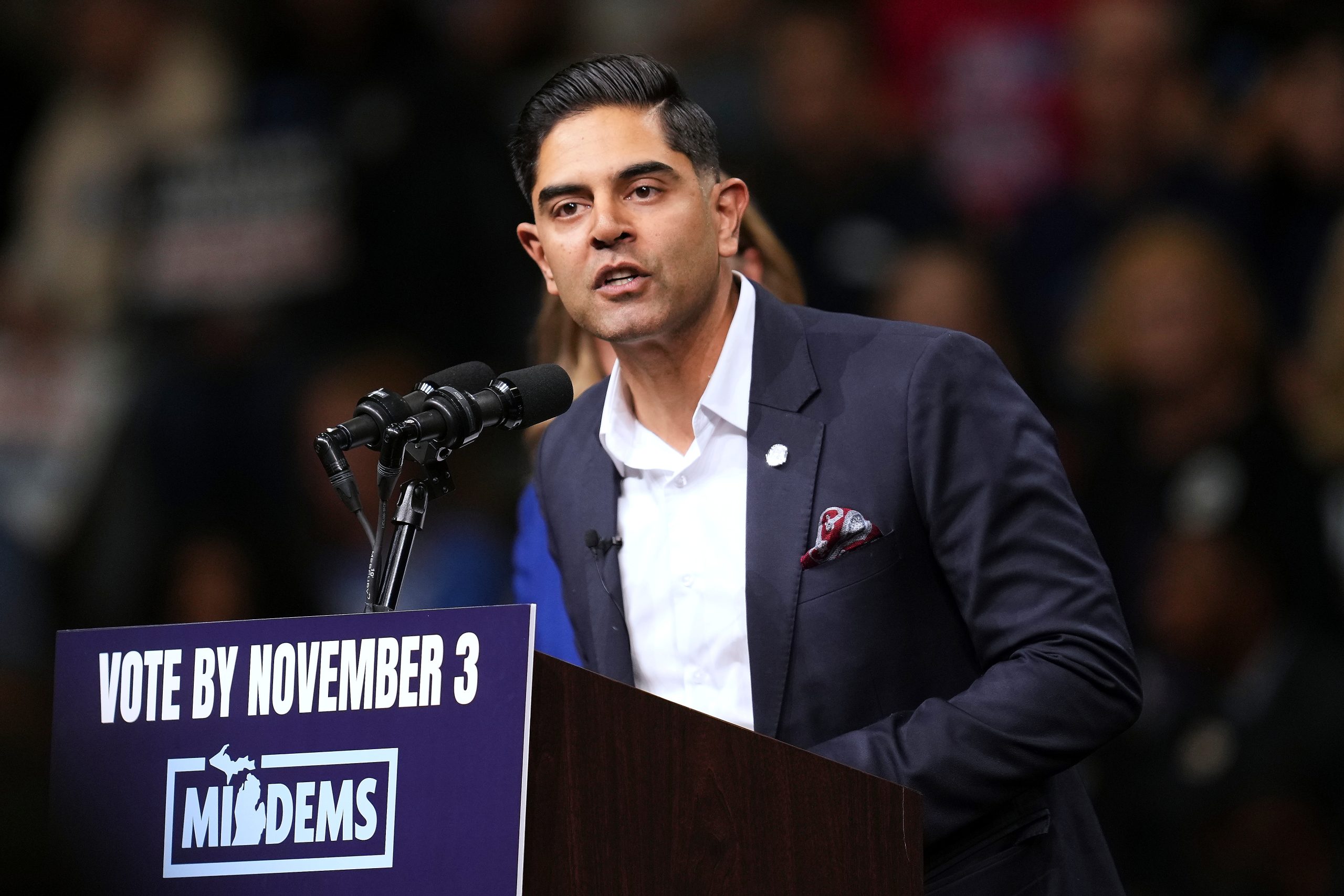
LANSING — State Rep. Ranjeev Puri, a Democrat from Canton Township, has been selected as the next House Speaker after Michigan Democrats secured a commanding majority in the state Legislature during the recent election. Puri, who currently serves as House minority leader, will lead a House that will consist of 63 Democrats and 47 Republicans starting in January 2027, marking the largest Democratic majority the chamber has seen since 1964.
In an interview following his selection, Puri emphasized the need for “transformational” change in Michigan, focusing on critical issues like state income levels and population growth. “I want us to start tackling why our household median income in Michigan is lagging behind our peer states, why our population growth is still not where it needs to be,” he stated, highlighting his agenda for the upcoming legislative session.
The transition to leadership comes on the heels of a tumultuous session characterized by significant partisan conflict and a failure to pass key bills due to infighting among Democrats and Republican walkouts. Puri aims to restore stability and functionality to the House, stating, “My charge upfront here is to return some normalcy to this institution.”
Democrats gained full control of the state government, linking their political fortunes to a unified agenda that addresses pressing issues such as affordable housing and healthcare access, although initial discussions have revolved around budget challenges. Expected conversations will include strategies to work collaboratively with Governor Jocelyn Benson and Senate Majority Leader-elect Darrin Camilleri.
Puri, who is notably the first Sikh American to lead the Michigan Legislature, pointed out that he intends to lead with a decentralized approach, valuing input from newly elected members as well as veterans within the caucus. He reflects on the previous term when Democrats faced challenges despite their holding power for the first time in 40 years, vowing to learn from those experiences and to cultivate a cooperative environment.
While Puri has affirmed that measures like a Michigan-specific Voting Rights Act remain a priority, discussions on specific legislative proposals are still in the works. He conveyed optimism regarding potential collaboration with House Minority Leader-elect Tom Kunse, hoping both parties can prioritize the needs of the Michigan populace over partisan divides.
As the House gears up for its next term, Puri is confident that with a decisive majority and a commitment to tackling substantive issues, the upcoming session can mark a significant moment for Michigan’s legislative progress.
