




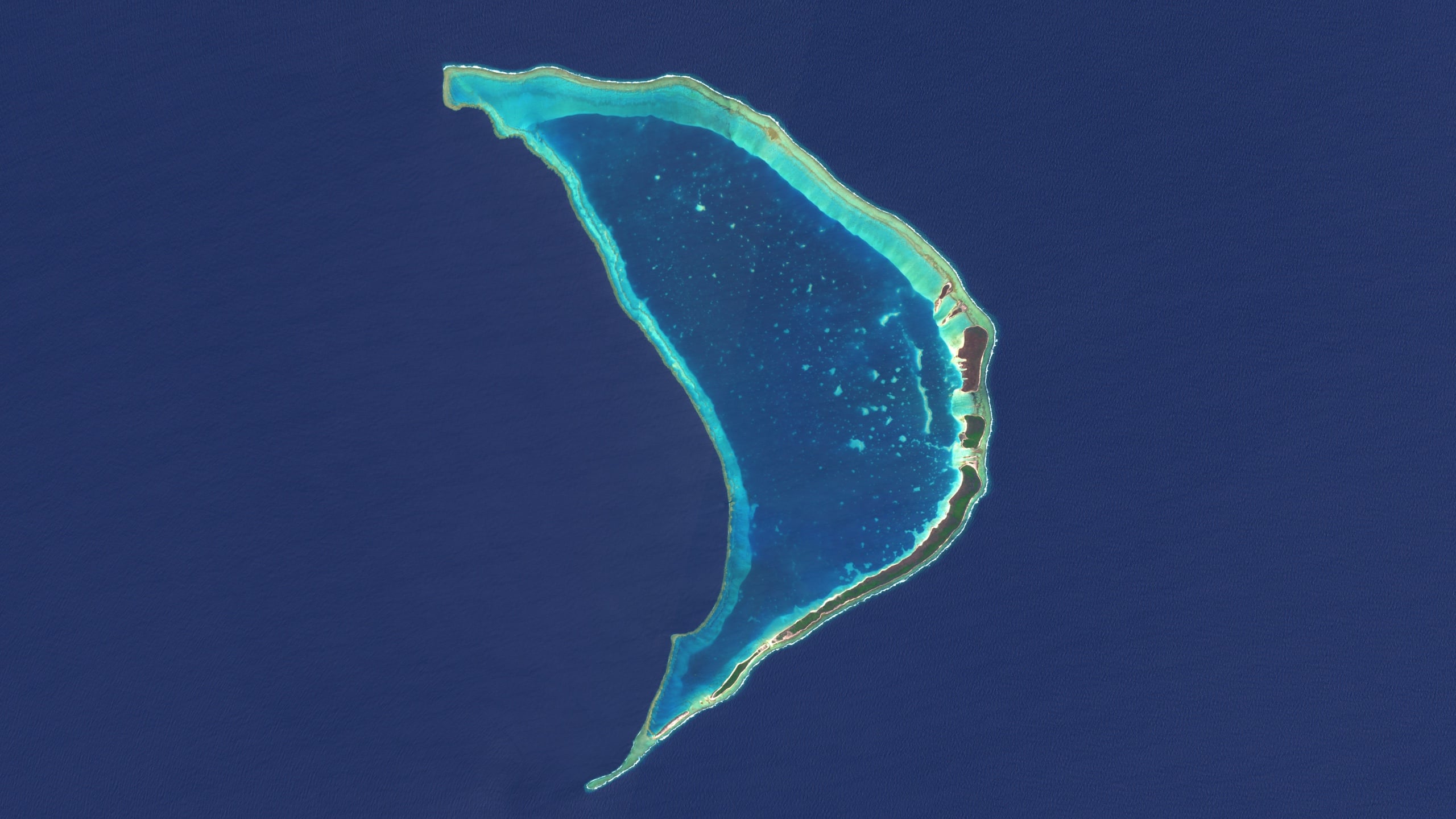
Two coral atolls in the Pacific, Bikar and Bokak, have been identified as some of the most untouched marine ecosystems in the region. This discovery comes from a recent study published in Frontiers in Marine Science, which details a survey of these atolls, declared the first national marine sanctuary in the Marshall Islands last year.
Marine ecologist Alan Friedlander from the University of Hawai’i highlighted the significance of Bikar and Bokak, stating, “They are not just treasures for the Marshall Islands but for the entire planet.” He credited the community of Utirik Atoll for historically safeguarding these environments.
Both atolls are situated in extreme isolation; Bikar is over 100 kilometers (62 miles) away from the nearest inhabited atoll, while Bokak is almost 400 kilometers from human contact. Traditional Marshallese communities have been aware of these locations for centuries, but their remoteness has allowed them to remain largely unspoiled.
The 2023 research expedition aimed to provide an in-depth understanding of the ecosystems at Bikar and Bokak. The study noted that remote oceanic atolls, such as these, allow researchers to examine ecological structures and functions largely unaffected by direct human pressures.
During the expedition, scientists documented 266 reef fish species across 38 families, revealing a greater biomass of fish at Bokak. Notably, sharks constituted a significant portion of the reef biomass, accounting for 26.8 percent at Bikar and 33.9 percent at Bokak. Additionally, they observed 138 fish species at deeper depths and identified records of 14 fish taxa new to the Marshall Islands.
Seabird populations included 17 species, with a particular concentration of turtle activity noted at Bikar, where researchers recorded 71 turtle crawls and 132 nest pits.
Despite their remoteness, both Bikar and Bokak are not immune to ecological threats. Introduced Polynesian rats were observed on the atolls, and the impacts of global warming, coral bleaching, and ocean acidification are present. The researchers emphasize that while these atolls are relatively intact, they are not pristine, and historical and global influences must be considered in ecological evaluations.
The findings contrast starkly with other Pacific sites, such as Bikini Atoll, which remains uninhabitable due to contamination from mid-20th century nuclear tests. Observations after surveying Bikini noted extensive damage and a lack of marine life compared to the thriving ecosystems of Bikar and Bokak.
The comprehensive ecosystem assessments provide valuable insights for conservation efforts and underscore the need for ongoing study of these rare habitats. The full report is available in the current issue of Frontiers in Marine Science.
