




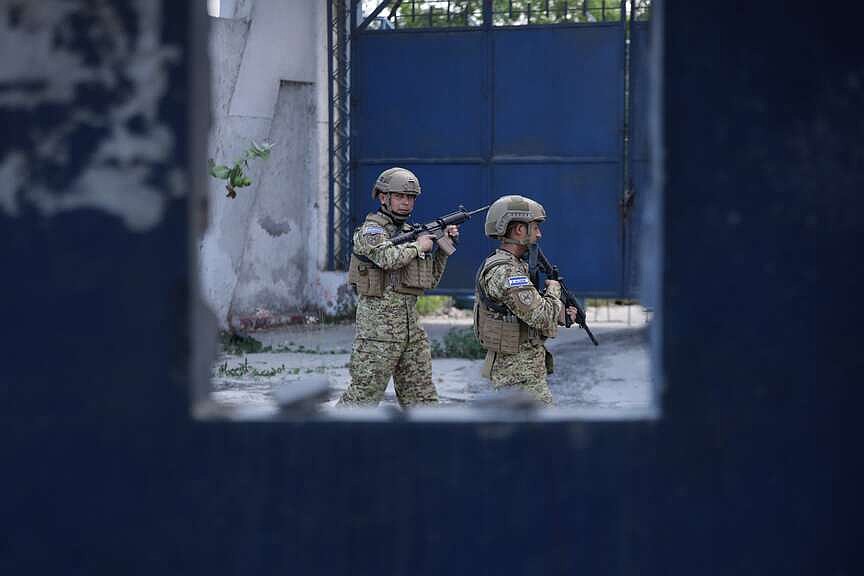
PORT-AU-PRINCE, Haiti — Thousands demonstrated in the streets of Haiti’s capital and other areas on Tuesday, expressing support for El Salvador’s President Nayib Bukele and his troops, who are assisting in the fight against gangs in the country. Bukele recently sent approximately 2,500 Salvadoran soldiers to Haiti following an attack on four Salvadoran troops on October 18, who remain unaccounted for.
The situation in Haiti has deteriorated, with ongoing violence resulting in over 20,000 deaths in the past five years and gangs reportedly controlling around 70% of Port-au-Prince. As fighting escalates between gangs and foreign forces supported by Haitian authorities, many Haitians have begun to view Bukele’s intervention positively.
According to Sam Vigersky, a fellow at the Council on Foreign Relations, the public’s enthusiasm for Bukele’s troops is understandable. He noted that the rapid increase in troop numbers contrasts sharply with the sluggish pace of the past United Nations-backed missions, generating a renewed sense of hope among the Haitian populace.
Despite the celebratory atmosphere, tensions escalated when police used tear gas to disperse crowds attempting to reach a stadium recently secured by Haitian and foreign forces. The stadium had been under gang control for over two years, hindering Haiti from hosting World Cup qualifiers.
Experts caution that without a robust long-term security strategy, the situation could rapidly decline once the Salvadoran troops leave. Diego Da Rin of the International Crisis Group warned that public enthusiasm might turn into resentment against the government if adequate plans for security are not implemented. His organization has urged Haitian authorities to develop a comprehensive strategy to maintain stability after foreign forces withdraw.
A report released by the International Crisis Group highlighted significant government failures over the past two years, emphasizing that plans to establish a National Security Council aimed at creating a long-term security strategy never materialized. Some former officials expressed concerns about the potential misuse of intelligence by the council to target political opponents, complicating efforts to improve national security.
Currently, various entities are engaged in the fight against gangs in Haiti, including the national police, the military, a U.N.-supported force, and private security contractors. As of now, the Salvadoran troops’ mission is primarily aimed at weakening gang influence rather than dismantling them altogether, underscoring the urgent need for Haiti to prepare for a future where its own forces are responsible for security.
