




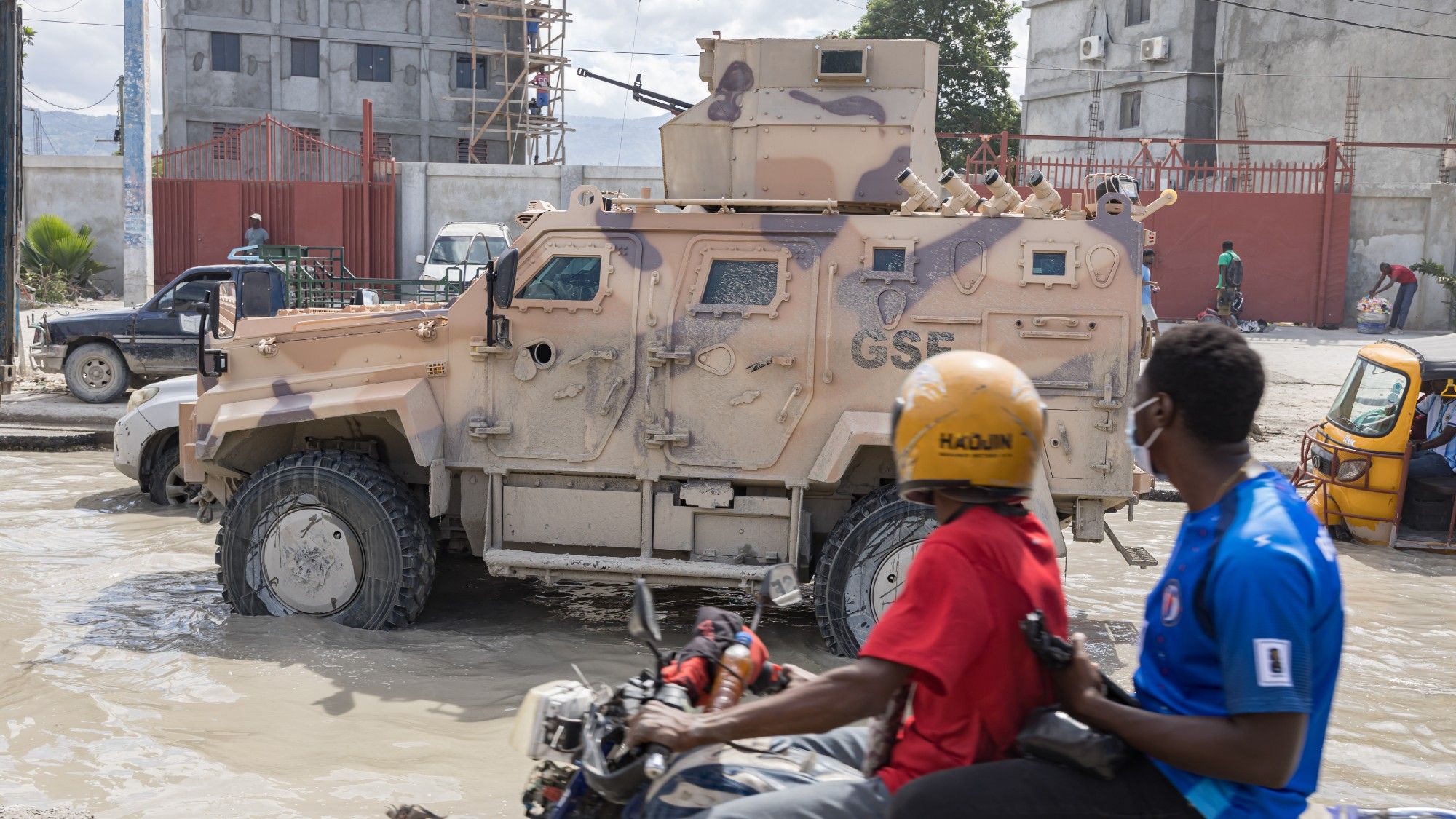
El Salvador’s President Nayib Bukele has dispatched over 2,000 troops to Haiti in an ambitious campaign aimed at countering the rampant gang violence that has plagued the nation. His military intervention aims to dismantle the influence of criminal gangs, which currently control nearly 90% of the capital, Port-au-Prince.
Bukele’s initiative follows a significant incident involving Wilson “Death Any Day” Joseph, a prominent gang leader. His gang, 400 Mawozo, is believed to have been responsible for the kidnapping of four Salvadorans who were working for the UN-backed Gang Suppression Force. In response to the abductions and Joseph’s defiant declaration of readiness to confront Bukele’s troops, the Salvadoran leader carried out an air assault on Joseph’s villa, resulting in an estimated 20 fatalities, though Joseph managed to evade capture.
Bukele’s militaristic approach has drawn both support and concern. While he claims to have the backing of U.S. officials, such as Senator Marco Rubio, there are apprehensions about his heavy-handed tactics reminiscent of past authoritarian measures in El Salvador. Critics, including advocacy groups like Amnesty International, have condemned his actions as violations of international law. However, many Haitians express a sense of relief at Bukele’s involvement, claiming that years of ineffective responses by Haiti’s own security forces and limited UN missions have left them desperate for action.
In recent weeks, some shifts in Haiti’s power dynamics have been attributed to Bukele’s influence. For instance, security forces in Haiti, inspired by Bukele’s aggressive style, have reportedly initiated a series of operations against gangs, including the death of the “Boston” gang leader in a drone strike. Local sentiments vary, with some citizens viewing Bukele as a potential savior after years of insecurity characterized by kidnappings and violence.
Despite these developments, experts caution that the complexities of the situation in Haiti make it far more challenging than Bukele’s previous successes in El Salvador. The potential for significant bloodshed and a prolonged struggle remains high, with the risk that the intervention could escalate rather than resolve the ongoing violence. The situation continues to evolve as Bukele’s campaign unfolds, and many are watching closely to see whether his military strategy will yield substantial improvements or exacerbate the turmoil.
