




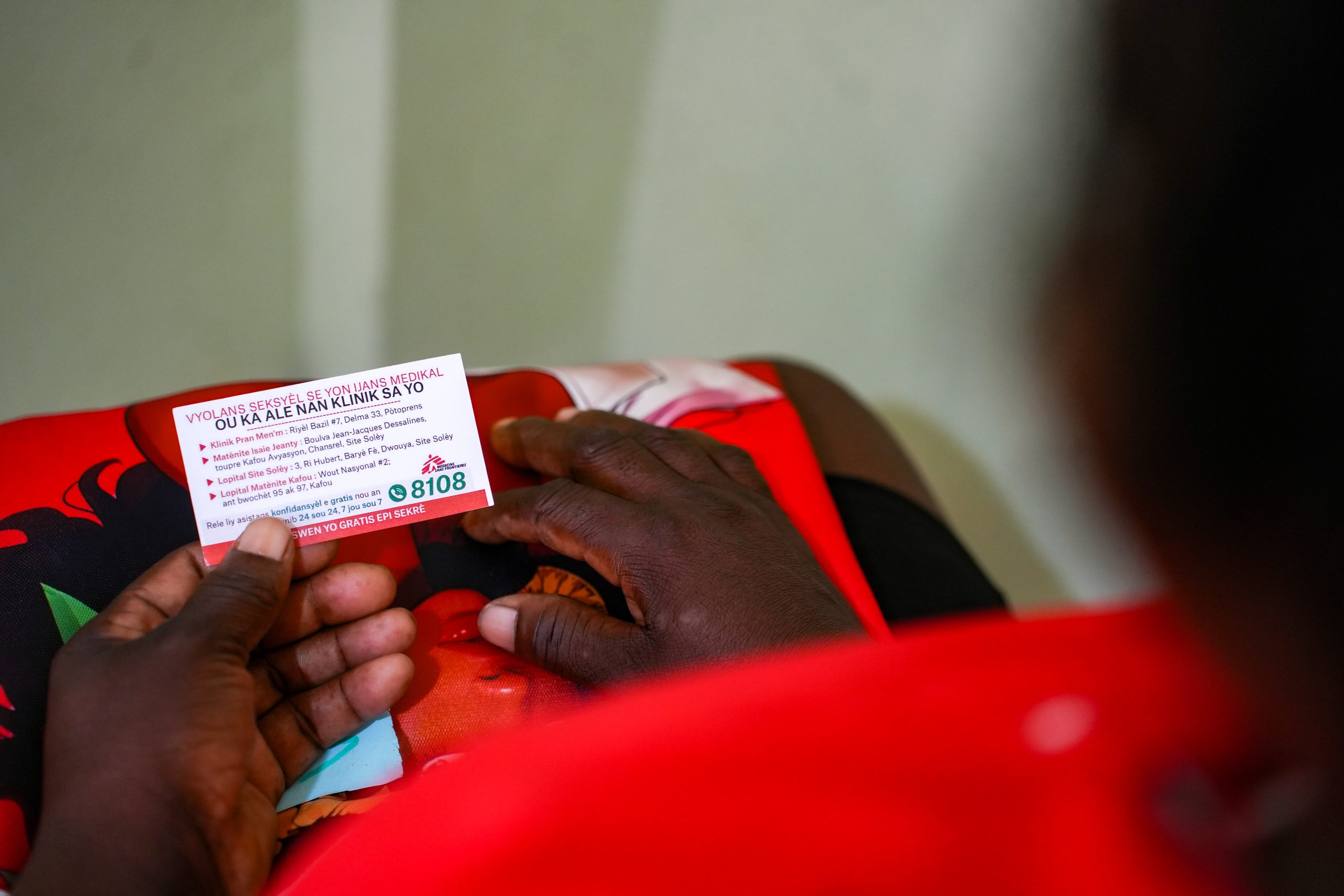
Doctors Without Borders/Médecins Sans Frontières (MSF) has reported a troubling rise in sexual violence against women and girls in Port-au-Prince, Haiti. On the International Day for the Elimination of Violence Against Women, MSF cited the alarming number of survivors seeking care at their facilities, emphasizing the critical need for increased protection and support services.
In 2026, many victims have been displaced from their homes, exacerbating their vulnerability. MSF is calling on state authorities, humanitarian groups, and civil organizations to enhance the availability of safe shelters, strengthen healthcare referrals, and provide more sustained assistance to local initiatives.
Despite ongoing warnings from MSF and other organizations regarding the escalating issue of sexual violence, demand for support continues to grow. The organization’s facilities treated 5,635 survivors between January and October 2026, with 804 treated in July alone. However, these numbers likely underrepresent the true extent of the violence, as many survivors do not access available care.
“More than 70 per cent of the victims and survivors cared for by MSF between January and July 2026 arrived after 120 hours, a critical time limit for certain emergency medical treatments,”
Marie-Camille Gauthier Lessard, Canadian project coordinator at MSF’s Pran Men’m clinic
Marie-Camille Gauthier Lessard highlighted that many survivors are unable to reach care in time due to ongoing insecurity. “Many victims and survivors are unable to reach our facilities in time and safely,” she noted. The prolonged delay in seeking treatment can significantly affect the survivors’ medical outcomes.
Armed violence in Port-au-Prince is severely disrupting daily life, forcing numerous families to seek refuge elsewhere, often in makeshift shelters where women and girls remain at heightened risk. One survivor recounted her traumatic experience, stating that she and her children had to flee after armed men assaulted her in her home.
“One day, two armed men burst into my home; they forced the door and came in. They beat me and they both sexually assaulted me,” she said. After relocating to a friend’s house, she faced another attack. The survivor expressed her ongoing fear for her safety and well-being for her children.
Claudia Lodesani, MSF’s medical coordinator in Port-au-Prince, described the harsh conditions in which many displaced individuals find themselves. “Displaced people end up in makeshift shelters such as churches, schools or stadiums, which are most of the time unsanitary and unsuitable,” she said. In these environments, the risk to women and girls is particularly acute.
MSF continues to offer medical and psychological care to survivors at its facilities, including the Cité Soleil hospital and the Pran Men’m clinic, amid increasing calls for broader support and improved safety measures for vulnerable populations in Haiti.
