




South Korea’s economy faces significant vulnerabilities due to its reliance on a few key industries, which could be severely impacted by military actions from North Korea. The country’s total exports for 2025 are projected at approximately $700 billion, with over $300 billion stemming from four primary sectors: semiconductors, automobiles, shipbuilding, and steel, according to industry analyses.
This concentrated industrial base presents a structural imbalance that not only threatens economic stability but also heightens national security risks. Military experts have suggested that adversaries like North Korea may target these crucial industries in the event of a conflict rather than directly confronting South Korea’s military forces. The goal would be to disrupt the economy significantly, undermining the nation’s capacity to sustain military operations.
Recent advancements in North Korea’s missile technology, including ballistic and hypersonic systems, as well as drone capabilities, increase the potential for coordinated attacks on South Korea’s industrial infrastructure. Such disruptions could have far-reaching consequences, not only on the national economy but also across the wider region.
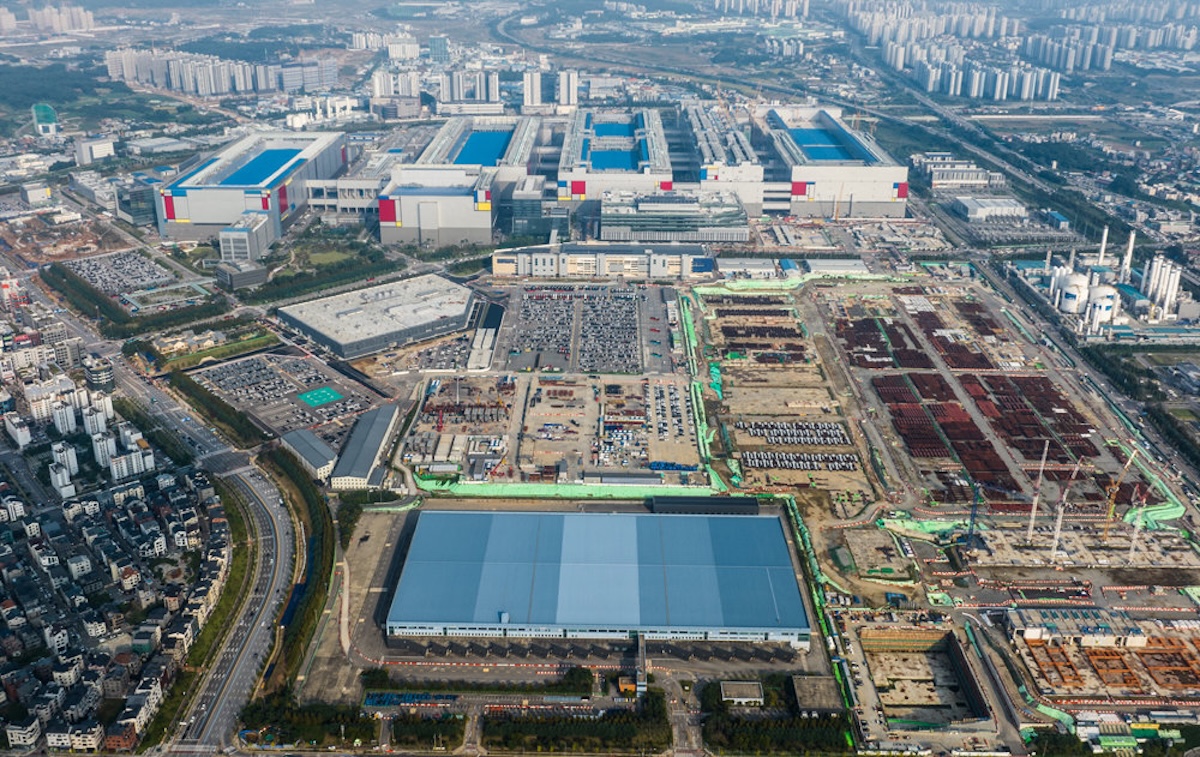
Semiconductors play a central role in this scenario, representing about 25% of South Korea’s total exports at $176 billion in 2025. Major manufacturers like Samsung Electronics and SK hynix operate critical production facilities located near the North Korean border, posing a heightened risk of attacks that could cripple global technology supply chains.
The automobile industry, also vital to the economy, is expected to generate about $72 billion in exports in 2025. With major plants concentrated near Seoul and along the southeastern coast, any disruption to these facilities could resonate through domestic supply chains and affect employment across various sectors.
Shipbuilding, with exports around $32 billion in 2025, includes significant operations by companies like HD Hyundai and Samsung Heavy Industries. Many of these shipyards are located in a few coastal regions. A targeted attack could impact South Korea’s position in the global market for advanced vessels and potentially disrupt international shipping and trade.
The steel industry, critical across several manufacturing sectors, expects to export around $30 billion in 2025. Key players like POSCO and Hyundai Steel have major facilities in geographically concentrated areas, which could become targets in a conflict, affecting the supply chain for numerous industries, including defense and heavy machinery.
The convergence of these vulnerabilities necessitates a shift in South Korea’s national security strategy. Experts suggest that the country must prioritize the protection of its industrial bases alongside traditional military defenses. This includes diversifying its industrial sectors to mitigate reliance on a few industries, enhancing regional partnerships, and establishing alternative production networks.
A comprehensive national industrial security strategy could help South Korea avoid economic collapse during a conflict by establishing an infrastructure capable of withstanding disruptions. By strengthening its industrial resilience, South Korea aims to safeguard its economy and enhance national security in an increasingly volatile geopolitical landscape.
