




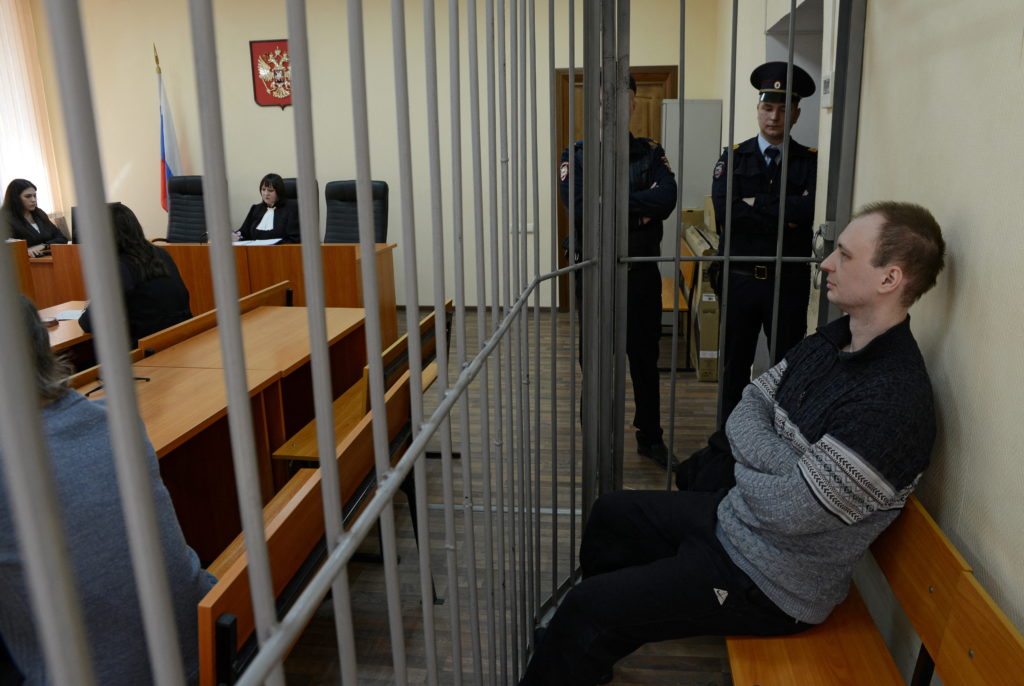
BOSTON — Family and advocates for Robert Gilman, a former U.S. Marine detained in Russia for over four years, have expressed grave concerns regarding his deteriorating health. Claims indicate that Gilman, aged 32, has been hospitalized in a civilian facility and is currently experiencing severe medical issues, including a high fever and elevated blood pressure. Eric Lebson, chief strategy officer for Global Reach, an advocacy group representing Gilman’s family, reported that he has been in “a dissociative stupor” for the past 47 days, attributing this to alleged mistreatment while imprisoned.
Current Condition and Family Concerns
Since his transfer to the hospital, Gilman has been placed under constant supervision, including being handcuffed to his bed and dependent on a feeding tube. Reports state that Gilman’s mother recently traveled to Russia in an attempt to see him, but her request was denied by the hospital staff. Meanwhile, his legal representation has faced challenges in accessing him, prompting complaints directed at various governmental authorities in Russia. Irina Brazhnikova, one of his lawyers, mentioned that they have been unable to visit Gilman despite his current psychological state, which has drawn increased concern from his family.
Lexie Hudson, Gilman’s sister, articulated her fears regarding his situation, expressing that she is increasingly worried for his safety and well-being. U.S. Senator Edward Markey has also called for cooperation between the U.S. and Russia to facilitate Gilman’s release, emphasizing the urgency for medical care as well as the potential ramifications for U.S.-Russia relations if his condition continues to worsen.
A spokesperson for the State Department conveyed the U.S. government’s ongoing concern for Gilman’s health, affirming that his case has been discussed with Russian authorities. The spokesperson noted that efforts are being made to secure his release based on humanitarian grounds.
Gilman was initially sentenced to three and a half years in prison in 2022 after a conviction related to an incident involving police. His sentence was later extended to over ten years following additional charges purportedly stemming from altercations during his incarceration. Reports indicate that Gilman pleaded guilty to some of these charges, explaining his actions as a means of avoiding transfer to another facility.
Why It Matters
The situation surrounding Robert Gilman highlights ongoing tensions between the U.S. and Russia, particularly in relation to detained Americans. The implications of his health crisis resonate beyond personal tragedy, potentially impacting diplomatic relations and raising questions about the treatment of prisoners in foreign custody.