




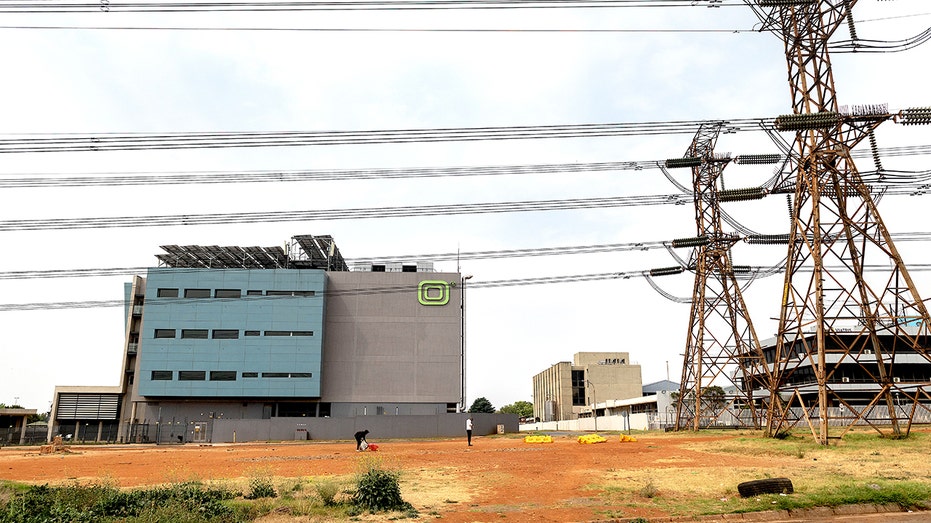
Africa is emerging as a potential new frontier for Artificial Intelligence (AI) and data centers, spurred by environmental constraints and increased operational difficulties faced in more developed markets, according to industry experts. As significant investments from American companies continue to flow into the region, the continent is being viewed as an attractive ground for AI infrastructure development amidst ongoing competition with other global players, notably China.
Growth Opportunities in Africa
The Trump administration has actively supported U.S. companies in establishing AI development as a global benchmark. Officials believe that as America and Europe confront challenges related to environmental regulations and energy scarcity, Africa’s relatively undeveloped infrastructure could provide unique opportunities for growth. Abhishek Goyal, a consultant at Arizton Advisory & Intelligence, stated that “Africa is emerging as a significant potential location for building AI infrastructure.”
This year alone, American firms have secured substantial contracts in Africa. Notably, a U.S. company gained a $6.2 billion contract in Lesotho aimed at constructing a data center coupled with a hydropower plant. Additionally, projects in Gabon, supported by the U.S. Embassy, are set to bring in $600 million for American businesses, while another contract worth $100 million for data centers and a gas-to-power plant has been established.
However, while the region is witnessing a surge in data center projects, experts like Arthur Goldstuck, CEO of World Wide Worx, emphasize that Africa’s current capacity is quite limited compared to the U.S. and Europe. He noted that Africa will not replace these markets in terms of global computing centers but can effectively serve its growing local cloud market demands.
Goldstuck points out that growing demand from governments, banks, and other institutions for local cloud services is intensifying the push for AI and data center developments. The need for sensitive information to remain within local jurisdictions further propels this expansion.
Despite the potential, experts warn that a significant regulatory gap exists in the region. Pitso Tsibolane from the University of Cape Town highlighted the absence of a public registry for data center facilities and noted that such gaps hinder transparency in resource use and operational accountability, which are crucial for sustainable development.
Analysts assert that several African nations, including South Africa, Kenya, Nigeria, Morocco, and Egypt, are ideally positioned to attract large-scale AI projects due to their renewable energy resources and lower development costs. The potential for future growth hinges on properly managing this emerging market and ensuring transparent regulations that support responsible business practices.
In summary, while Africa faces numerous challenges as it steps into the spotlight for AI and data center growth, its unique opportunities and untapped potential indicate a promising future as a vital player in the global technology landscape.
Why It Matters
The development of AI infrastructure in Africa could not only impact the continent’s economic growth but also foster innovation in technology and renewable energy sectors. A successful partnership between American and African enterprises may lead to advancements in telecommunications and harnessing of local data, ultimately benefiting communities across the region.
