




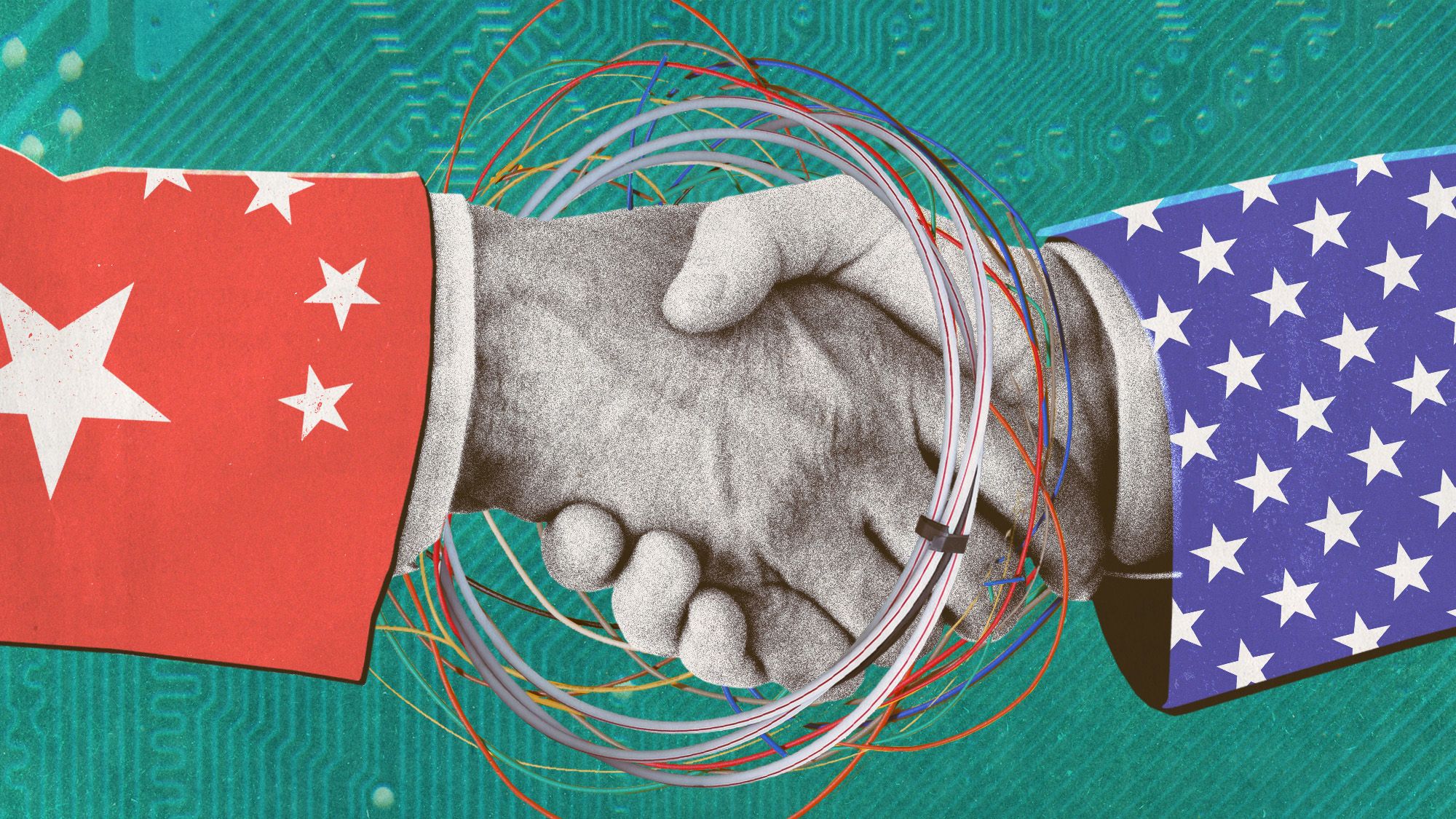
The United States and China are engaged in a competitive race to advance artificial intelligence technologies, with increasing calls from industry leaders for collaboration on regulation to mitigate potential threats posed by AI. However, analysts express doubt regarding the likelihood of meaningful cooperation between the two nations given their conflicting interests and perspectives on AI risks.
### Diverging Perspectives on AI Safety
During a recent summit involving U.S. President Donald Trump and Chinese President Xi Jinping, the issue of AI safety was reportedly on the agenda. However, both leaders view each other as obstacles to progress. President Trump has raised concerns that any regulatory measures could disadvantage the U.S. by allowing China to gain an upper hand in AI development. Conversely, Chinese officials perceive discussions around safety regulations as tactics used by the U.S. to hinder China’s rapid technological advancements, potentially allowing Washington to establish a dominant position in the global AI landscape.
Experts suggest that even a partial acknowledgment from both leaders regarding the risks associated with AI could create a foundation for collaborative efforts. Samm Sacks, a fellow at Johns Hopkins University, stated that political will is essential, emphasizing that both nations need to recognize AI as a shared concern.
The apprehensions surrounding AI differ significantly between the two countries. U.S. firms, such as Anthropic and OpenAI, are focused on enhancing AI systems, leading to fears about a feedback loop where human oversight diminishes. In contrast, Chinese companies like DeepSeek and Moonshot face constraints due to limited access to AI computing power, making the perceived tipping point for unchecked AI a distant concern for them. Chinese officials are more focused on the potential for AI to incite societal upheaval that could challenge the Communist Party’s authority.
Beijing may benefit from a situation where American apprehensions about AI lead to a slowdown in U.S. technological progress. Representative Kat Cammack highlighted concerns that the Chinese government might exploit these fears to gain a strategic advantage.
The Biden administration has proposed an “emergency AI hotline” to facilitate better communication and transparency between the two nations, as noted by Treasury Secretary Scott Bessent. Nonetheless, expectations for significant breakthroughs during the Trump-Xi summit remain low, as mutual distrust continues to hamper effective dialogue.
### Why It Matters
The potential for cooperation on AI safety is critical as the technology becomes increasingly influential in shaping both economies and societies globally. Without joint efforts to manage the rapid development of AI, risks may escalate, impacting not only the U.S. and China but the international community as a whole. Continued discussions, even without immediate agreements, may be essential for establishing a framework for future stability and safety in AI advancements.
