




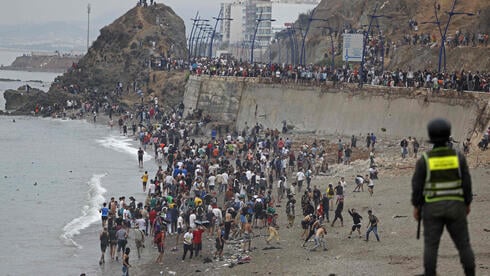
Ceuta, a Spanish enclave on the North African coast, has become a focal point for an ongoing migration crisis. In July, an estimated 80,000 to 100,000 undocumented migrants entered the city, which has a resident population of around 84,000. Most of these migrants were men from Morocco and a smaller number from sub-Saharan Africa, many of whom returned shortly after arrival. However, between 8,000 and 12,000 remain, with at least a quarter identified as unaccompanied minors.
As migrants flood the streets, they often appear destitute and hungry. Some gather in public spaces like parks and plazas, while others create makeshift camps along the coast, particularly around Playa del Trampolín, where they hope to launch into Europe. In a hastily assembled settlement, at least 5,000 people live among a stench of human waste and desperation. Many carry basic supplies and materials for shelter while seeking sanitation amid limited resources.
The city’s sole official reception center exceeds its capacity of 500 individuals, now housing around 800, including numerous women and minors. Those denied entry often find themselves abandoned, struggling for basic necessities and shelter. Residents report a rising tide of violence, with frequent altercations requiring police intervention and the presence of Spanish troops to maintain order.
As the situation has escalated, there have been reports of severe hardships among the migrants, including unaddressed injuries and safety concerns. Accounts detail resource shortages leading to intense competition over basic provisions and space, especially at night when aid workers leave and the encampments turn chaotic.
On July 30, coinciding with the anniversary of King Mohammed VI’s reign, tens of thousands of Moroccans began heading toward the borders. They sought refuge in Europe amid economic instability, as unemployment rates among young people in Morocco reach approximately 35%. The disparity in economic opportunities—averaging €4,800 annually in neighboring Fnideq compared to €36,800 in Ceuta—fuels the migration trend, with many young Moroccans aspiring to find better prospects in Europe.
The Spanish government is grappling with this complex issue. After a Supreme Court ruling in July that affected deportation procedures, speculation arose about the motivations behind the sudden surge of migration. While political leaders have pointed fingers at various parties, most agree the situation is dire, reflecting a mix of desperation and hope among those seeking a better life.
This influx has prompted local reactions ranging from sympathy to resentment, with residents expressing concern over their changing city. Demonstrators in Spain have held rallies to raise awareness, illustrating the contentious nature of immigration policies and their human toll.
As authorities respond to the crisis, Ceuta continues to grapple with the implications of mass migration, balancing humanitarian needs with the realities of border control. The situation remains fluid, with additional shelter facilities urgently needed to address the growing population of displaced individuals in the enclave.
