




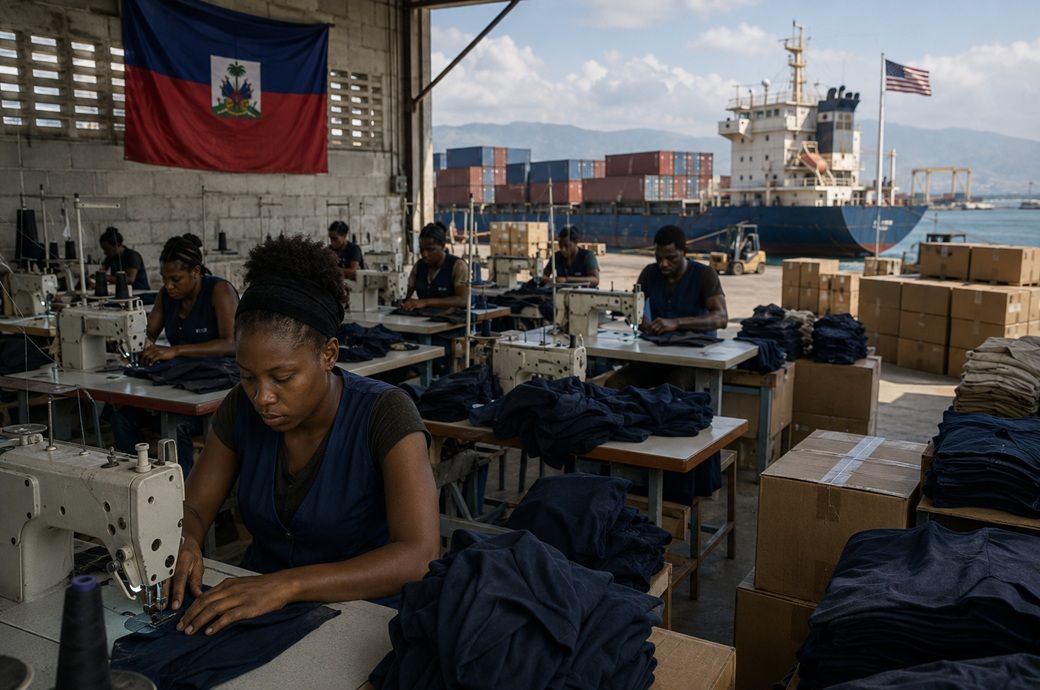
Haiti’s textile and apparel sector will receive a critical extension of preferential trade treatment through the Haitian Hemispheric Opportunity through Partnership Encouragement (HOPE) and Haiti Economic Lift Program (HELP). This two-year extension will allow qualifying Haitian textile and apparel products to continue receiving duty-free access to the U.S. market until December 31, 2028.
The recent legislation, signed into law by U.S. President Donald Trump, follows its passage by the Senate on August 8 as part of H.R. 6500, the Continuing Appropriations and Extensions Act, 2027. This extension provides an opportunity for Haiti’s struggling textile industry to stabilize amidst ongoing economic and political challenges.
Challenges Facing the Textile Sector
Haiti’s textile industry, a vital source of formal employment for many, has seen job numbers plummet. Employment levels dropped from approximately 60,000 workers in 2021 to around 22,000 by the end of 2025, reflecting the severe impact of political instability, gang violence, and disruptions to transport and supply chains. As these challenges have deepened, many factories have closed, and trade preferences have come under increasing pressure.
Despite the potential benefits of the HOPE/HELP extension, industry experts caution that this support alone may not be enough to ensure recovery. While the extension allows for continued duty-free treatment, it does not address the underlying factors that have contributed to the significant contraction of the industry. The reduction in orders and closures has manifested a decline in investor confidence, indicating that a broader recovery strategy is necessary.
The Haitian government has expressed support for the U.S. decision to extend these trade preferences, viewing them as a means to preserve jobs and encourage investment. Industry representatives also highlighted the extension’s potential to provide critical relief to businesses and workers, albeit with a call for longer-term stability to enhance investor confidence.
However, improved security, functioning infrastructure, reliable logistics, and a stable trade policy will be essential in conjunction with these trade preferences to foster a revitalized environment for Haiti’s textile sector. With greater stability, the industry may have a chance to restore its operational capacity and regain confidence among international buyers.
In conclusion, the two-year HOPE/HELP extension offers a significant reprieve for Haiti’s textile sector, yet it is seen as a temporary measure rather than a comprehensive recovery plan.
Why It Matters
The future of Haiti’s textiles and apparel industry is of critical importance for the country’s economy, as it represents one of the main sources of employment and foreign exchange. Ensuring the sector’s viability through extended trade preferences could play a pivotal role in the nation’s economic recovery, provided that necessary systemic improvements are also pursued.
