




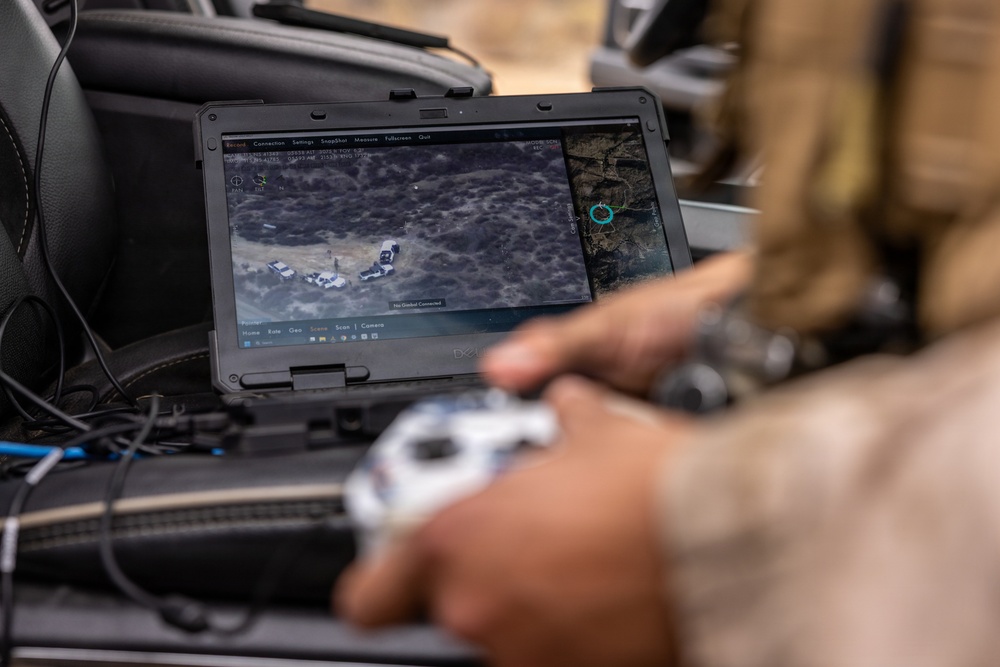
SAN DIEGO, Calif. — U.S. Marines from Joint Task Force-Southern Border are conducting tests of emerging command-and-control capabilities with the aim of enhancing communication and situational awareness for patrols at the southern border. These efforts are part of Operation Ardent Vanguard and involve the integration of new technologies to address communication challenges in remote areas.
Enhancing Communication Capabilities
The initiative brought together Marines from 1st Battalion, 7th Marine Regiment and Combat Logistics Regiment 17 (CLR-17) to find solutions for communication gaps experienced during operations. A primary focus has been on overcoming challenges posed by dead zones that impede radio communication, particularly in mountainous terrain known for obstructing line-of-sight signals.
Master Sgt. Steven Baez, communications chief with CLR-17, highlighted that these communication challenges severely limit patrols’ ability to maintain reliable connectivity and access important information while deployed. To tackle this, the team has designed a solution that involves extending existing communication services into these problematic areas.
Maj. Michael Calnan, the regimental communications officer with CLR-17, explained that the team settled on a solution that utilizes readily available government and commercial technologies. This approach enables the Marines to tailor solutions specific to various locations based on operational needs.
From August 3 to August 7, 2026, the Marines tested their strategies in several identified dead zones within the San Diego Sector. This demonstration integrated multiple capabilities to create a more comprehensive command-and-control system, aiming to enhance monitoring and security efforts along the border.
The team employed Mobile Ad hoc Network (MANET) radios to establish a flexible, meshed network that allows radios to communicate despite traditional communication barriers. This setup improves connectivity among all linked radios, increasing efficiency as more devices are added.
With the MANET in place, Marines deployed small unmanned aerial systems (sUAS), such as the Stalker VXE30 and Skydio X10, in previously restricted areas. This new connection allowed for live video feeds from drones to be transmitted to Android Tactical Assault Kit (ATAK) devices used by ground troops, addressing a significant tactical challenge.
Another advancement was the implementation of an artificial intelligence overlay that assists Marines in detecting and identifying targets, thereby enhancing their monitoring capabilities. This tool helps accelerate recognition of individuals, vehicles, and other significant items according to patrol requirements.
Following the demonstration’s success, the communications team plans to broaden the new capabilities across a larger section of the border mission. The focus will shift toward minimizing communication dead zones and improving access to real-time data and AI-assisted insights.
Why It Matters
The modernization of communication tools within military operations at the southern border is expected to increase operational speed and decision-making efficacy. By streamlining systems to allow quick access to aerial videos and AI alerts, Marines can maintain essential contact with command centers, thus enhancing overall situational awareness and mission effectiveness.
