




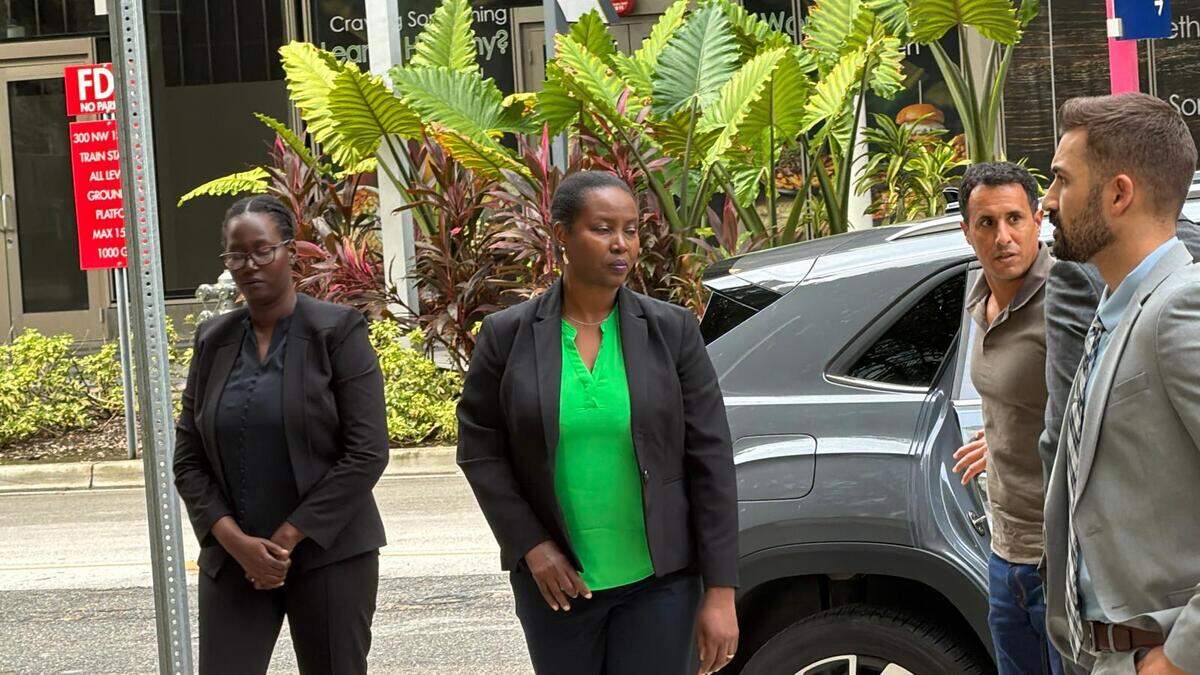
In an ongoing trial in Miami regarding the assassination plot against former Haitian President Jovenel Moïse, his widow, Martine Moïse, has attributed her husband’s political challenges to specific opposition figures. Her testimony focused notably on senator Antonio “Don Kato” Chéramy, claiming he played a significant role in obstructing the electoral process in Haiti.
Failure to Hold Elections
Martine Moïse, who has been testifying at the trial of Christian Emmanuel Sanon, accused Chéramy of preventing elections during her husband’s presidency. In a courtroom recitation, she described Chéramy as having gone on “a rampage inside the Parliament” that hindered the electoral process. She characterized his actions during a May 2019 incident, where Chéramy and others moved furniture out of the Senate in protest of Moïse’s administration, as part of a broader pattern of obstructionism.
In her emotional testimony, she stated that social media depicted many photographs of Chéramy together with Sanon, insinuating a connection between them. She alleged that Chéramy expressed intentions to assume her husband’s position in the political landscape of Haiti following his assassination.
Chéramy has publicly dismissed these allegations. In a statement, he asserted that Martine Moïse was politicizing the trial, which he deems crucial for the country. He suggested that she should not single him out, contending that her accusations misrepresented the political landscape that led to the chaotic situation surrounding the late president’s administration and the broader unrest that engulfed Haiti in recent years.
Chéramy further contended that during Moïse’s presidency, there were no formal electoral laws submitted to Parliament that would facilitate elections. He argued that the former president’s lack of interest in elections was evident and that he focused instead on defending the Constitution and constituency needs.
As the trial proceeds, the defense aims to illustrate the convict’s potential disassociation from the assassination plot by highlighting the numerous adversaries President Moïse had gathered throughout his tenure. Sanon, accused of conspiring to kidnap or murder Moïse, has described his mission to revive Haiti under a different governance structure.
The trial is expected to last several weeks and involves a comprehensive examination of Haiti’s political climate leading up to the assassination, including the absence of elections that plagued Moïse’s administration and the violent environment that followed.
Why It Matters
The trial not only investigates the assassination of Jovenel Moïse but also delves into the political turmoil that has characterized Haiti’s governance over the past few years. Martine Moïse’s testimony sheds light on the broader implications of political strife in Haiti, where the failure to hold elections has contributed to systemic instability. This case encapsulates the intersection of politics and legal accountability in a country yearning for stability and democratic governance.
