




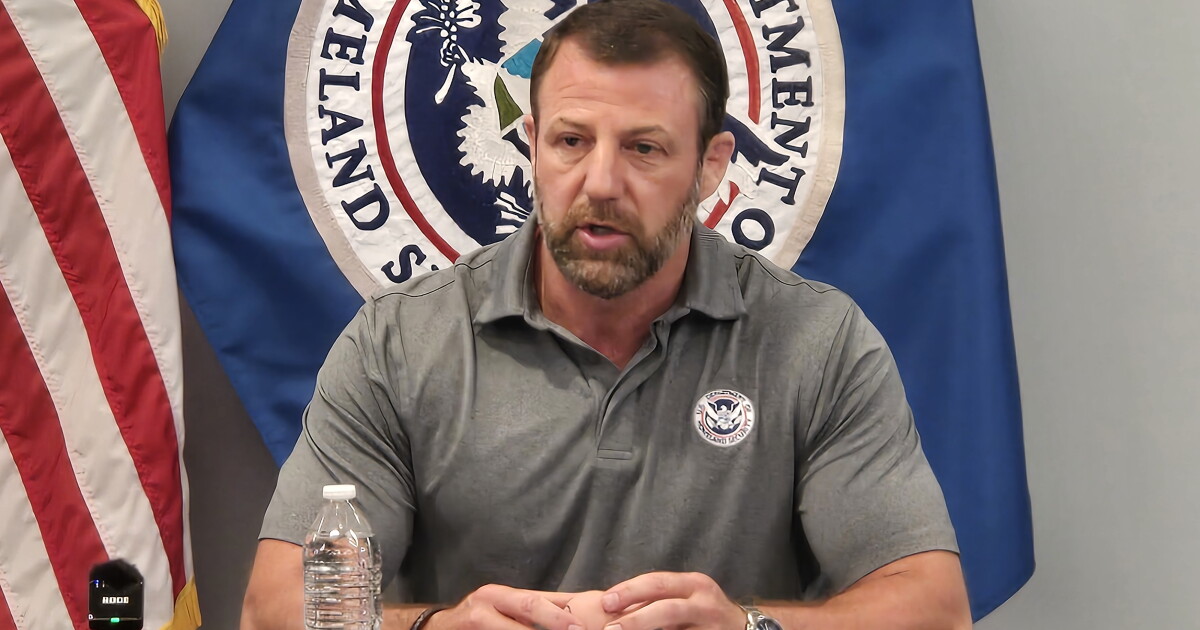
Homeland Security Secretary Markwayne Mullin expressed condolences to the family of a Haitian immigrant who reportedly died by apparent suicide in Ohio earlier this week, while also clarifying that the Department of Homeland Security (DHS) does not bear responsibility for the individual’s death. This statement came during Mullin’s visit to Warren County, where he discussed the collaboration between U.S. Immigration and Customs Enforcement (ICE) and local law enforcement.
DHS, ICE and Ankle Monitors
Pierre Damas Bel, a 20-year-old student at Wright State University, emigrated from Haiti to Springfield in 2024. Following the termination of his Temporary Protected Status (TPS) in late July, he was fitted with an ankle monitor by ICE. Reports indicate that Bel expressed his emotional distress to his father via phone shortly before his death, which the Ohio State Highway Patrol attributed to suicide.
“It breaks my heart for the parents,” Mullin stated regarding Bel’s death. “But we were following our procedures; we did our job. What happened when he went home… he wasn’t in our custody. We’re not responsible for that.”
Following a federal court’s decision issued on July 27 that permitted the end of TPS for Haitian nationals, Bel was among many placed on ankle monitors. The TPS program was initially established in response to the catastrophic earthquake in Haiti in 2010, which left the country in upheaval. The Trump administration argued that Haiti is now safe for returnees and thus justifies the termination of the program.
Mullin emphasized that TPS was intended to be temporary. “It’s not designed to be permanent,” he remarked. However, advocates highlight that Haiti continues to be deemed dangerous by the U.S. State Department.
The ankle-monitoring program has raised concerns among immigrant communities in Springfield, with individuals expressing feelings of stigma and criminalization. Bel himself shared his distress about wearing the device in a social media post, stating, “I didn’t come here to commit a crime or hurt anyone. Yet now I’m walking through the streets of the United States with a GPS monitor on my leg carrying a feeling of shame and humiliation I never imagined I would experience.”
During his visit, Mullin also discussed the implementation of 287(g) contracts, which permit local law enforcement to perform limited immigration enforcement. This agreement allows agencies such as the Warren County Sheriff’s Office to collaborate with ICE, facilitating enforcement actions against those with undocumented status.
Mullin noted that 14 detainees currently held in Warren County have been apprehended on local charges. He defended recent interactions between law enforcement and educational institutions, claiming that visits aimed at immigrant welfare checks were misrepresented.
In response to the tense atmosphere surrounding immigration enforcement in Springfield, where a significant Haitian community resides, Mullin stated that ICE plans to continue its practices of detainment and deportation. “We’ve made 380 arrests in Springfield,” he confirmed. “We’re going to continue to push.”
Why It Matters
The events leading to Pierre Damas Bel’s death raise significant questions regarding the emotional and psychological impact of immigration policies on vulnerable populations. The discourse surrounding TPS termination and the ongoing use of ankle monitors highlights the complex intersection of immigration enforcement, public safety, and humanitarian considerations in the United States.
