




NORTH CHARLESTON ARTIST CREATES EXHIBIT USING TIN FROM HISTORIC FREEDMAN’S COTTAGE
A new solo exhibit featuring the creative work of local artist Fletcher Williams III is set to display pieces crafted from salvaged materials from a Freedman’s cottage. The exhibition, titled “250 Years From Mr. Freedman,” will be held at Storehouse 8 at the Charleston Navy Yard from July 5-14.
Exhibit Overview and Inspiration
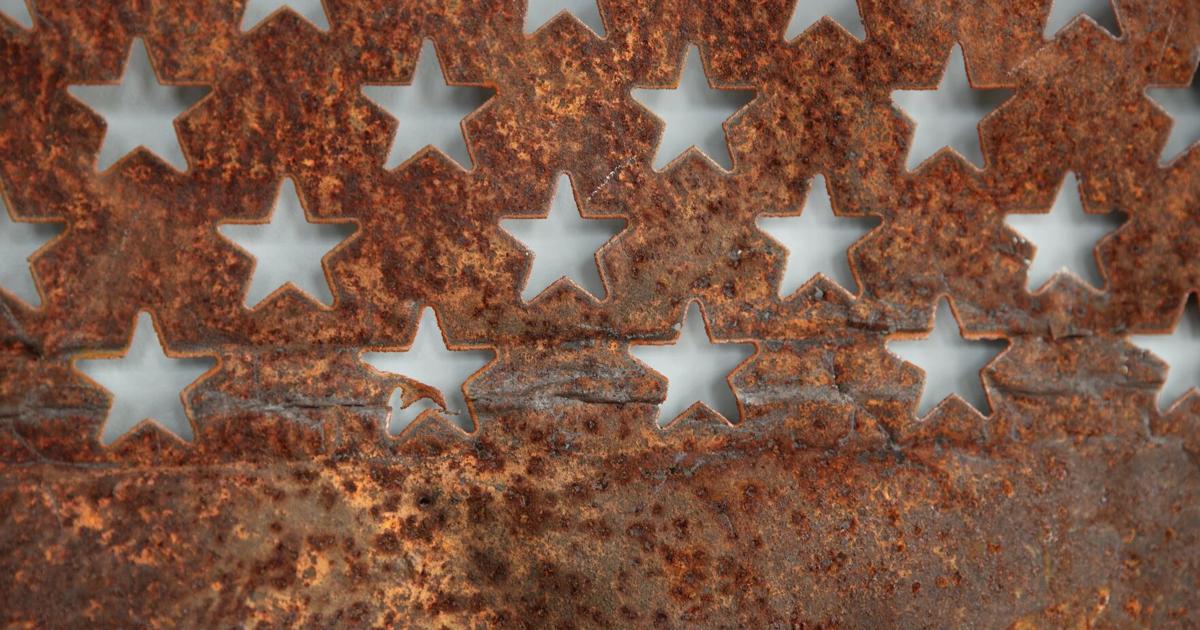
Williams has transformed tin remnants from a burnt Freedman’s cottage into intricate wall reliefs, some of which echo the design of the U.S. flag. This project aims to bring historical narratives into contemporary art, showcasing the story of freed enslaved people and their housing in Charleston.
The featured tin roof has been in Williams’ possession for nearly a decade and has previously appeared in other exhibitions, including a 2020 installation at the Aiken-Rhett House. Williams stated that during a chance discovery in downtown Charleston, he learned about the roof’s historical significance when chatting with a property owner.
“The property owner thought I was the contractor he was supposed to meet and ended up offering me the roof after we spoke about its history,” Williams recalled. This interaction reflects the artist’s approach to his work, where he incorporates regionally and culturally significant materials into his creations.
Freedman’s cottages were constructed in the years after the Civil War, addressing the housing needs of recently freed enslaved individuals and working-class families in Charleston. Williams’ artistic endeavor seeks to honor those who lived in these shelters, reinforcing their significance in the broader historical context.
The exhibition, which is free to attend, can be visited on Thursdays through Sundays, from noon until 5 p.m. Visitors are invited to experience the narratives woven by Williams, blending documented history with local folklore and personal storytelling.
Creating a Narrative
In discussing the exhibit’s concept, Williams highlighted his creative process: “Creating the fictional narrative around Mr. Freedman actually gave me the freedom to respond creatively to the material.” He emphasized how the history and stories tied to the tin roof inspired the narrative framework of the exhibit.
Through this distinctive artwork, Williams aims to foster dialogue about the historical experiences of community members and their resilience over the centuries. The exhibit is part of a broader effort to chronicle important local histories and celebrate cultural heritage through contemporary artistic mediums.
Why It Matters
This exhibit serves to remind visitors of Charleston’s complex history and the lasting impact of slavery and racism, while also showcasing contemporary African American artistry. Williams’ work not only preserves the memory of the past but also prompts discussions surrounding identity and heritage in today’s society.
