




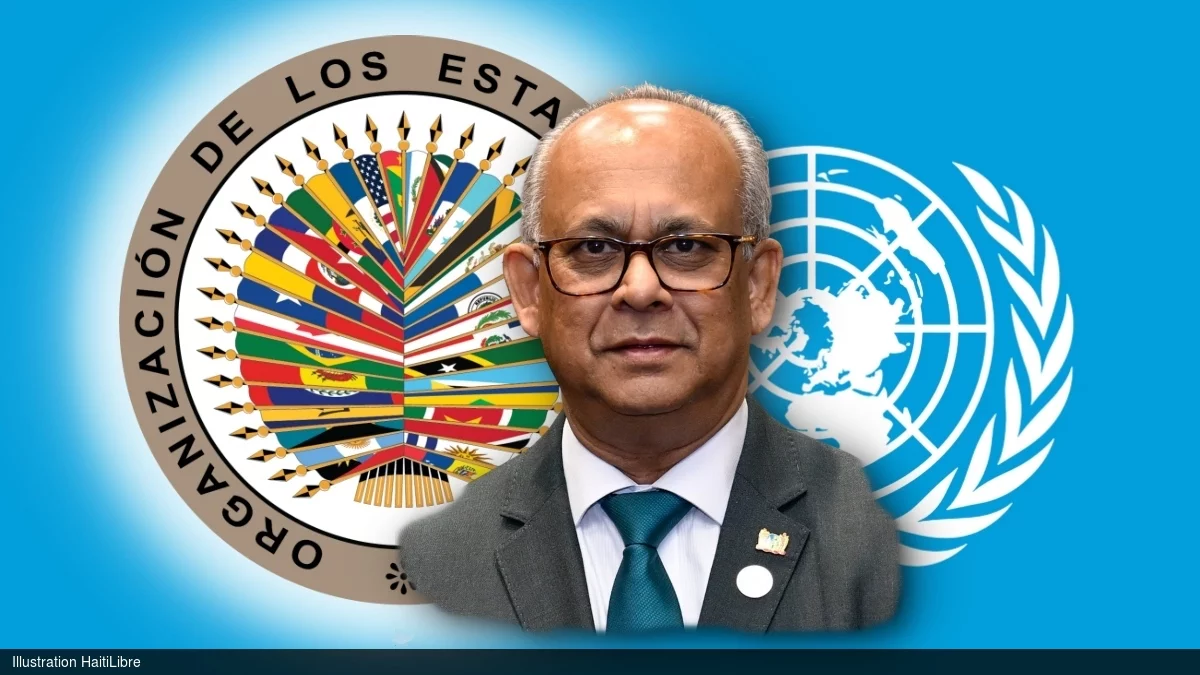
The Organization of American States (OAS) has formally requested the United Nations Security Council to renew the mandate of the Gang Suppression Force (GSF) in Haiti. This call was made through a joint statement issued by the 32 member states on September 25, 2026. The OAS urged the international community to provide the necessary personnel, funding, equipment, and logistical support to ensure a comprehensive and sustainable deployment of the GSF.
OAS Member States Show Solidarity with Haiti
The member states expressed their solidarity with the Haitian population and reaffirmed their commitment to supporting Haitian-led solutions while respecting the country’s sovereignty and territorial integrity. They emphasized the importance of implementing the OAS General Assembly resolution AG/RES. 3051 (LVI-O/26), adopted on June 23, 2026, which aims to support Haiti in a manner that is coordinated with the United Nations, CARICOM, and other partners.
Among the nations that signed the joint statement were Antigua and Barbuda, Argentina, Canada, the United States, and Haiti, among others. OAS Secretary General Albert R. Ramdin reiterated his support for the GSF, stating that it plays a crucial role in helping Haitian authorities regain control over territories affected by gang violence, restore access to vital infrastructure, and improve public safety. He noted that simply renewing the mandate would not be sufficient; tangible results require adequate resources and sustained political will.
The joint statement was influenced by a high-level mission to Haiti led by Secretary General Ramdin from August 16 to 19, 2026, where he identified security and electoral processes as immediate priorities. Haiti’s Permanent Representative to the OAS, Jean Josué Pierre, emphasized the necessity of renewing the GSF’s mandate and its full deployment while reinforcing Haiti’s security institutions to protect its citizens and facilitate credible elections.
In supporting the GSF, the OAS member states also called for initiatives aimed at disarming and reintegrating former gang members, restoring humanitarian access, and expanding socioeconomic opportunities for the youth. The joint statement highlighted the need for operations to adhere to international law and human rights standards, alongside addressing illicit arms trafficking and accountability for those financing gang activity.
Lastly, preparations for elections should continue in parallel with improving security conditions, according to the joint statement. It urged support for civil identification and voter registration, along with the establishment of an OAS Electoral Observation Mission to oversee the electoral process.
Why It Matters
The call for the full deployment of the GSF reflects ongoing concerns about security and stability in Haiti, a nation grappling with significant challenges from gang violence. The international community’s response, including resource allocation and strategic support, will play a critical role in shaping Haiti’s path toward democratic governance and long-term stability.
