




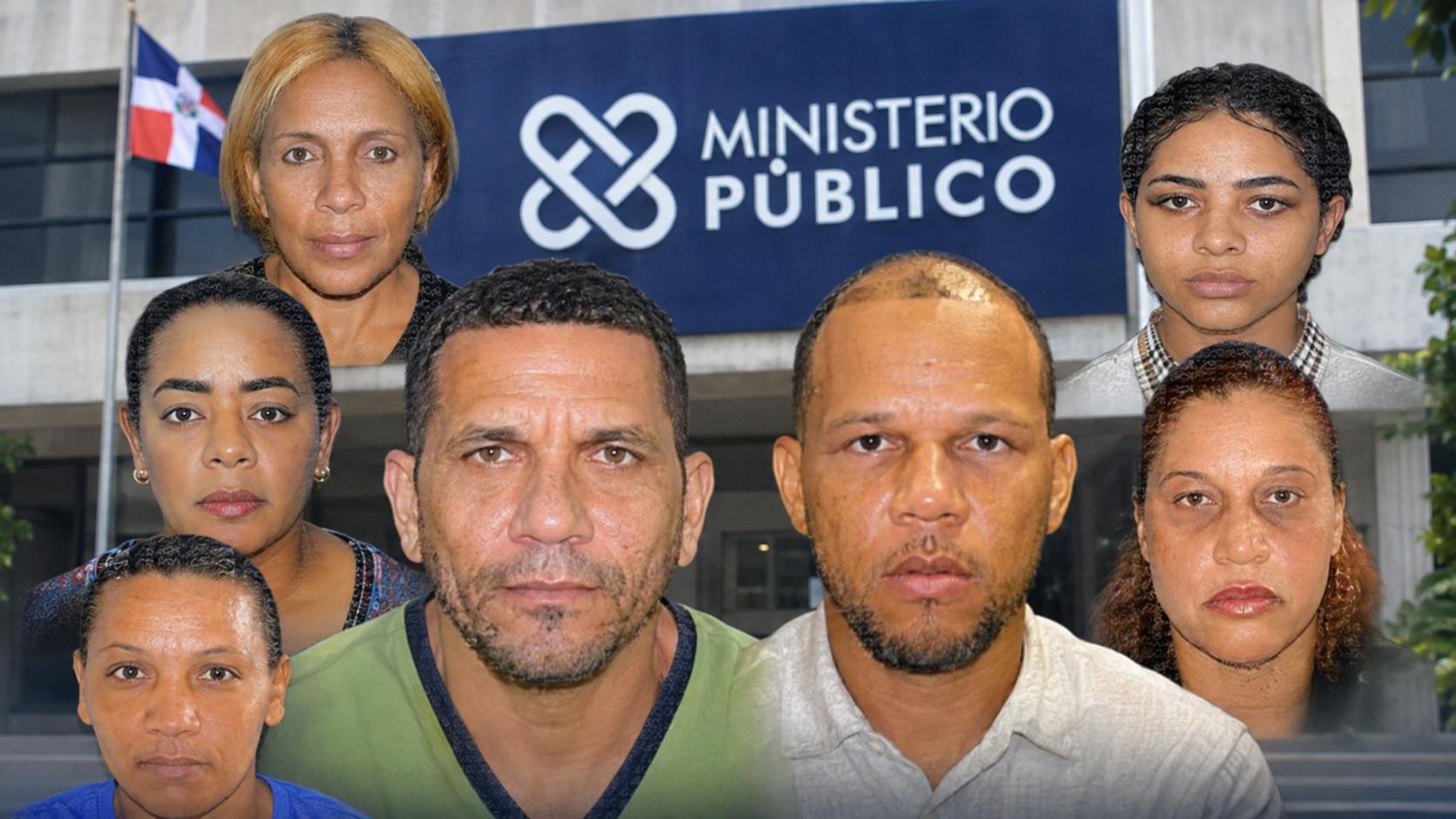
In a significant crackdown on an alleged international drug trafficking operation, authorities have identified family members—including wives, children, sisters, nephews, and romantic partners—as key figures in a network aimed at concealing assets. This operation, known as Operation Breakwater, was conducted by the Public Ministry in conjunction with the Specialized Anti-Drug Prosecutor’s Office.
The network reportedly centered around Fausto Candelario Ortiz, known as “El Pachá,” and his brother Yovani Candelario Ortis, who are accused of using close familial ties to launder money and manage businesses derived from illegal activities. The two alleged leaders developed a scheme leveraging trust and kinship to obscure their financial dealings, according to documents filed by the prosecution.
Court filings reveal that Fausto Candelario Ortiz was deported from the United States in 2005 after serving time for drug trafficking. He faced legal issues again in the Dominican Republic in 2015 relating to money laundering and weapons offenses.
The investigation outlines how family members not only owned assets but also played roles in the organization, handling cash, managing properties, and overseeing operations. María del Rosario, known as “Belkis” and Fausto’s partner for over 30 years, has been identified as a key player in maintaining control over significant real estate holdings and commercial interests, which were allegedly part of the money laundering scheme.
Despite lacking formal employment, Del Rosario possesses substantial property assets and shares in family-operated companies, such as Inversiones Candelario & Del Rosario Negocios Diversos, S.R.L.. Authorities allege that she is linked to multiple properties, including a luxury apartment in Punta Cana and significant land holdings, which were concealed through various financial maneuvers.
The prosecution also highlighted a notable transaction involving Del Rosario, where a sum of US$2,187,338.06 was transferred into her account in September 2025. This money allegedly pertains to land sales in which she was not the original owner, prompting further investigation into its illicit origins.
Other women linked to Fausto, including Tauni Castillo Urbáez and Rosanny Amada Sarmiento Villavicencio, have also been implicated. They are accused of managing properties and vehicles acquired with dubious funds. Castillo Urbáez, for instance, is noted to have owned assets tied to the drug operation without identifiable legitimate income to validate those holdings.
Moreover, the investigation points to generational involvement, with the children of Candelario Ortiz also allegedly participating in the scheme. Cristian George del Rosario, identified as Fausto’s son, recorded substantial cash inflows during his tenure at a family company. Meanwhile, Alexander Algenis Candelario del Rosario, also noted in the indictment, is said to have maintained active bank accounts and owned properties associated with the Candelarios.
The indictment describes various methods employed to keep assets under family control, obscuring the true ownership from authorities. This includes leveraging siblings, such as Yolanda Candelario, who managed properties and businesses used by Yovani, further indicating a broader scheme aimed at maintaining control and concealing the organization’s operations.
As the investigation continues, authorities emphasize that the connections within the families suggest a deliberate effort to construct a wealth control structure that allowed the alleged ringleaders to operate with reduced visibility. The Public Prosecutor’s Office is pursuing these allegations as the case develops.
