




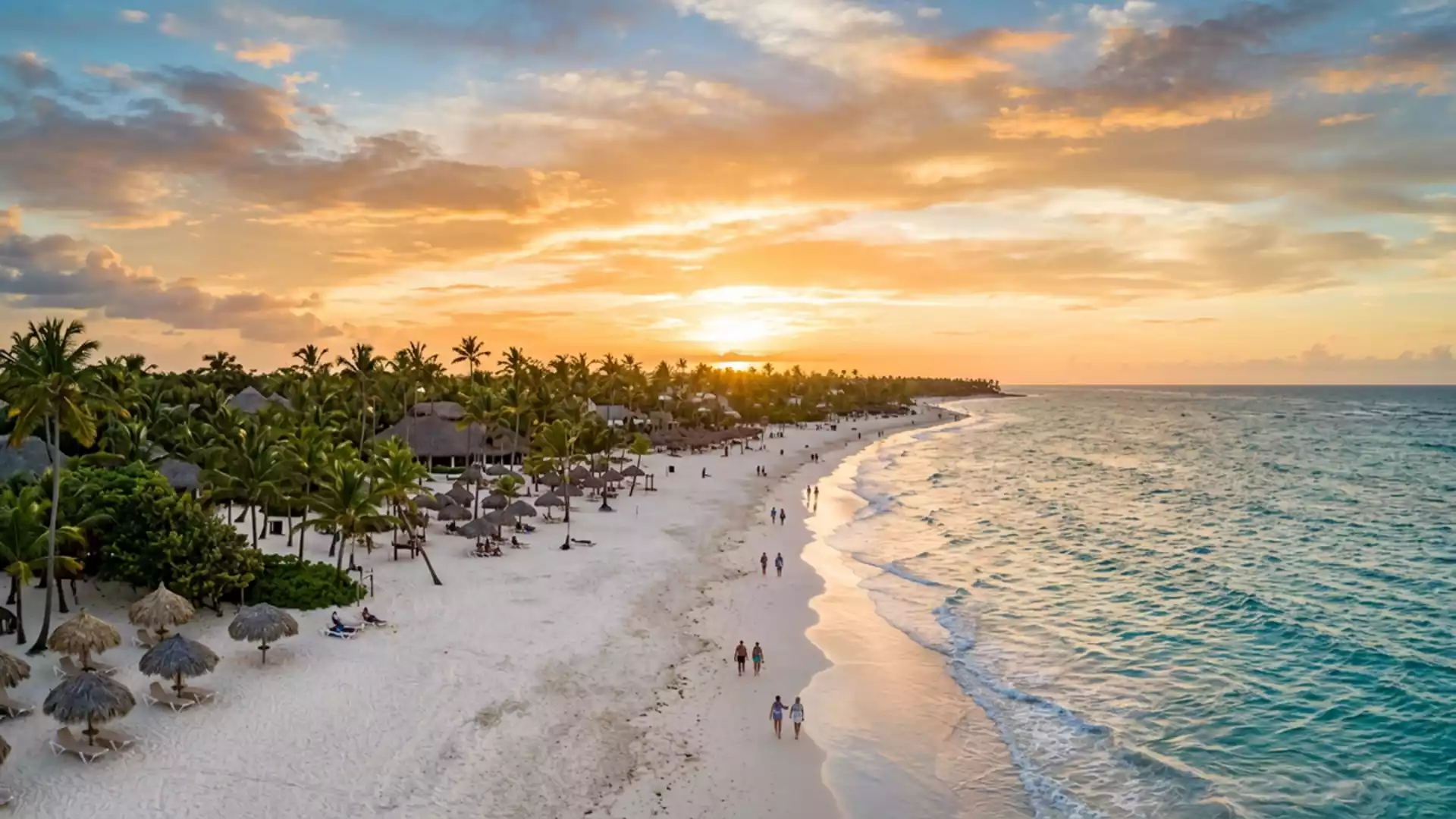
Punta Cana, located on the eastern tip of the Dominican Republic, is characterized by its picturesque sandy beaches that meet the Caribbean Sea and the Atlantic Ocean. The region is known for its distinct contrast, showcasing a thriving resort coastline alongside palm forests, freshwater lagoons, and designated ecological areas.
Where Punta Cana Meets Two Seas
Punta Cana is part of La Altagracia Province and falls within the Verón–Punta Cana Touristic Municipal District, which lies between the Atlantic and Caribbean waters. The area’s coastline features light-colored sand, shallow waters, and extensive rows of coconut palms. The beaches extend beyond the nearby Bávaro area, creating a lengthy shore rather than a dense urban waterfront. The inland region remains primarily coastal, dotted with roads, hotels, golf courses, and patches of tropical greenery.
From a Remote Coast to Punta Cana International Airport
The current identity of Punta Cana took shape in the late 1960s with developments initiated by Frank Rainieri and Theodore Kheel. The name “Punta Cana” is derived from the local cana palm, which is indigenous to the area. Punta Cana International Airport, which opened in December 1983, serves as the main air gateway, connecting the resort district to various international destinations. This airport is a key geographical feature, but Punta Cana’s allure is not limited to transportation; its hotels, residential areas, beaches, and ecological sites create a sprawling coastal landscape that integrates with the communities of Bávaro and Verón.
Forest Paths and the Ojos Indígenas Lagoons
The Ojos Indígenas Ecological Reserve offers a unique perspective of Punta Cana, covering 1,500 acres of tropical forest and freshwater lagoons that connect to the coastal environment. This reserve emphasizes environmental education and scientific research. Visitors can explore trails leading through the woods to freshwater pools, known locally as ojos, or “eyes.” The reserve is home to native plant species, a variety of birds, and reptiles, with its lagoons standing in sharp contrast to the open seas outside the coastal region. The name of the reserve reflects both the significance of water and the connection to Indigenous cultural heritage.
Why It Matters
Punta Cana is not only a top tourist destination known for its resorts but also embodies a rich blend of cultural influences, including Taíno, African, and Spanish heritages. The unique interplay of natural landscapes and cultural legacy is essential for promoting sustainable tourism while preserving the ecological integrity of the region.
