




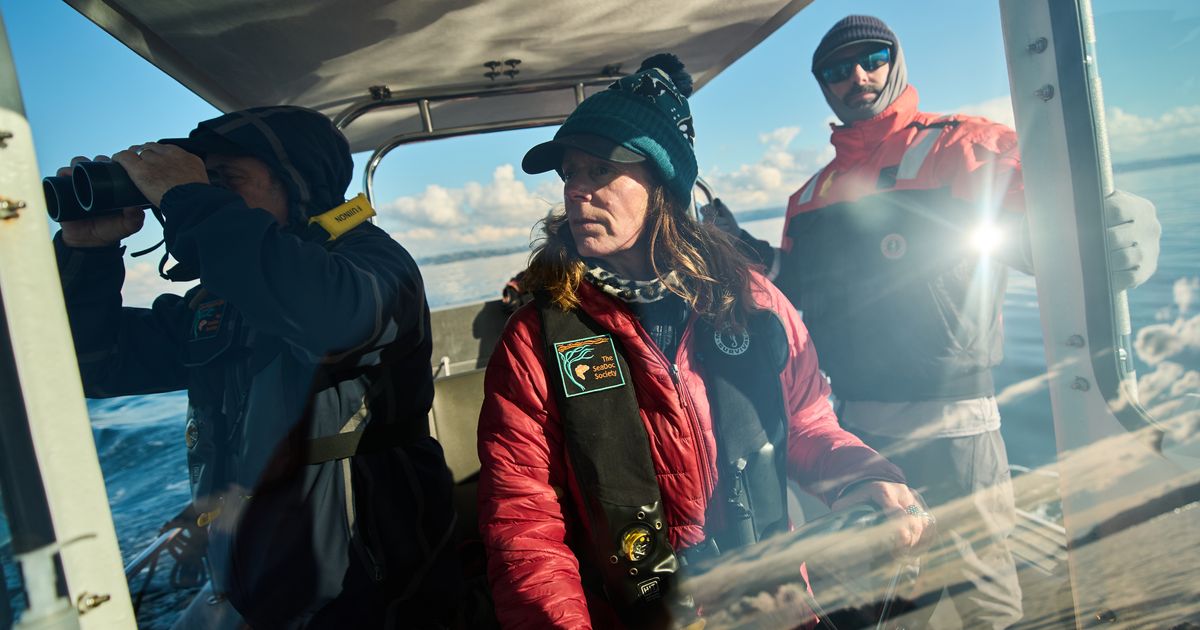
KINGSTON, Wash. — Each fall, Deborah Giles embarks on a quest to locate the Southern Resident killer whales, an endangered species whose numbers are declining despite conservation efforts. These orcas have recently shifted their hunting grounds and are now foraging for coho and chum salmon just north of Seattle, spending less time in their traditional habitat, the Salish Sea, which lies between Washington State and British Columbia.
This seasonal change has led to a collaboration between The SeaDoc Society and the San Diego Zoo Wildlife Alliance. The teams are utilizing drones equipped with petri dishes and microscope slides to collect droplets from whale spouts, while a specially trained dog searches for whale feces, essential for conducting health assessments on the 76 remaining Southern Resident orcas.
“They were here before us, long before us,” Giles said. “They’re a group of animals that are uniquely bonded to this place and to each other.”
Challenges in Food Sources and Research
Their primary prey, Chinook salmon, once thrived in the Pacific Northwest and averaged over 100 pounds. However, due to dam construction, overfishing, and urban expansion, their populations have plummeted, with current averages closer to 12.5 pounds. Giles noted these changes have drastically impacted the orcas’ ability to thrive.
The dwindling salmon have prompted the orcas to hunt in open ocean waters, making research more complex. Traditionally, these whales would gather around the San Juan Islands during summer months, but Giles now travels further south in the fall to gather research samples.
On a recent November outing, the team hastened to a location where orca sightings had been reported. James Sheppard, a drone pilot and senior scientist with the San Diego Zoo Wildlife Alliance, launched a drone to capture data from a male orca. The drone recorded the whale’s exhalation, while Sheppard scrambled to retrieve the sample promptly to maintain its integrity.
Despite challenging conditions, such as low visibility and unpredictable whale behavior, Sheppard noted that the orcas typically exhibit little concern for the drone. “To them, it’s just a strange seagull that’s been following them,” he said.
Following the drone work, Eba, an 11-year-old poop-sniffing dog, attempted to locate whale feces from the boat. Although she signaled a find, her handlers were unable to recover any samples that day.
Data Collection and Health Monitoring
Over the years, researchers have amassed hundreds of fecal and breath samples, which are analyzed for hormonal, bacterial, and genetic information at the San Diego Zoo Wildlife Alliance lab. This data contributes to detailed health profiles for each individual orca.
“If we need to intervene… we have that animal’s entire record right there,” Giles stated, emphasizing the importance of this information. Researchers have discovered a high rate of miscarriages among female orcas, coupled with a significant calf mortality issue, as evidenced by mothers observed with deceased young.
In contrast to the Southern Residents, Bigg’s killer whales are thriving in the same waters, preying on abundant sea mammals such as seals. These differing fates highlight the urgent need for action to restore salmon populations to support the struggling orca community.
Authorities have initiated measures to mitigate vessel noise, but Giles stresses that revitalizing salmon runs is essential, as the fish often swim north to Alaska, away from where orcas can hunt them. “It’s our job to turn back the clock,” she concluded.
