




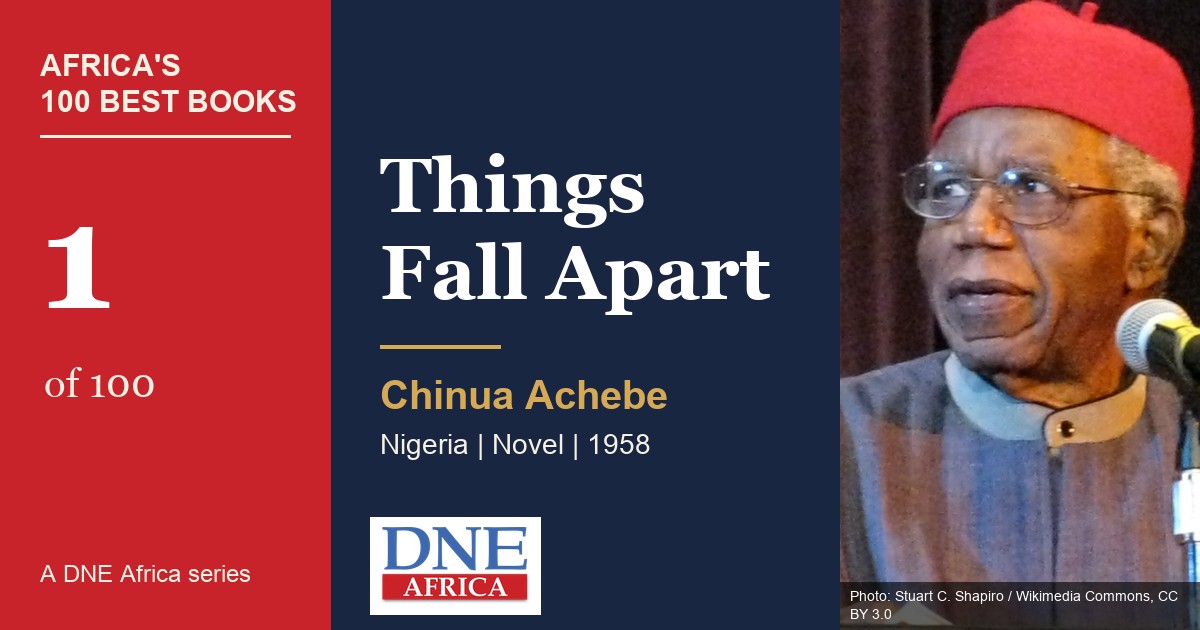
Chinua Achebe’s seminal 1958 novel, Things Fall Apart, which ranks as the top title in Africa’s 100 Best Books, is acknowledged globally but is notably absent from Nigeria’s school examination curriculum. The book has yet to be translated into Igbo, despite its significant impact on world literature.
Considered a cornerstone of African literature, Things Fall Apart has been credited with catalyzing Nigeria’s literary renaissance in the 1960s. The Man Booker International Prize jury in 2007 noted that Achebe’s works pioneered the modern African novel. More than 12 million copies have been sold since its release, as reported by NPR when Achebe passed away in 2013. The book’s title is derived from W.B. Yeats’s poem The Second Coming, and it prominently featured in the top 12 of the Africa’s 100 Best Books list compiled in 2002 by the African Studies Centre Leiden.
The novel narrates the story of Okonkwo, a renowned wrestler and warrior from the fictional Igbo village of Umuofia in late 19th-century Nigeria. The plot unfolds against the backdrop of British colonial expansion, highlighting the cultural disruptions that accompany this change. Achebe meticulously portrays an Umuofia rich in traditions and social structures before colonial influence takes hold, as seen through various events including weddings, funerals, and communal practices.
Critics from Nigeria, however, have often approached the text through a different lens, emphasizing its artistic merit rooted in Igbo oral tradition rather than solely as a commentary on colonialism. In a recent essay, Ikechukwu Emmanuel Asika of Anambra State University argues that the proverbs and humor in the narrative are intentional narrative techniques. The effectiveness of proverbs in the story illustrates how traditional wisdom informs community life and debate.
Despite its global recognition, Things Fall Apart is not featured in the literature exam texts for Nigeria’s senior school students from 2026 to 2030, according to lists from the West African Examinations Council (WAEC) and Nigeria’s National Examinations Council (NECO). Instead, students will study two other African novels, Pede Hollist’s So the Path Does Not Die and Elma Shaw’s Redemption Road.
The novel has also yet to find representation in its indigenous language, with Brittle Paper reporting no published Igbo edition, despite the existence of numerous translations in other languages. However, the book remains a popular choice among readers and educators within Nigeria.
In 2018, the 60th anniversary of Things Fall Apart was celebrated with events organized by the Christie and Chinua Achebe Foundation and the Association of Nigerian Authors. These included symposiums, stage readings, and writing competitions that spanned across major cities in Nigeria.
Achebe, born on November 16, 1930, in Ogidi, Nigeria, is recognized not only for his literary contributions but also for his role as a cultural ambassador. He passed away on March 21, 2013, in Boston, leaving behind a profound legacy that continues to inspire discussions about identity and storytelling.
