




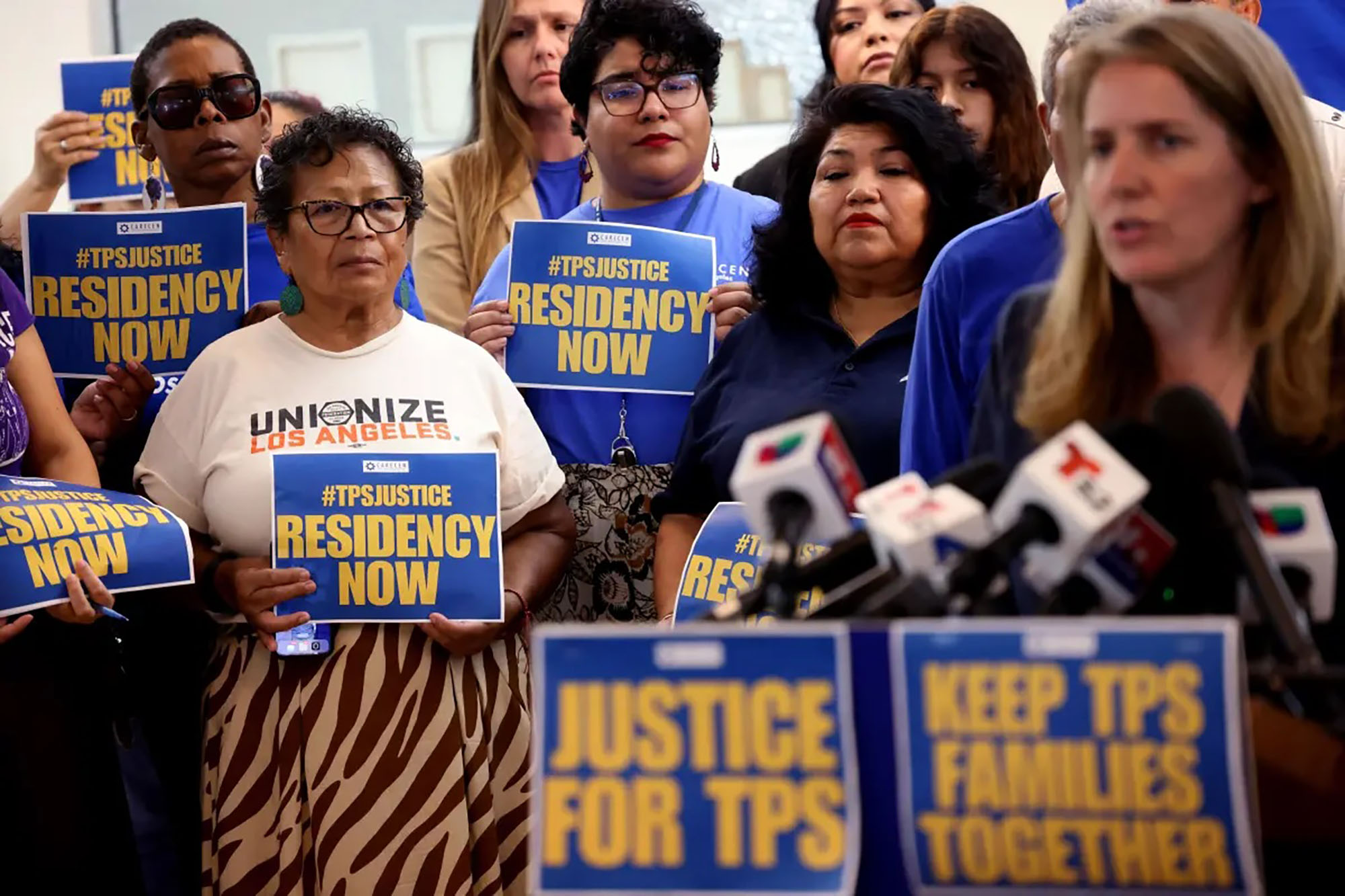
More than 170,000 Salvadorans received encouraging news last week when the Trump administration announced it would continue their humanitarian protections under the Temporary Protected Status (TPS) program. However, this decision has raised questions about potential inconsistencies in immigration policy, particularly in comparison to similar actions affecting other nationalities.
Decisions made earlier this summer to end TPS for approximately 350,000 Haitians have brought the spotlight on this issue. While Salvadorans have been granted continued protection, Haitians face deportation and return to a nation facing severe socioeconomic challenges. Reports indicate that TPS is intended to provide temporary relief for individuals from countries experiencing war, natural disasters, or conditions that threaten their safety. In the case of Salvadorans, the TPS designation has been in place since the 1990s and was reaffirmed after destructive earthquakes in 2001.
The Trump administration has already terminated TPS designations for 13 countries, including significant regions such as Afghanistan, Syria, and Nicaragua. Observers have noted that while living conditions in El Salvador have significantly improved—with homicide rates decreasing and living standards bettering—Haiti remains largely unstable, controlled by criminal gangs and marked by dire humanitarian conditions.
Speculation exists regarding the reasons behind this selective application of TPS protections. Analysts suggest the close political alliance between Salvadoran President Nayib Bukele and former President Donald Trump may be a factor. Bukele has supported U.S. policy by accepting deported Venezuelans and engaging in actions that align with U.S. immigration strategies, including taking those deportees to detention facilities with reports of human rights abuses.
Despite the Department of Homeland Security maintaining TPS for Salvadorans for now, uncertainty lingers as no formal extension has been announced. The department has indicated more information will be shared “at an appropriate time.” This leaves many Salvadorans, some of whom have lived in the United States for decades, unsure of their future. Many have established roots, built businesses, purchased homes, and raised families in the U.S., making the prospect of returning to El Salvador fraught with difficulty.
The ongoing situation reflects broader concerns about the TPS program, which is meant to be a temporary measure that does not provide a path to permanent residency or citizenship. Critics argue that extending TPS indefinitely contradicts its intended purpose and adds further complexity to U.S. immigration policies.
Why It Matters: The continuation of TPS for Salvadorans amid the termination for Haitians illustrates potential inconsistencies in U.S. immigration policy. As many Salvadorans face uncertainty about their status, the broader implications for TPS and immigration reform remain significant, highlighting the need for a reassessment of established practices.
