




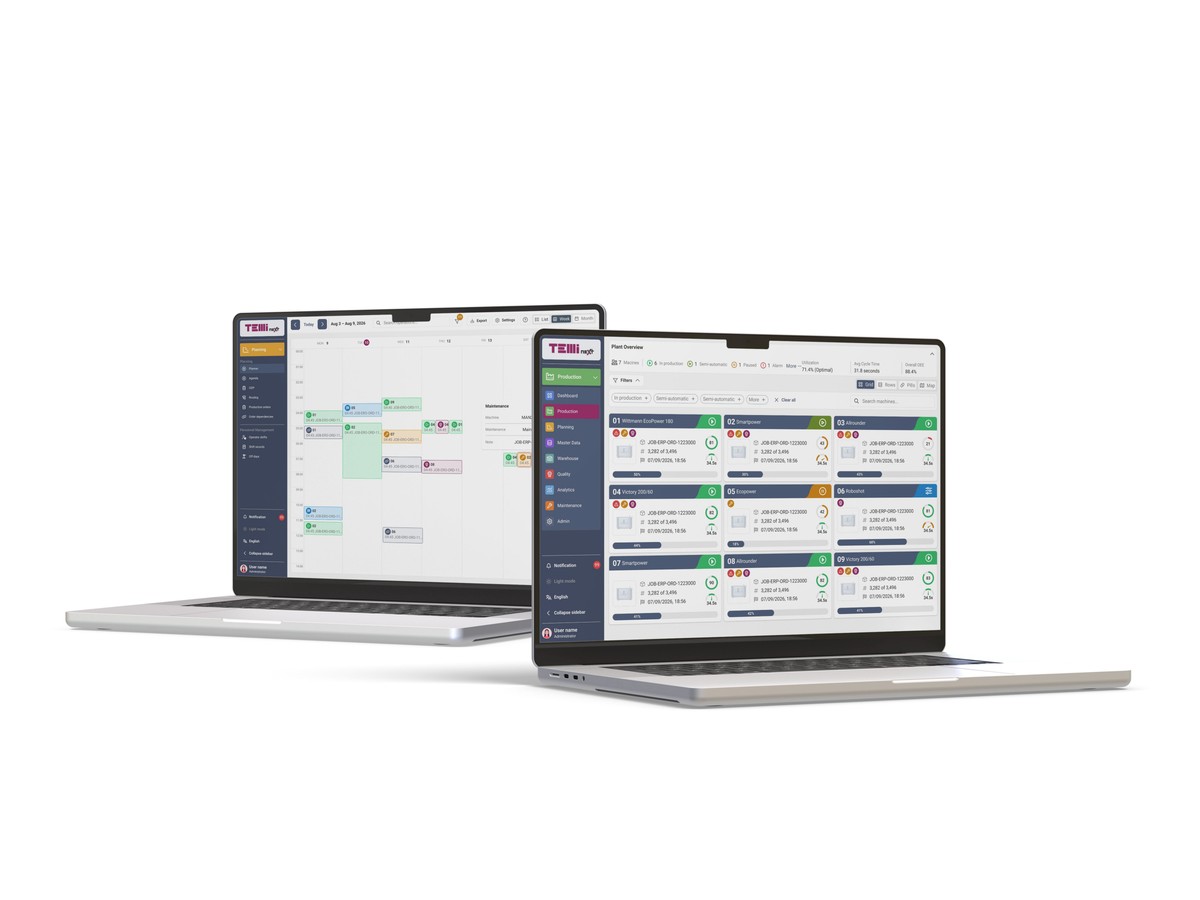
The Wittmann Group introduced its TEMI Next Manufacturing Execution System (MES) at the Fakuma 2026 trade fair. This new platform supports artificial intelligence and is designed to map all processes within a production facility. For the first time, Wittmann is offering TEMI Next as a Software as a Service (SaaS) solution through a subscription model, providing users with investment security and future-proofing, according to the company.
Wittmann stated that the efficacy of artificial intelligence relies on the quality of data input, and TEMI Next was designed from the ground up to cater to both current and future AI applications. The MES platform can track injection molding as well as other production processes in a unified system. While the previous version supported various injection molding machines through Euromap interfaces and OPC UA, the new version significantly increases the number of protocols supported, allowing integration of assembly processes, filling and packaging systems, and components from multiple suppliers.
User-friendly design is a key feature of TEMI Next, which includes a completely revamped user interface with role-based views. The system provides real-time data access without requiring users to refresh their screens. Its intuitive processes facilitate quick productivity for new employees and individuals transitioning from other fields, and it offers multilingual support, which benefits international teams.
The platform also incorporates an integrated energy management system. Utilizing the energy module of Wittmann’s iMAGOxt consumption management software, TEMI Next allows for detailed calculations of energy consumption and carbon dioxide emissions at the machine, part, or lot level. It records and analyzes energy usage along with process and quality data, providing a comprehensive view of production costs that can assist in unit cost calculations. Furthermore, TEMI Next can integrate with existing enterprise resource planning (ERP) systems, such as SAP or Odoo.
Wittmann’s subscription model aims to lower investment costs, as users are charged based on actual usage. This model ensures continuous access to the latest software version, with centralized updates, maintenance, and enhancements. Additionally, the approach reduces the burden on in-house IT departments by eliminating the need for on-site installations and local maintenance.
