




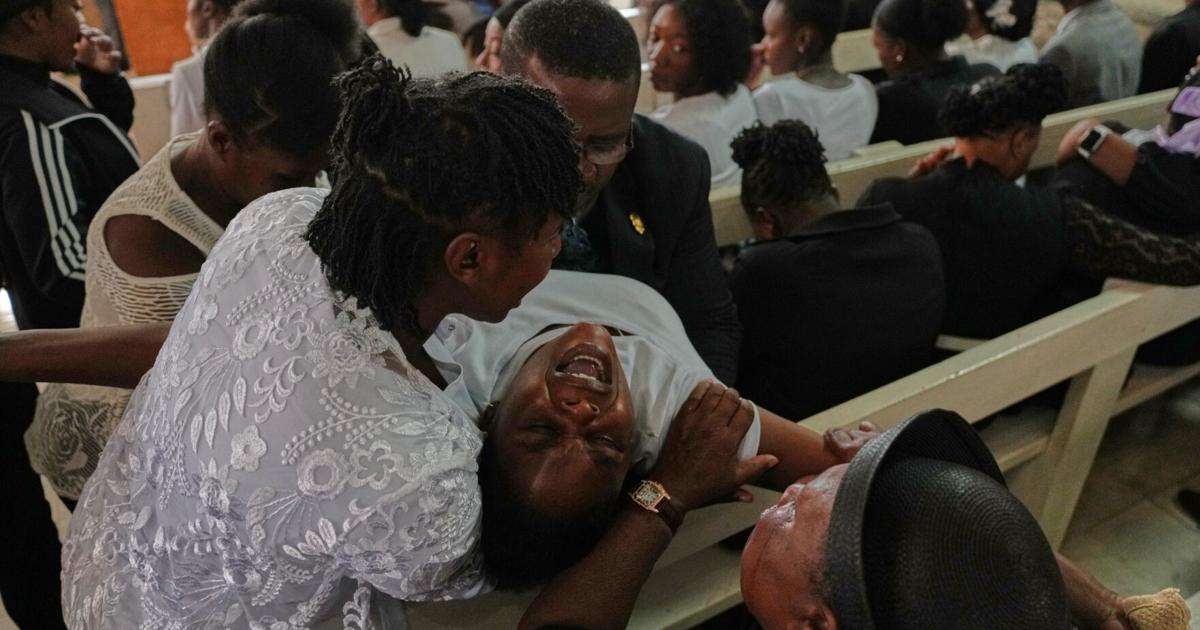
PORT-AU-PRINCE, Haiti — On a somber Wednesday, over 100 mourners gathered for funerals at a church in Kenscoff, a mountainous area near Haiti’s capital, in memory of five family members who lost their lives in a violent gang attack. The recent violence claimed the lives of more than 30 individuals, marking a significant escalation of gang-related activities in the region.
Community Grieves Amid Rising Violence
The funerals were held for two brothers and three cousins, whose deaths have drawn attention to the deteriorating security situation in Haiti. This incident, part of a broader pattern of gang violence, has devastated local communities and evoked widespread grief.
Officials have expressed growing concern about the prevalence of gang attacks, which have intensified in recent months, causing fear and instability among the population. The violence is seen as a reflection of ongoing political and social turmoil in the country.
Witnesses described the harrowing scene at the church, where community members came together to honor the deceased. The funerals served not only as a tribute but also as a reminder of the urgent need for effective measures to address the rampant violence and restore safety in the region.
Haitian authorities continue to grapple with the challenge of controlling gang activities, which have flourished due to a combination of factors, including economic hardship and weakened law enforcement. The international community has also highlighted the necessity of collaborative efforts to stabilize the situation and support the beleaguered population.
As mourners reflected on the lives lost, many expressed hope for a future free from the terror of gang violence, while also recognizing the daunting obstacles that lie ahead for the community and the nation as a whole.
Why It Matters
The surge in gang violence in Haiti not only leads to tragic loss of life but also undermines efforts to achieve stability and peace in a country already facing significant socio-economic challenges. Understanding the dynamics of this violence is crucial for fostering effective humanitarian responses and ensuring the safety of citizens.
