




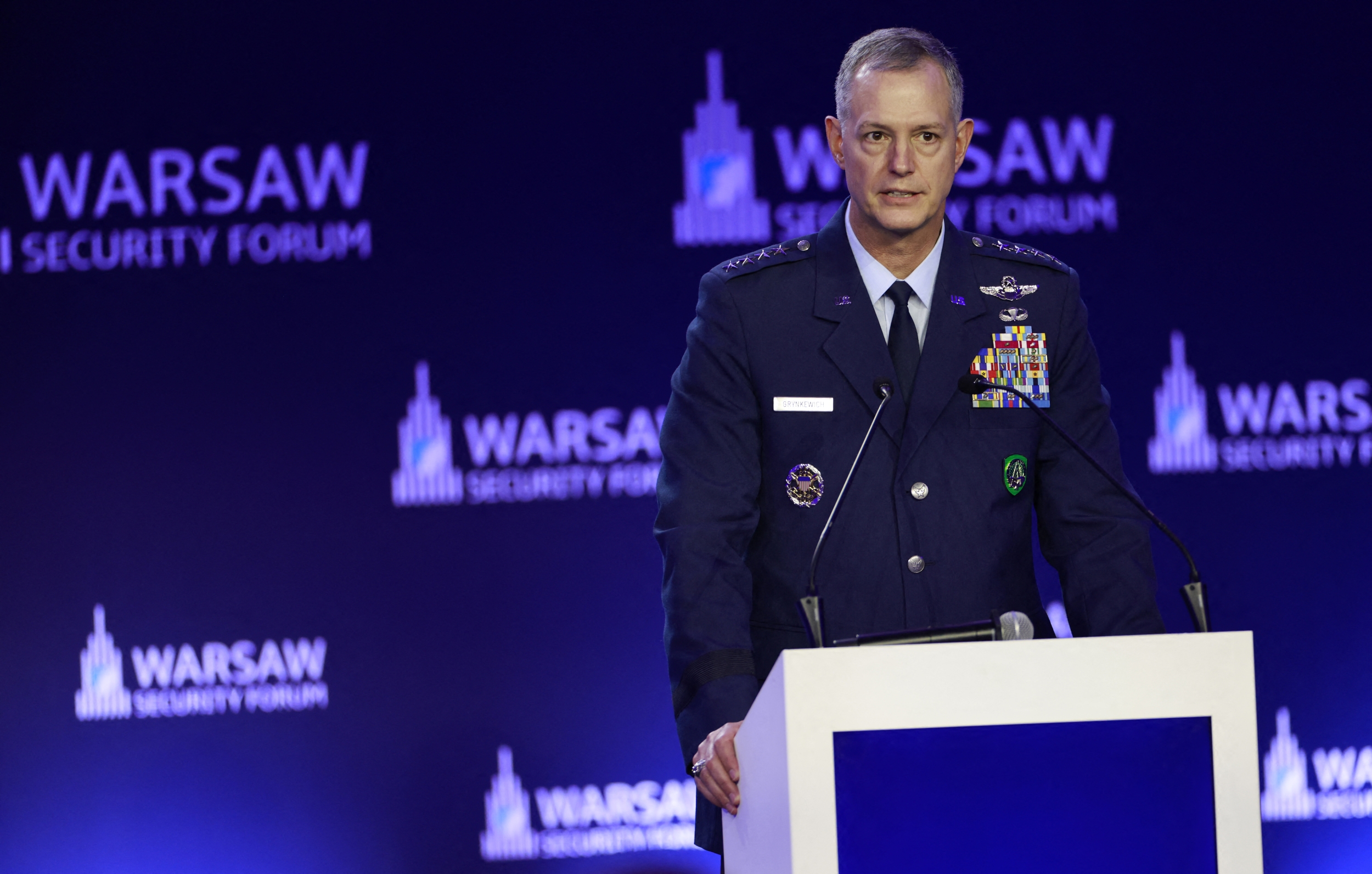
NATO’s Supreme Allied Commander in Europe, General Alexus Grynkewich, unveiled the alliance’s “Theory of Victory” strategy at the Warsaw Security Forum, outlining a framework aimed at deterring potential Russian aggression by making any attack on NATO territory seem unwinnable. This initiative is seen as a calculated move to communicate to Moscow that the costs of military confrontation would outweigh any perceived benefits.
The presentation of this strategy comes amid a notable increase in Russian hybrid attacks in Europe. An Associated Press tracker noted that incidents rose sharply from 59 in March 2025 to more than 200 presently. Denmark’s military intelligence has warned that this campaign is expected to intensify, potentially involving increased cyberattacks targeting critical infrastructure.
Despite the heightened threat levels, top officials from various NATO member countries emphasized that there is no current intelligence indicating an imminent Russian attack. Norway has declared 2026 the year of “total defense,” mobilizing all sectors of society to prepare for crises. This includes potentially reinstating requirements for new buildings to have air raid shelters, a practice discontinued in 1998. In Sweden, military preparedness exercises have involved over 18,000 troops, highlighting the integration of NATO’s operational capabilities.
NATO’s Strategy Presented Amid Rising Tensions
The Warsaw Security Forum, which concluded on October 12, focused on the evolving security landscape in Europe, underscored by Grynkewich’s strategic release. He explained that the strategy draws on lessons from the ongoing conflict in Ukraine, integrating advanced technologies like drones and artificial intelligence into NATO’s already formidable airpower capabilities. Grynkewich confirmed NATO’s ability to respond to threats swiftly, reinforcing the alliance’s readiness.
Meanwhile, Russian Foreign Minister Sergei Lavrov dismissed NATO’s announcements, suggesting that the escalating military rhetoric could destabilize the geopolitical framing in Europe. He characterized the response from Western nations as overly theatrical, indicating the potential for an ongoing cycle of provocation and escalation.
Plans for Enhanced Civil and Military Preparedness
NATO Secretary-General Mark Rutte highlighted the alliance’s robust plans to tackle the increase in hybrid warfare tactics, which encompasses sabotage and drone incidents. These plans are being coordinated closely with EU foreign policy chief Kaja Kallas, focused on integrating military strategies with economic sanctions against Moscow. Rutte noted that the rise in hybrid incidents could signify Russia’s weakening position in Ukraine, advocating for continuous support for Ukraine as an effective countermeasure.
The landscape of preparedness is particularly evident in the Nordic countries, where Norway and Sweden are making significant changes to military and civil defense structures. Sweden, for example, has implemented civil defense planning directives to ensure burial space for potential casualties during crises, demonstrating a serious commitment to preparedness.
While various preparations are underway, leaders have cautioned against conflating these initiatives with an immediate war threat. Officials from Grynkewich to Rutte have reiterated that current assessments do not predict an imminent conflict, with forthcoming actions being seen more as deterrents rather than responses to active threats. As European nations navigate these challenges, the comprehensive restructuring across civil and military sectors marks a critical evolution in continental defense strategy.
