




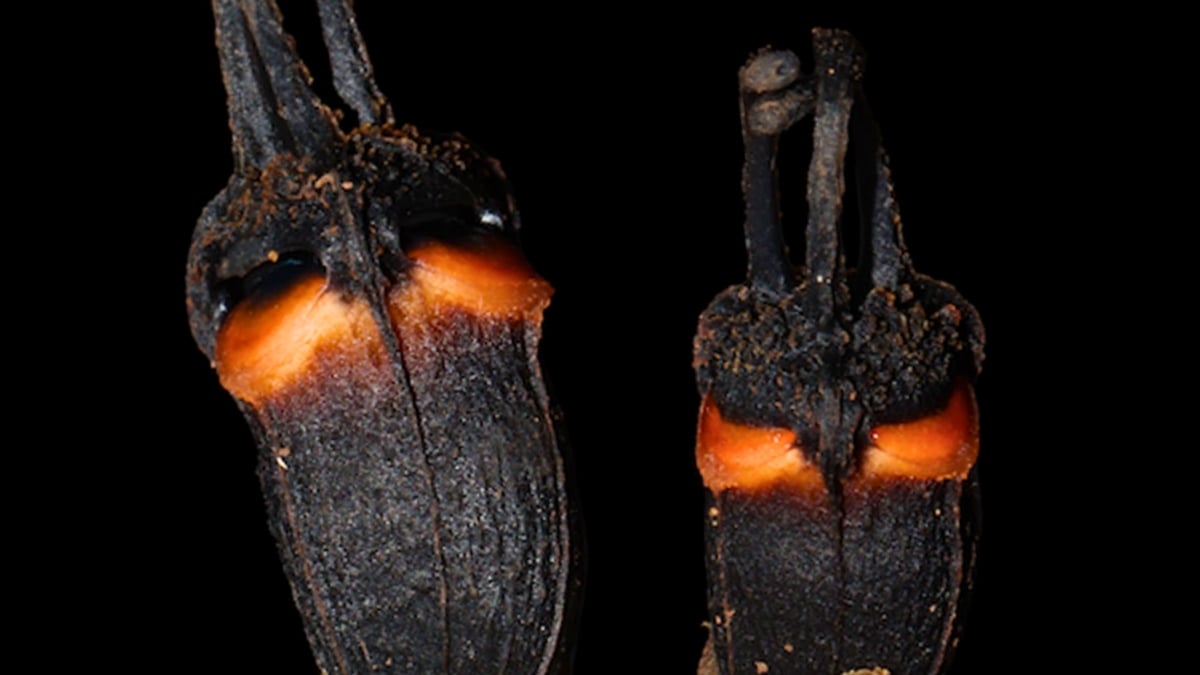
A previously unknown plant species has been discovered on the forest floor of Thailand, challenging established botanical knowledge. The plant, named Thismia daemona, or the “devil flower,” lacks chlorophyll and does not require sunlight for sustenance, a departure from typical plant behavior.
Discovery and Characteristics of the Devil Flower
Scientists from Chulalongkorn University and Prince of Songkla University identified T. daemona during a study published in the scientific journal PhytoKeys. The species was found in May 2025 in Thong Pha Phum National Park, located in western Thailand, at elevations between 930 and 970 meters (approximately 3,000 feet).
This small, nearly black flower can reach heights of about 12.5 centimeters (5 inches) and is characterized by three elongated appendages resembling horns and reddish-orange spots that give an impression of glowing eyes. Notably, the plant survives without developing chlorophyll or undergoing photosynthesis, relying instead on an underground fungal network for nutrients
.
Researchers describe the plant’s unique method of obtaining nutrients as mycoheterotrophy. By forming a symbiotic relationship with fungi in the soil, T. daemona is able to thrive in the shaded, leaf-litter-rich environment of the forest floor. It primarily grows beneath fallen leaves, with its flowering phase occurring above ground for short periods of time.
The discovery of T. daemona adds to the existing biodiversity of Thailand, increasing the number of known Thismia species in the nation from 15 to 16. This species is part of a smaller group known as Geomitra, which prior to this finding, had only been documented in parts of Malaysia, Borneo, and Sumatra.
While this plant thrives in a protected national park, concerns about its future arise due to its restricted population, consisting of fewer than 50 individuals within an area smaller than 0.05 square kilometers (0.02 square miles). Although the area is within a national park, foot traffic from tourists poses a risk of damage to the delicate microhabitat it depends upon.
Researchers have tentatively classified T. daemona as Critically Endangered under the criteria set by the International Union for Conservation of Nature. Ongoing efforts to raise awareness of local biodiversity and promote sustainable tourism may help protect this intriguing plant from potential threats.
Why It Matters
The finding of T. daemona not only enriches the biological tapestry of Thailand but also underscores the importance of conservation efforts in frequently visited natural areas. The discovery highlights how new species may still be hidden in plain sight, emphasizing the need for continued exploration and protection of natural environments.
