




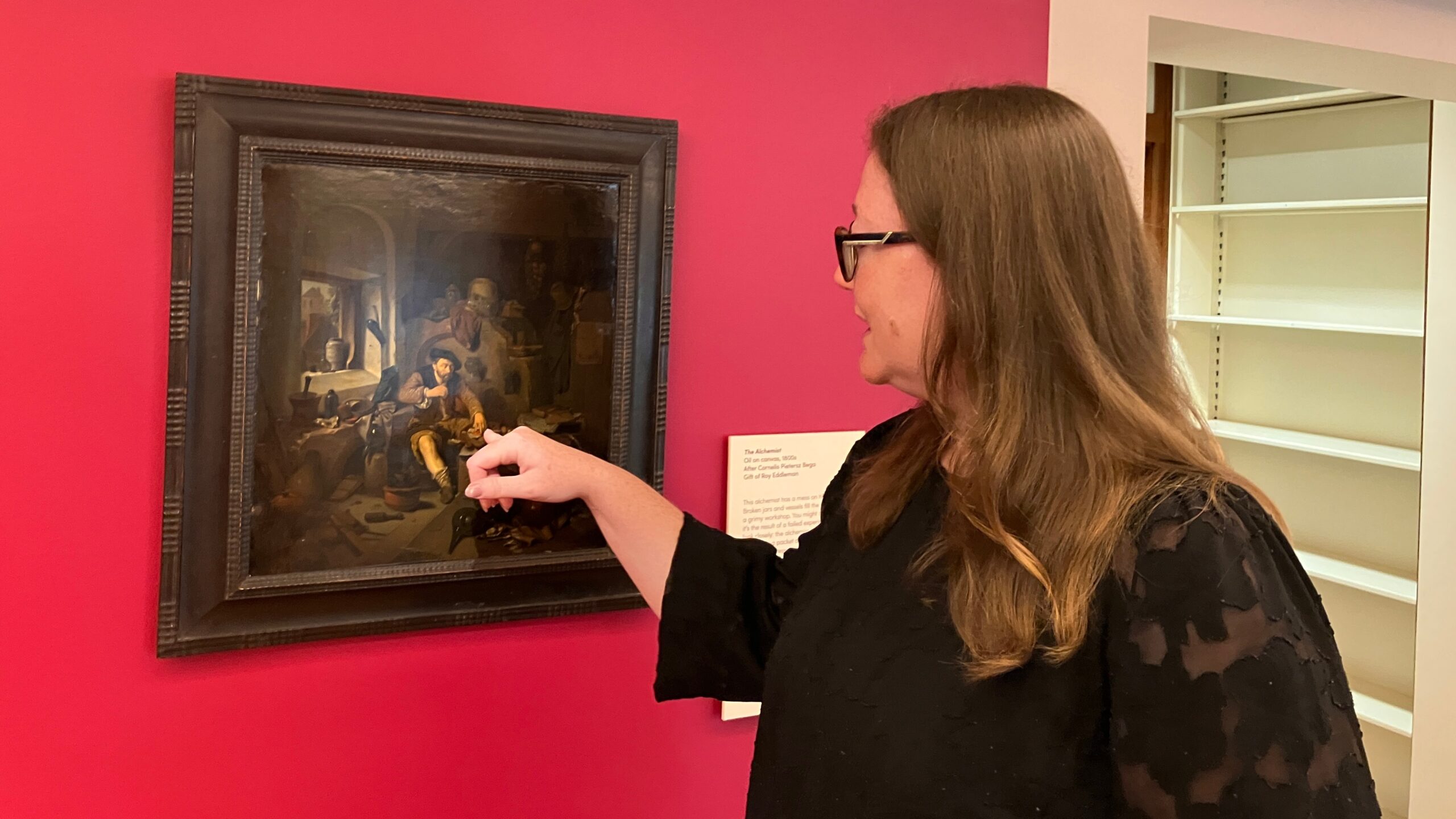
A new permanent exhibit at the Science History Institute in Philadelphia, titled “Fire and Gold: The Art of Alchemy (1450-1850),” explores the historical significance of alchemy and its contribution to the development of modern science. The exhibit features works and artifacts that illustrate how alchemists experimented with substances to create new materials, medicines, and colors.
One highlight is the painting “The Alchemist,” created in the 1800s by Cornelis Pietersz Bega. The artwork depicts a disheveled man in a dimly lit workshop surrounded by broken vessels and shards of glass, intently examining a handful of bright red powder. According to curator Elisabeth Berry Drago, the powder likely represents pigments crafted through the alchemical process.
Drago emphasized the complexities of alchemy and its practical applications, noting the creation of vermilion, a vivid red pigment. “Famously, the color vermilion, which is this beautiful, powerful, potent red, yes, it’s made by alchemy,” she explained. “It’s found in nature as the mineral cinnabar, but if you combine mercury and sulfide in a jar, if you superheat it, it sublimes and it becomes vermilion.” This process showcases the sophisticated techniques used by alchemists, which Drago argues are foundational to chemistry as we understand it today.
While many associate alchemy with the quest to transform base metals into gold, Drago clarified that the scope of alchemy is much broader. “Alchemy is, essentially, early modern chemistry. It’s searching for an understanding of matter,” she stated. This historical narrative highlights how alchemists formulated hypotheses, conducted experiments, and encouraged reproducibility in their discoveries.
The exhibit aims to reshape misconceptions about alchemy, illustrating its role in laying the groundwork for future scientific advancements. Visitors to the Science History Institute can engage with interactive displays and learn more about the legacy of these early practitioners of science.
