




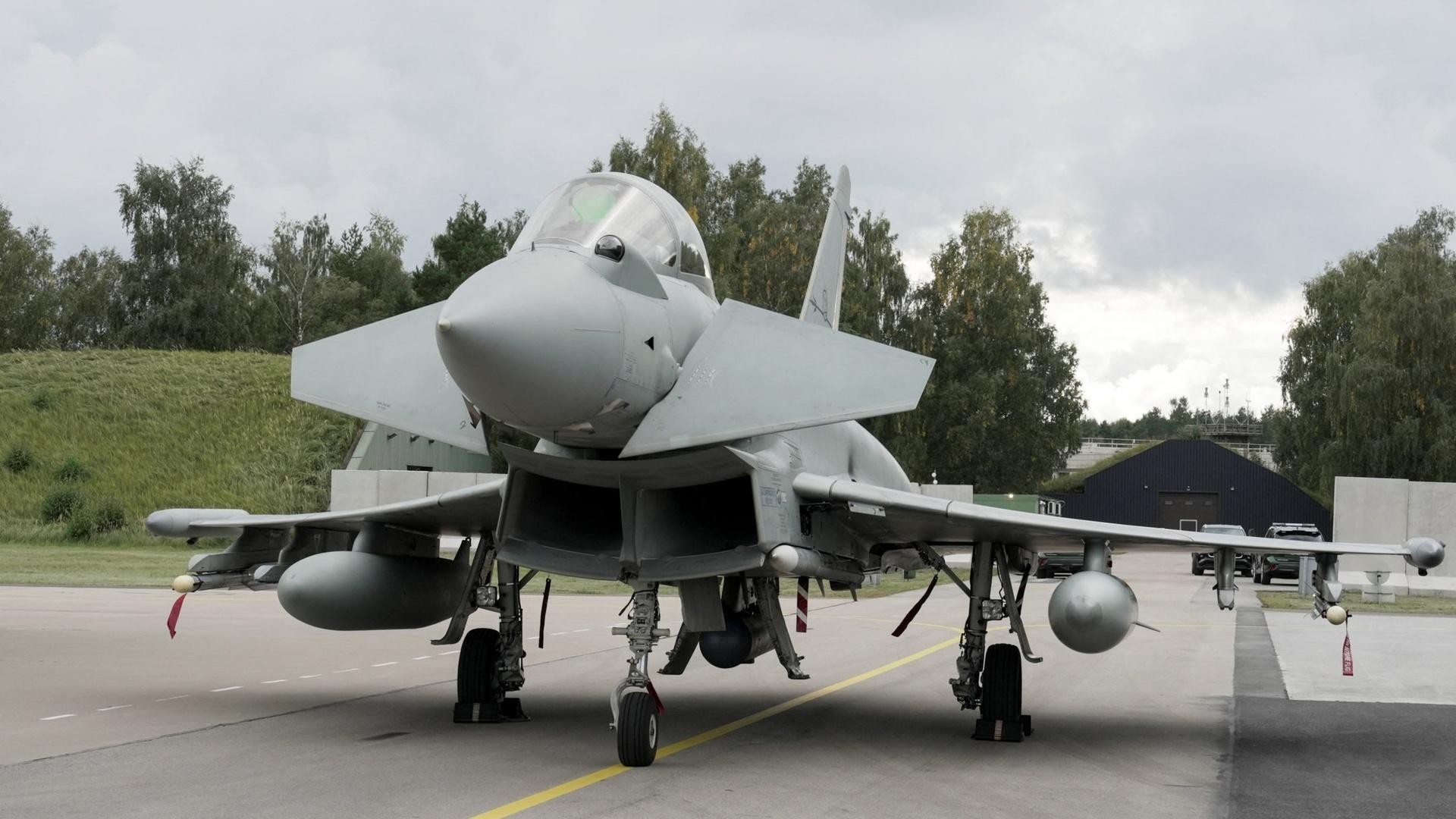
A NATO jet shot down a drone in Lithuanian airspace today, marking a significant incident amid ongoing tensions between Russia and NATO member states. The exact origin of the drone remains undetermined, but this event is part of a larger pattern of drone incursions and sabotage that have been reported in northern NATO nations.
The drone was intercepted near the village of Pratkunai, approximately 60 miles west of Vilnius, Lithuania’s capital. This area is strategically positioned between Russian-supported Belarus and Russia’s Kaliningrad region, making it a vital point for NATO’s defensive posture against Moscow. According to Lithuanian defense authorities, the drone was tracked for about half an hour before it was destroyed by the Italian air force, and there are claims that it may have been armed with explosives.
Lithuanian officials are currently investigating the circumstances surrounding the drone’s flight, with Laurynas Kasciunas from the Lithuanian National Security and Defense Committee stating that it is unclear whether the drone was a diverted aircraft or a deliberate provocation. Concerns are heightened as similar incidents have been reported in other Baltic nations, including Estonia and Latvia, where NATO jets have previously intercepted drones suspected of being Ukrainian misfires.
The geopolitical situation has become even more complex with claims from NATO officials of increased Russian provocations, which include incidents of sabotage and surveillance. Further straining relations, a Russian warship reportedly fired flares near a Danish military helicopter in the Baltic Sea, which Danish officials described as an act of intimidation.
Kaja Kallas, the European Commission’s Foreign Affairs High Representative, characterized recent actions by Russia as intentional and dangerous, emphasizing that European nations must respond with resolute measures. She remarked that the confrontations reflect a deliberate strategy by the Russian government to test NATO’s resolve and create divisions among its members.
This pattern of aerial incursion is viewed as part of a broader campaign by Russia, according to former U.S. Ambassador to NATO, Douglas Lute. He noted that these actions could lead to significant miscalculations or unintended conflicts. The situation underscores the ongoing risks posed by hybrid warfare tactics employed by Russia, aimed at destabilizing NATO unity.
Why It Matters: The recent drone incident in Lithuania is a stark reminder of the escalating tensions between NATO and Russia, particularly in light of the ongoing conflict in Ukraine. This situation illustrates the challenges faced by NATO member states in ensuring their national security amidst increasing provocations, emphasizing the critical need for vigilance and collaboration within the alliance.
