




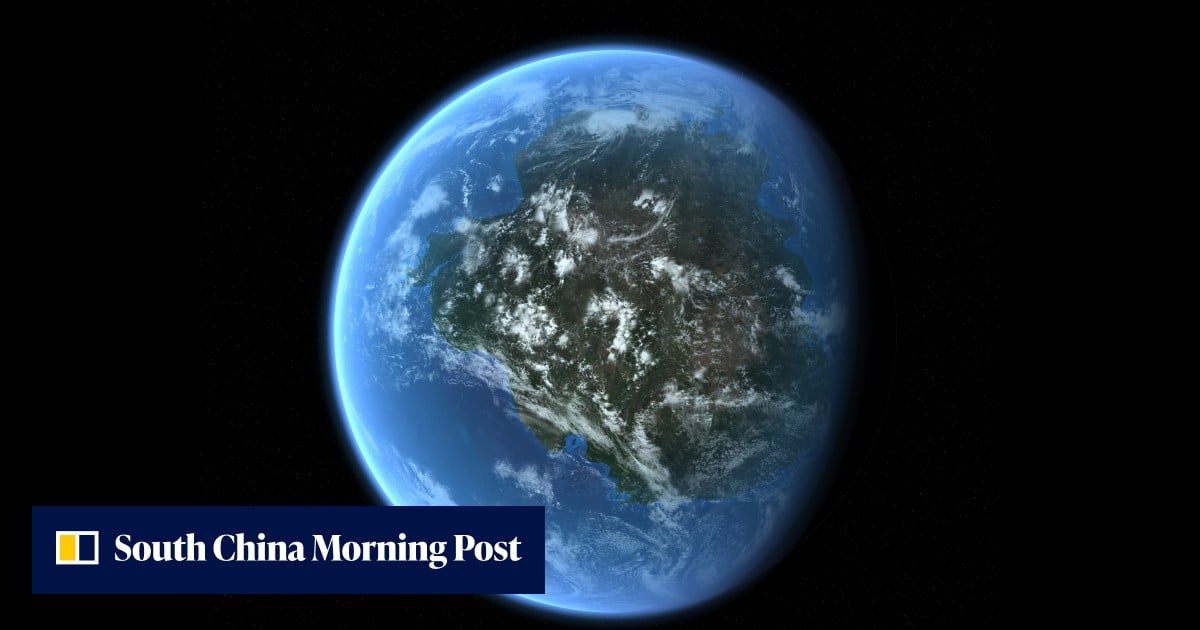
Researchers have uncovered significant evidence of a vast ancient land mass known as Gondwana, revealing that it once comprised around 80% of the Earth’s crust approximately 500 million years ago. This discovery, led by an international team of scientists from China, Australia, and a non-profit research institution in China, highlights the extensive size of Gondwana, which was much larger than previously understood.
Details of the Discovery
The findings were published this month in the peer-reviewed journal Science Advances. The study indicates that remnants of Gondwana are buried deep beneath the modern continents, providing insights into the geological history of the Earth. Researchers assert that the geological processes associated with Gondwana played a critical role in creating conditions that contributed to the Cambrian explosion, a pivotal period in Earth’s history marked by a rapid diversification of life.
This collaborative research involved the participation of the Chinese Academy of Geological Sciences, Curtin University in Australia, and Zhejiang Lab. The group’s work further elaborates on the importance of Gondwana in our understanding of Earth’s geological past and the evolution of life on the planet.
The study adds to the growing body of evidence regarding the distribution and impact of ancient supercontinents on Earth’s biosphere and geology. Through this exploration, scientists continue to piece together the complex history of terrestrial formations that have shaped the present-day continents.
Why It Matters
The discovery of the Greater Gondwana underscores the significance of ancient land masses in understanding Earth’s geological transformations and biological evolution. Insights from this study may enhance our knowledge of Earth’s developmental history and contribute to ongoing discussions regarding plate tectonics and environmental changes over millions of years. This information is pivotal for both geology and biology, providing a clearer picture of how life adapted in response to large-scale environmental conditions.
