




After a prolonged period without updates, NASA’s Perseverance rover has resumed regular communications about its explorations on Mars, specifically focusing on the “Lac de Charmes” area. This region, characterized by its valleys and ridges located west of the Jezero crater rim, offers a unique opportunity to study some of the oldest rock formations encountered by the rover. These rocks date back to a time when Mars was still forming, experiencing extensive asteroid impacts, thus providing vital insights into the early history of the planet and the evolution of rocky planets within the solar system.
### Scientific Findings from Lac de Charmes
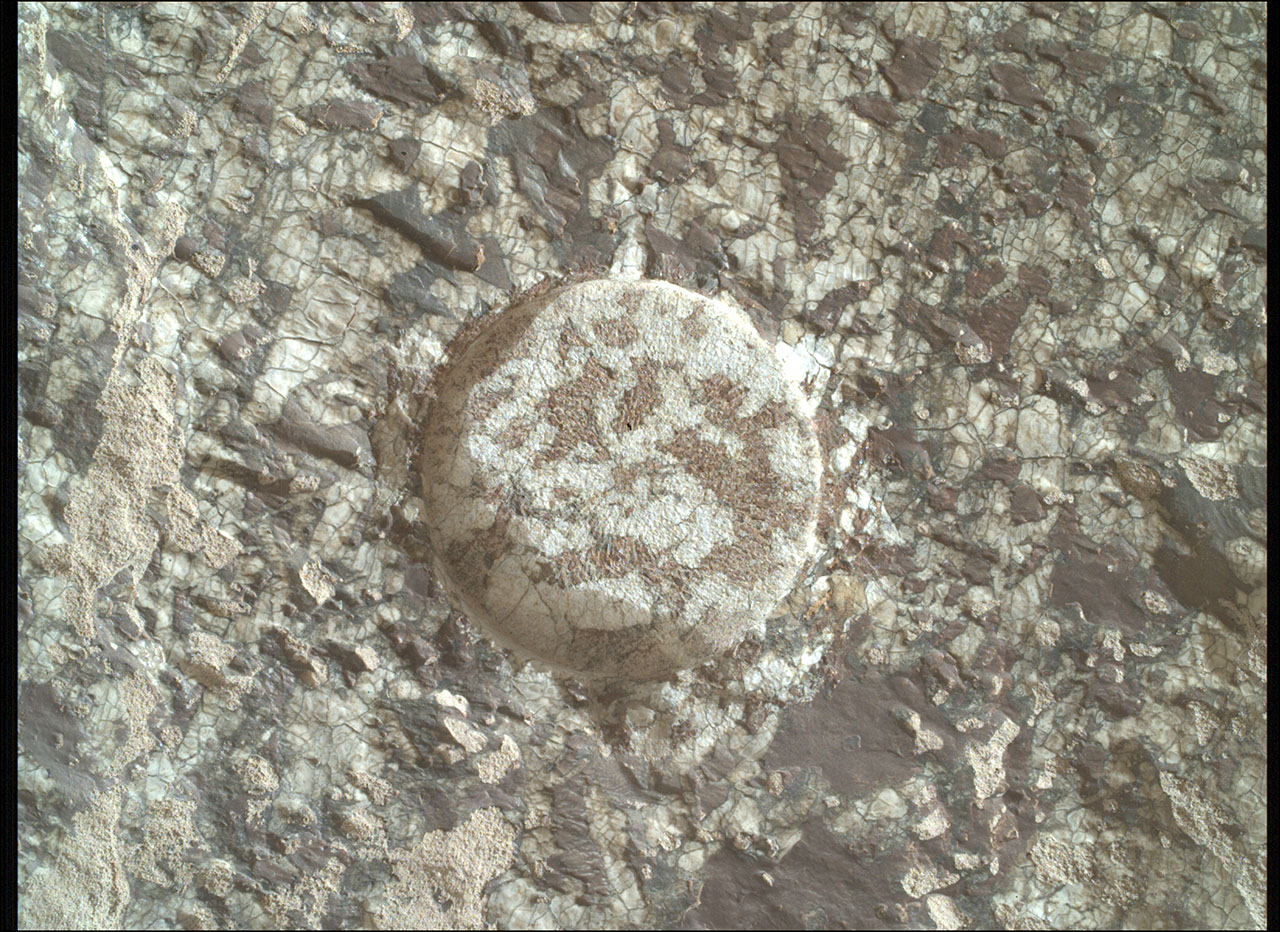
The Mars exploration team has prioritized a thorough examination of the ancient terrain of Lac de Charmes before selecting specific rocks for sampling. According to the latest reports, Perseverance has followed a winding path through this area, which has allowed scientists to better understand the geological processes that shaped it. During its explorations, the rover has established 13 abrasion patches on various rocks of interest, yielding a wealth of scientific data. Preliminary investigations hint that many of these rocks are igneous in nature, formed from cooled lava or magma, while others show characteristics indicative of impactite formations resulting from violent cosmic events.
Advancements in technology have aided the rover’s explorations. A new algorithm, utilizing a processor initially designed for the Ingenuity helicopter, has enhanced Perseverance’s navigational capabilities, allowing for longer and more precise drives across the Martian surface.
As Perseverance approaches the conclusion of its exploration in the Lac de Charmes region, it has recently set its sights on an area known as “Idubi.” This location features an abundance of light-toned boulders observed from afar. The initial investigations in Idubi have proven fruitful, with diverse rock textures and compositions identified. One particular light-toned boulder, designated “Badger Peak,” showcased a striking light-and-dark pattern. However, attempts to sample this boulder were unsuccessful due to its substantial hardness. The science team plans to locate a similar rock for sampling efforts.
In addition, Perseverance has paused to examine an intriguing outcrop termed “Gardenia,” which appears to be a breccia—a rock composed of fragments from various older rocks. The rover is scheduled to initiate another abrasion test this week to gather further details about this geological feature.
### Why It Matters
The ongoing investigations by the Perseverance rover are pivotal for enhancing our understanding of Mars’ geological history and the fundamental processes that shape planetary bodies. The insights gained from regions like Lac de Charmes and Idubi may hold keys to deciphering not only the past of our neighboring planet but also the broader narrative of rocky planet formation in our solar system.
