




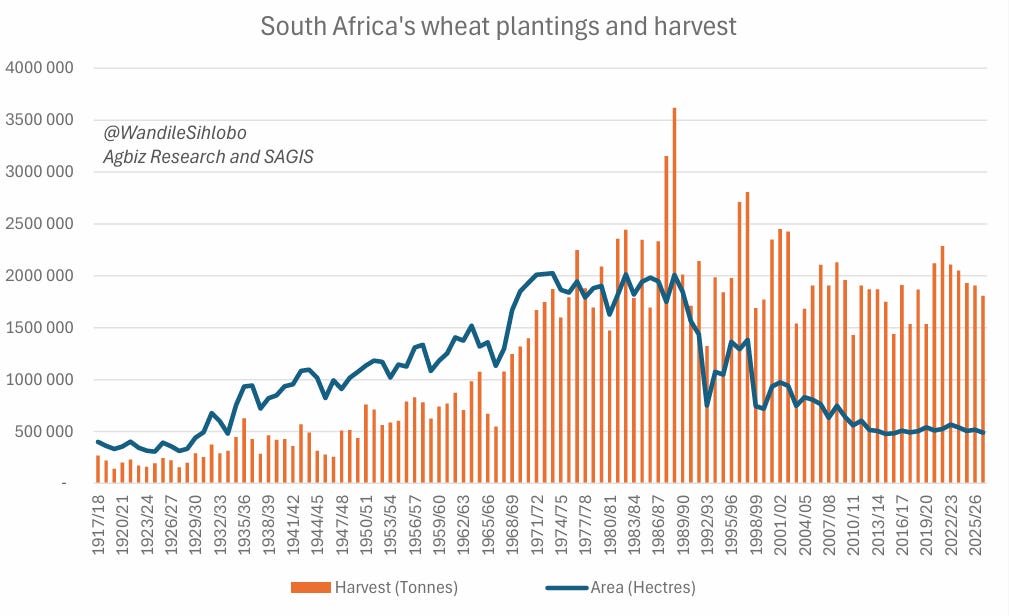
South Africa is poised to increase its wheat imports for the 2026-27 season due to a projected decline in domestic production. According to the latest estimates from the Crop Estimates Committee, the country’s wheat harvest is expected to drop by 5% to approximately 1.81 million tonnes, marking the lowest output in eight years. The estimated total production across all winter crops is 2.67 million tonnes, representing a 2% increase from the previous year.
Key to this decline is a reduction in the area planted, coupled with recent dry conditions affecting yields, particularly in the Western Cape region. As a result, authorities foresee that imports will rise to around 2.0 million tonnes, compared to 1.8 million tonnes imported during the previous season. The full impact of the growing conditions, however, may still fluctuate as the season progresses, with several more assessments scheduled.
While South Africa faces challenges on the local front, global wheat supplies remain relatively stable. The International Grains Council recently forecasted global wheat production for the 2026-27 season at 820 million tonnes, despite a slight year-on-year decrease of 3%. This figure, however, is notably above the long-term average of approximately 790 million tonnes.
The primary short-term challenge facing the market continues to be disruptions in shipping infrastructure stemming from the ongoing conflict in Ukraine, creating upward pressure on prices.
H2: 2026-27 Season Challenges for South Africa’s Wheat Market
The anticipated challenges for South Africa’s wheat production may have implications for both local consumers and international markets. As the government adjusts its import strategy to compensate for diminished local harvests, the country will continue to rely on external sources to meet domestic demand. Meanwhile, producers and policymakers alike will be assessing potential impacts on food prices and supply chains in light of these developments.
Why It Matters
Ensuring food security is critical for South Africa, and fluctuations in wheat production directly influence the nation’s agricultural economy and consumer prices. With rising import needs, the stability of the global market and shipping routes will also play a vital role in managing supply and price levels moving forward.
