




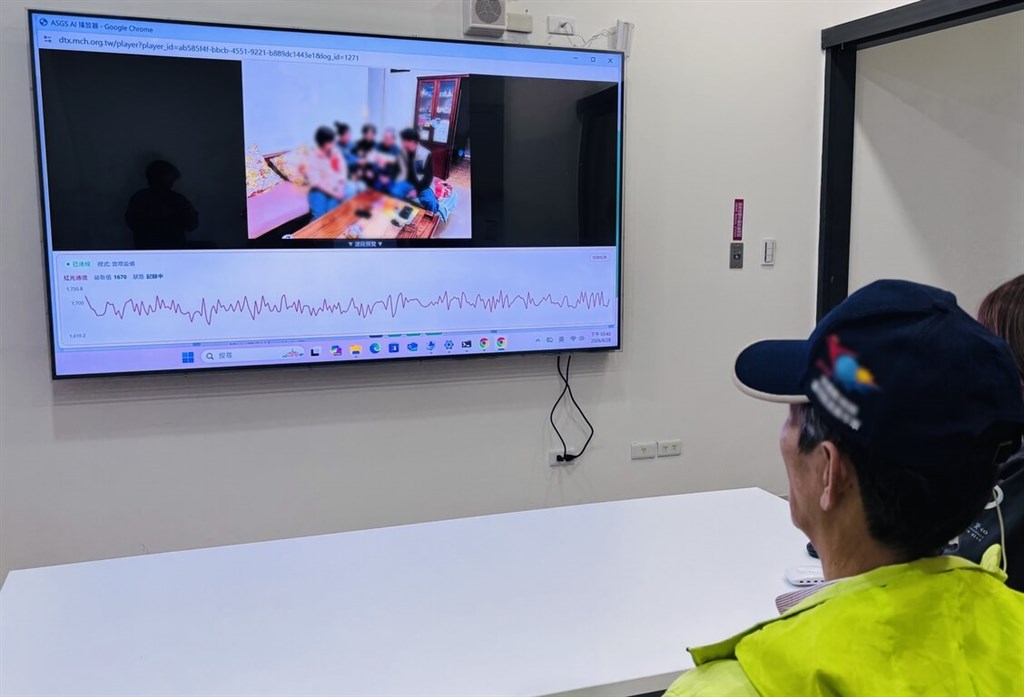
Taipei, Oct. 4 (CNA) — The Institute for Information Industry (III), supported by government funding, in collaboration with industry partners, has developed an artificial intelligence (AI) technology aimed at enhancing dementia care. This technology transforms old photographs, voice recordings, and family narratives into personalized video content tailored for individuals with dementia, III announced on Sunday.
Created by the III’s Institute of AI Innovation (iAI), the “Multimodal Real-time Digital Scene Generation Technology Application Service” leverages generative AI to recreate familiar environments from patients’ accounts, moving away from generic care materials to provide customized digital experiences.
A proof-of-concept trial of this technology has been successfully completed at the Mennonite Christian Hospital’s dementia care unit in Hualien. The application focuses on reminiscence therapy, cognitive stimulation, and rehabilitation for dementia patients.
Carrie Huang (黃婉茹), deputy division head at the iAI, emphasized the importance of familiar people, locations, and experiences in aiding memory recall for those affected by dementia. In line with this, Edward Hong (洪毓良), senior strategy director at the iAI, detailed how the multimodal system assimilates photos, voice recordings, and textual descriptions with various AI technologies, including semantic analysis, image and video generation, and lip synchronization to create these tailored video presentations.
Hong also indicated that the hospital is tracking patients’ brainwave activity while they engage with the videos, providing insights that could inform future content development. In addition, patients at Mennonite Christian Hospital wear location-enabled wristbands that enable the system to recognize them upon entering a dedicated audiovisual room, where their personalized videos are projected automatically.
Feedback from caregivers has shown that patients who viewed the customized videos exhibited increased willingness to communicate, participate in activities, and, in some instances, were more engaged in their rehabilitation efforts, according to Hong.
