




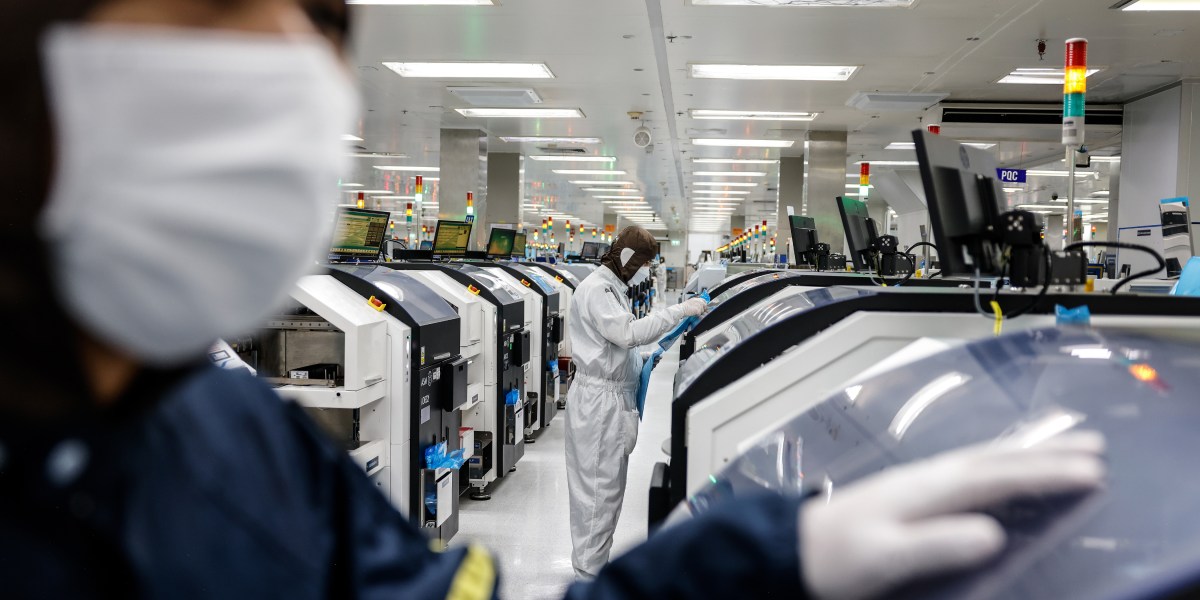
Despite attracting significant foreign investment through the “China plus one” strategy, Southeast Asia is experiencing mixed results, with many local economies benefiting less than anticipated. The approach aims to entice manufacturing companies looking to move operations from China amid rising costs and geopolitical concerns. While the region has seen billions of dollars invested in new factories, leaders say the influx has not translated into a substantial transfer of design capabilities or advanced manufacturing processes.
“China plus one has been a net gain for Southeast Asia, but a conditional and uneven one,” said Meng-Chun Liu, director of the Chung-Hua Institution for Economic Research in Taiwan. He noted that while jobs and factories are being established, the region lacks the infrastructure to capitalize on high-value manufacturing.
Vietnam stands out as a prime example. While it has excelled in attracting foreign investment and saw its GDP grow 8.0% in 2025, the country mainly focuses on final assembly rather than producing intermediate components. As major companies like Target express frustrations with Southeast Asia’s manufacturing capabilities, some are reconsidering their stance, with a trend observed of relocating supply chains back to China.
Compounding these challenges, increasing competition from China is shifting focus away from Southeast Asia as manufacturers view the region more as a consumer market. This dynamic risks undercutting any manufacturing advantages gained.
Changing Manufacturing Paradigms
The traditional “flying geese” model, which dictated that manufacturing would flow from advanced economies to emerging ones, appears to be evolving. Liu explained that China is now more inclined to retain its manufacturing operations domestically, undermining expectations that it would outsource lower-end production to neighboring countries.
Southeast Asia’s manufacturing landscape is fragmented, with Vietnam leading in electronics assembly, Thailand in automotive production, and Malaysia in semiconductor packaging. However, the underdeveloped ecosystems mean factories often depend on Chinese imports to maintain operations. Major companies such as Apple continue to rely on Chinese suppliers, which limits gains in higher-skill manufacturing jobs in the region.
Currently, Vietnam is adjusting to rapidly rising imports from China, which saw a nearly 30% increase to approximately $183 billion last year, even as exports to the U.S. also surged by 28.1% to $153.2 billion. Malaysia, meanwhile, is emerging as a key player in the semiconductor sector, where its investment in data centers constitutes nearly 18% of its GDP.
Regional leaders, like Malaysian Foreign Minister Datuk Seri Mohamad Hasan, emphasize the importance of ensuring that Southeast Asia’s role in technology, such as AI, is not limited to being a data processing destination, with decisions made externally.
In response to these challenges, some Southeast Asian nations are pursuing strategic actions. Indonesia has banned nickel ore exports to promote local smelting capabilities, while Singapore continues to serve as a hub for orchestrating regional supply chains.
Amidst these developments, U.S. trade policies also influence the region’s economic landscape. Tariffs on Chinese goods have prompted some companies to shift production to Southeast Asia, but the White House recently raised concerns about potential tariff evasion by some nations. Experts suggest Southeast Asian countries may need to develop distinct industrial parks to comply with varying international standards and networks.
A long-term concern for Southeast Asia is the risk of transforming from a manufacturing hub to simply being a market for Chinese exports. Trade between China and ASEAN surpassed $1 trillion in 2025, raising fears that smaller economies might struggle to develop their local industries. Thailand has seen its GDP growth decline, partly due to increased competition from cheaper Chinese goods.
As Southeast Asia navigates this complex economic landscape, local manufacturers face the dual challenge of integrating into a competitive global market while also fostering sustainable development in their economies.
