




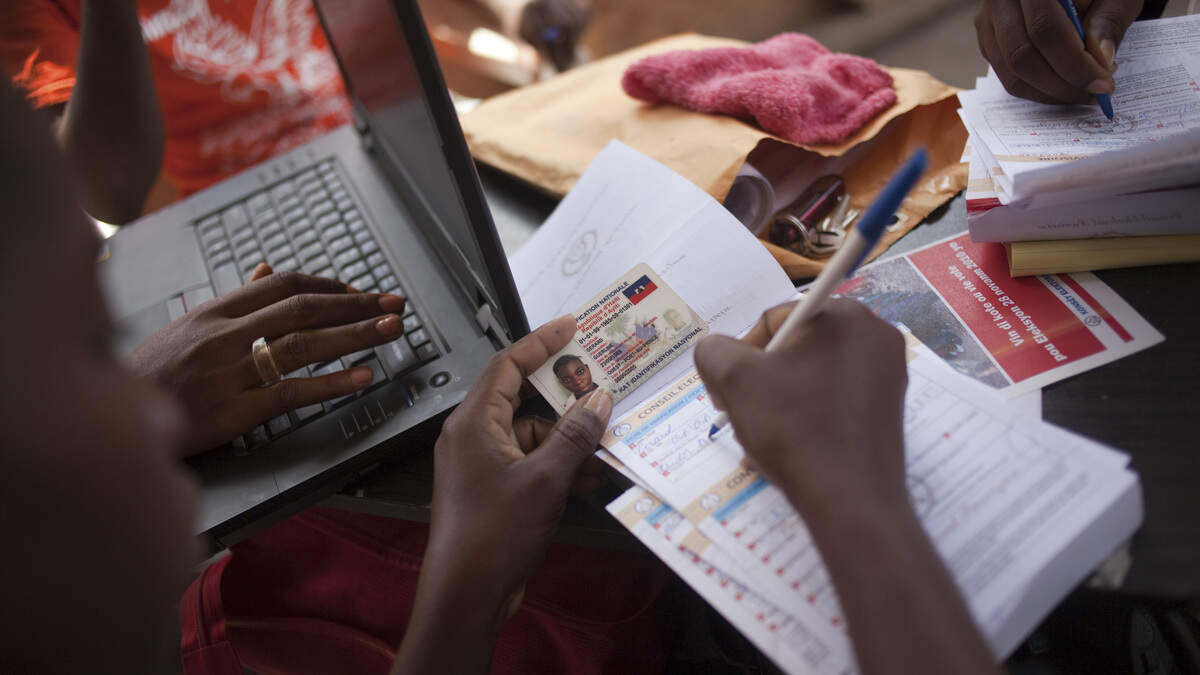
Haiti’s transitional authorities have revised the country’s electoral law, easing the requirements for candidates ahead of the December 13 elections. This marks the third modification of the electoral rules within four months as political parties express concerns about the burdensome eligibility criteria which have hindered voter registration efforts.
The updated decree was made public on Thursday, following its publication in Le Moniteur, the official government gazette. While it outlines the organization of elections for the president, legislative bodies, and local officials, as well as a constitutional referendum, significant uncertainty remains regarding the feasibility of holding the elections as scheduled.
The Provisional Electoral Council has pushed the online registration deadline for candidates to October 31 and postponed the official campaign start, with plans to release a revised electoral calendar soon.
This revision aims to facilitate participation by eliminating certain financial document requirements and a mandatory medical certificate, and by introducing electronic voter registration. Previously, candidates were required to provide a sworn statement attested by a notary certifying their absence of past criminal convictions. Under the new rules, candidates only need to attest that they have never been convicted.
While the updated law continues to prevent individuals sanctioned by the United Nations Security Council from running for office, it does not disqualify those only sanctioned by individual foreign governments or the European Union. A recent UN report mentioned that only nine individuals are currently listed under UN sanctions, suggesting the limited impact of this provision on Haiti’s elections.
The report from a UN Panel of Experts highlighted ongoing support for armed gangs from influential figures in Haitian society and indicated that several individuals with alleged gang ties have registered as candidates. It raises concerns about whether the electoral framework can effectively prevent those linked to criminal networks from participating in the elections.
Electoral Challenges
Since the electoral process began, political parties have struggled with requirements, including the submission of endorsement lists from 30,000 supporters via an online platform. Voter registration has also fallen behind, with only 784,226 voters registered from over six million eligible citizens. Additionally, 145 proposed voting centers are inaccessible, and among 105 qualified political parties, only 33 have submitted compliant membership lists.
The new electoral changes include extending registration deadlines to the end of October, lowering fees for candidates, particularly at local and legislative levels, and reducing the number of required documents from 26 to 22. Some eliminated requirements were aimed at ensuring compliance with UN sanctions.
Candidates still need to provide a sworn declaration regarding serious offenses, a recent criminal record certificate, and a police certificate from the Central Directorate of Judicial Police. A notarized resignation letter is also necessary for certain public officials. Among those who have registered to run for president is the controversial public prosecutor Jean Ernest Muscadin, who faces scrutiny over his compliance with the new rules.
