




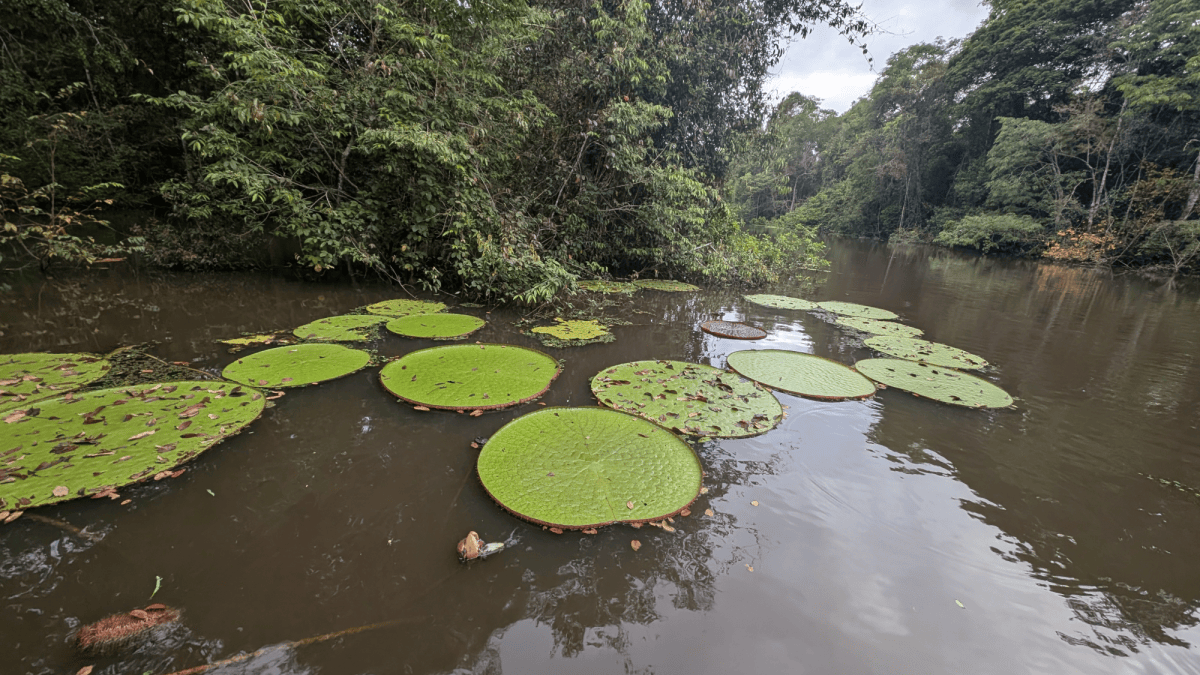
A new species of water lily, identified as Victoria colombiana, has been discovered in the Inírida River region of Guainía, Colombia. This finding comes from a December 2021 Instagram post by Jeremiah Harris, a carnivorous plant grower in Colorado, where he shared images of what appeared to be Amazonian giant water lilies. However, experts noted that no known species of the Victoria water lily had been recorded in that area.
Upon seeing Harris’s post, water lily expert Carlos Magdalena, a horticulturist at the Royal Botanic Gardens, Kew in the U.K., suspected the existence of an undiscovered species. To confirm this, he utilized satellite imagery and conducted a remote survey of the Inírida River and its nearby lakes, ultimately finding definitive evidence of the Victoria plants.
The newly identified water lilies, known for their impressive size, can even be viewed from space due to their extensive leaves, which are among the largest of any single plant in the world.
Magdalena, along with his team, embarked on a five-day expedition to the region, which included local members from the Indigenous reserves of the río Atabapo. Despite their expertise, the expedition posed challenges, culminating in only two water lily plants being found by the last night—neither of which had flowers, a critical factor for species identification.
As they were about to conclude their search, boat captain Gustavo Melo, a member of the Indigenous Tucano community, guided the team to a small lake. At this location, they discovered five more Victoria plants, one of which was blooming. This breakthrough allowed the researchers to gather necessary samples for documenting the new species.
“This is one of those extraordinary stories where indigenous and horticultural knowledge, with the help of social media and technology, came together to uncover a truly extraordinary botanical achievement,” Magdalena said.
Following the expedition, Magdalena and his colleagues published their findings in the journal Phytotaxa, where they also announced the discovery of another new species, Victoria mattogrossensis. The team estimates that only 30 to 50 specimens of V. colombiana exist in the wild, making it extremely vulnerable to extinction. Efforts are underway to categorize this species as Critically Endangered by the IUCN Red List.
Magdalena expressed the team’s commitment to understanding and protecting this unique water lily species. They are considering establishing a naturalized population in a more accessible lake within Indigenous territory and aim to cultivate the species in Bogotá as part of their conservation efforts.
