




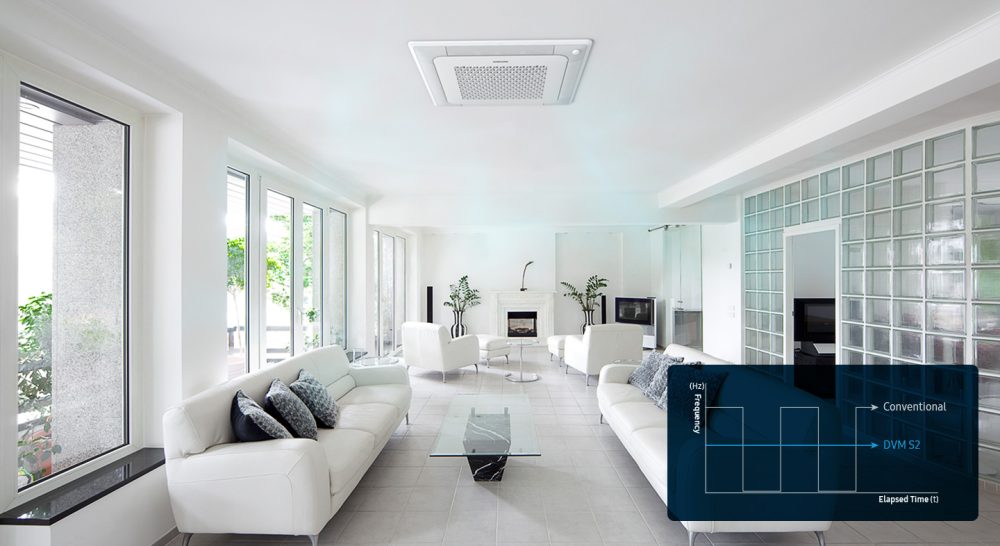
Samsung is advancing the modernization of buildings across Southeast Asia and Oceania through its intelligent heating, ventilation, and air conditioning (HVAC) solutions. These systems aim to improve energy efficiency in aging structures, many of which were built before sustainability became a priority.
The company’s DVM S2 system connects a single outdoor unit to up to 64 indoor units, greatly reducing installation footprints. This system is particularly beneficial for retrofits, as its sub-cooling control and smaller main liquid pipe cut overall refrigerant charges by as much as 30%. It can seamlessly integrate with existing structures, minimizing the need for extensive renovations.
Samsung’s SmartThings Pro further enhances the DVM S2’s capabilities, allowing for multi-site monitoring, automated scheduling, energy analytics, and customizable dashboards that enable entire estates to be managed from a single interface.
With fluctuating climates contributing to rising electricity costs, HVAC systems now account for a significant percentage of energy use in commercial buildings. As a result, many property owners are considering retrofitting existing systems instead of undertaking costly demolitions and rebuilds. This trend reflects a shift towards leveraging existing resources to create more energy-efficient environments.
Samsung’s DVM S2 is designed to optimize efficiency by learning a building’s specific cooling patterns. This intelligent system adjusts temperatures and pressures in real-time, which can reduce compressor energy consumption by up to 15%. Such technology has already been implemented in various settings, including hotels and office buildings, where it supports a customized approach to cooling across different areas, such as lobbies and fitness centers.
Connecting Technology to Savings
The integration of connected systems not only leads to energy savings but also reduces long-term operational costs. The DVM S2 and SmartThings Pro operate on a unified platform, enabling facility managers to view real-time energy usage and performance indicators from a centralized dashboard. This predictive maintenance capability allows for early identification of issues, potentially reducing the need for emergency repairs.
An example of this connected approach can be seen in the upcoming Grantz Forest Park project in Cebu, Philippines, where Samsung’s integrated solutions will enhance energy efficiency in new developments. This will allow residential facility managers to monitor and control HVAC, lighting, and power systems through SmartThings Pro.
As the focus on sustainability and energy efficiency continues to grow, property owners in Southeast Asia and Oceania are increasingly looking to modernize their existing buildings. With AI-powered HVAC solutions, Samsung is helping to redefine energy efficiency for offices, hotels, and mixed-use developments, paving the way for enhanced operational performance in the region.
