




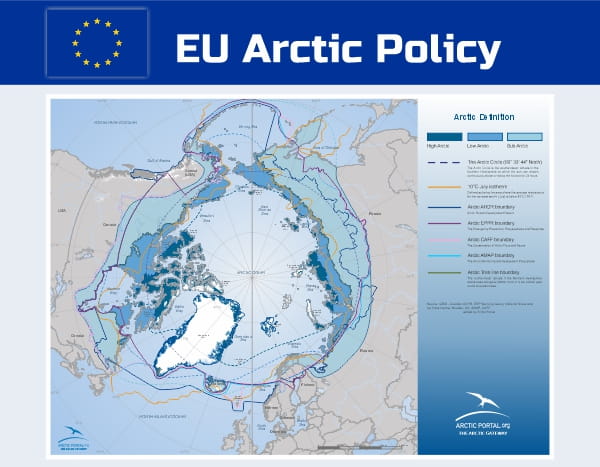
The European Commission unveiled a new policy update on October 20, 2026, titled “Europe’s Northern Neighbourhood: A New Strategy for the Arctic.” This document builds upon the EU’s Arctic Policy from 2021 and focuses on enhancing security, addressing climate change, fostering economic prosperity, and creating opportunities in the Arctic region.
President of the European Commission, Ursula von der Leyen, emphasized the significance of the Arctic in her introduction to the document, stating, “The Arctic is Europe’s Northern Neighbourhood – close, connected and critical to our future. And it is changing.” She highlighted the role of new shipping routes and resources in increasing strategic competition, stating that the new strategy aims to invest in security, resilient infrastructure, and economic opportunities for Arctic communities.
The updated policy outlines the need for enhanced security measures, citing Russia’s activities in the Arctic, the ongoing war in Ukraine, and cooperation with China as key factors necessitating a shift in the EU’s approach. The strategy stresses the importance of multilateral cooperation while also recognizing that it cannot be the sole foundation for the European Union’s Arctic policy moving forward.
Main Themes of the New Arctic Policy
The policy is structured around four main themes:
- Strengthening security and resilience in the Arctic,
- Responding to accelerating climate change,
- Building a prosperous and economically secure Arctic,
- Creating opportunities for people and communities in the Arctic.
To enhance security, the EU plans to boost cooperation with allies and like-minded partners, develop a political framework, and establish “Arctic-ready capabilities.” This will involve deepening relationships with NATO and improving maritime domain awareness through advanced satellite data and information sharing. The introduction of the Arctic Cable Hub is anticipated to be pivotal in protecting critical infrastructure.
Additionally, the policy aims to improve societal resilience through emergency preparedness, search and rescue operations, and by expanding icebreaker capacity. In addressing climate change, the EU will maintain its climate commitments and focus on sustainable investments in the Arctic, bolstered by initiatives like the EU Polar Research Hub and partnerships for a green transition.
Economically, the policy encourages the European Investment Bank to support a sustainable Arctic economy, aiming to facilitate a network of transportation and maritime training to ensure freedom of navigation in the Arctic Ocean. Moreover, the EU is developing a Pan-Arctic Cable concept for digital connectivity, committing 200 million EUR in investments in Greenland over the next two years.
To engage the youth in Arctic affairs, the EU intends to hold regular Arctic Youth Policy Dialogues and set up a Youth Sounding Board in Greenland. The Commission also pledges to collaborate with regional representatives and organizations to promote sustainable development and strengthen governance capacity in the Arctic.
