




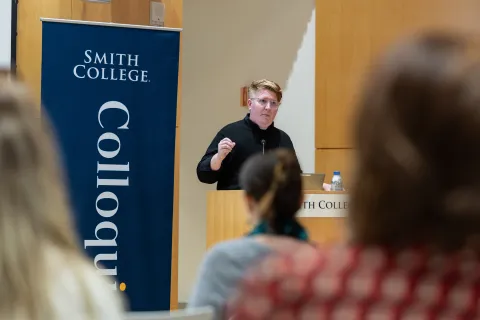
At Smith College on October 20, Amanda Ballantyne, a 2002 alumna and labor and technology policy expert, emphasized the need to reassess the public dialogue surrounding artificial intelligence (AI). During the inaugural talk of the 2026-27 Presidential Colloquium series, she characterized the current surge in AI as an opportunity filled with potential.
Speaking to a gathering of students, faculty, and staff in the Campus Center Carroll Room, Ballantyne urged that discussions about AI should focus on the valuable insights workers and communities possess. She advocated for their right to participate in shaping the development and application of new technologies.
Balletantyne, who is currently a visiting scholar at the MIT Stone Center on Inequality and Shaping the Future of Work, opened the colloquium series, which is centered on the themes of “AI, Integrity, and the Collective Good.” The series aims to explore the ethical, technological, and occupational challenges posed by rapid advancements in AI. Yacine Fall, a global health innovator and Smith College alumna from the class of 2021, is set to address the series on April 15, 2027.
Drawing from her background in labor organizing and technology policy, Ballantyne called for greater accountability from technology companies regarding their development of AI systems, particularly those that utilize public infrastructure funded by taxpayer dollars and academic research. “So many of the technologies that AI relies on, we paid for,” she stated, highlighting the importance of public engagement in determining returns on investment.
Ballantyne also emphasized the necessity of transparency in technology and the involvement of workers and local communities in decision-making processes related to AI’s application. She noted the resistance from some communities against the establishment of AI data centers, which demand significant water and energy resources, describing it as indicative of a disconnect between communal interests and corporate objectives.
“We shouldn’t have things in our society that are only governable by technologists,” Ballantyne remarked. “That is not democratic. We want workers to be involved in setting priorities. If we don’t do governance, we’ll end up being governed by a chatbot.”
