




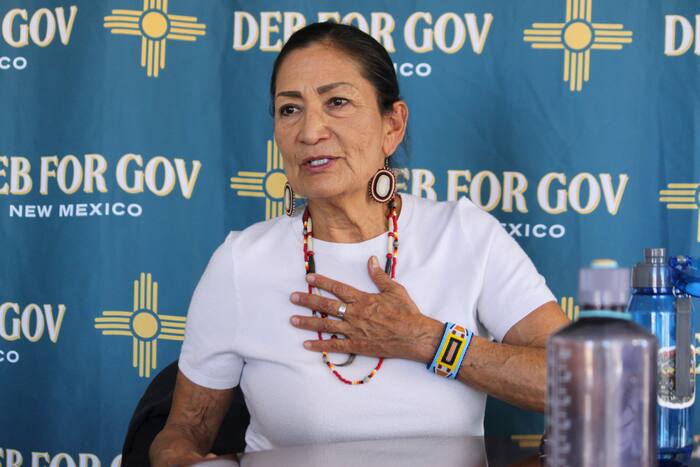
ALBUQUERQUE, N.M. – Deb Haaland could make history as the first Native American woman to serve as governor if she wins the New Mexico gubernatorial election this year. However, she must first convince voters to maintain the Democratic Party’s leadership in a state facing ongoing challenges, including high poverty rates, crime, and public education concerns.
Democrats currently hold all major state offices and have controlled the Legislature for nearly a century. A defeat for Haaland could be damaging for the party. She attributes some of the state’s issues to former President Donald Trump, citing cuts to social programs and rising living costs linked to his policies. Haaland proposes expanding tax credits and increasing funding for safety net programs to assist families.
Haaland, who is a member of Laguna Pueblo, has a personal history of overcoming adversity after relying on government assistance as a single mother. She previously served in Congress and was appointed as President Joe Biden’s Interior Secretary.
If elected governor, Haaland’s profile within the Democratic Party could rise significantly, especially as New Mexico has been designated one of the first states for the party’s upcoming presidential primary, indicating increased national attention and potential visits from presidential candidates.
Haaland faces Republican challenger Gregg Hull, a former mayor of Rio Rancho, who argues that New Mexico needs change. Hull intends to cut taxes, promoting this as a way to alleviate poverty by increasing residents’ disposable income. “I think the time has come to have a leader who is going to focus on the true solutions to these problems,” Hull stated.
The campaign has highlighted contrasting approaches, with Haaland leveraging her national profile and a campaign fund of nearly $20 million backed by notable endorsements, including former President Barack Obama and U.S. Senator Elizabeth Warren. Warren joined Haaland at a local daycare center recently, praising her efforts towards improving childcare programs.
Conversely, Hull emphasizes his successful leadership in Rio Rancho and plans to apply similar strategies statewide to attract major employers and enhance worker incomes. Local constituents like A.J. Rodriguez resonate with Hull’s focus on community achievements rather than federal experience.
Despite significant fiscal challenges, New Mexico’s new governor will also inherit a financial cushion due to its status as the second-largest oil producer in the nation. Higher energy prices have resulted in increased state revenues, which Hull aims to utilize for tax relief, proposing a gradual phase-out of state income tax.
Haaland advocates for continued investments in free childcare and healthcare service accessibility, particularly after federal funding cuts during the Trump administration. While she acknowledges the oil industry’s role in sustaining state resources, she notes that rising prices generate significant hardship for residents.
Some voters, like Chris Flores, support Hull’s tax elimination plan, viewing it as a solution to personal financial burdens, including student debt. Others, such as Alfred Lujan, criticize Republicans for inflation yet see Haaland as attuned to the financial struggles of everyday New Mexicans.
During her campaign, Haaland has attracted attention among Indigenous communities, where her commitments to health benefits and public services resonate strongly. Supporters have expressed both pride in her achievements and a commitment to hold her accountable for her promises should she be elected.
As the campaign unfolds, key issues surrounding poverty, education, and community welfare will likely shape voter sentiment leading up to the election.
