




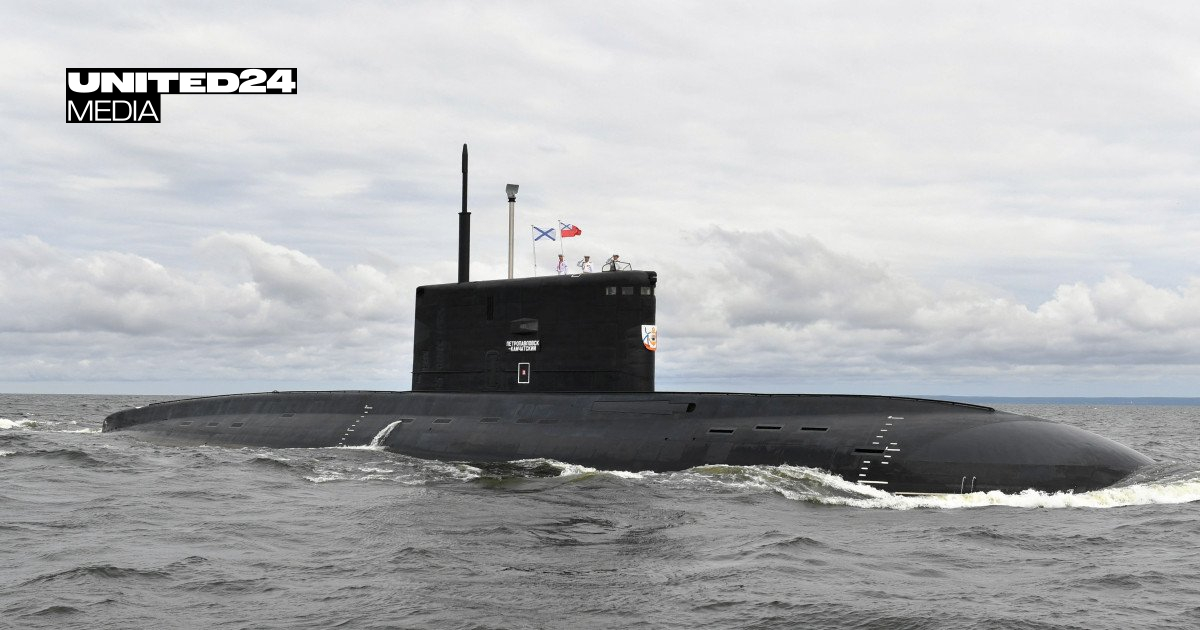
Russia has provided China with over $80 million worth of submarine technology and technical documentation, aiding the development of China’s conventional submarine fleet. This cooperation has persisted even after Russia’s invasion of Ukraine.
A report released on October 22 by the Washington-based research organization C4ADS indicates that Russia’s Rubin Central Design Bureau for Marine Engineering executed 12 shipments to Chinese military procurement bodies and China Shipbuilding and Offshore International Co. (CSOI) between August 2015 and April 2023. These shipments included conceptual designs for non-nuclear submarines, as well as testing documentation and technologies aimed at enhancing underwater stealth.
Some shipments, particularly those made in October 2019 and January 2020, contained documents focused on submarine testing related to cavitation, a phenomenon that creates underwater noise and can increase submarine detectability. A maritime security expert consulted by C4ADS suggested that these documents imply Russian assistance in assessing Chinese submarine noise-reduction technologies.
Furthermore, the collaboration has been reciprocal. Between December 2019 and September 2022, CSOI supplied Rubin with submarine testing equipment, which included instruments and control-panel components essential for evaluating onboard information and control systems. A shipment from September 2022 referenced a joint design and manufacturing contract, showing that technical cooperation continued despite the geopolitical tensions following Russia’s military actions in Ukraine.
Rubin, a subsidiary of Russia’s state-owned United Shipbuilding Corporation, is currently under sanctions imposed by the United States, European Union, and Japan. China’s conventional submarine fleet has traditionally utilized Soviet and Russian technology, although Beijing has begun developing its own designs. C4ADS’s findings reveal that Russian expertise remains influential in supporting Chinese submarine advancements, specifically in areas like acoustic stealth and underwater technologies.
In a related development, an earlier report from October 19 highlighted that Chinese companies have been supplying Russia with industrial equipment and navigation technologies that have enabled the production of Shahed-type attack drones at the Alabuga facility, with production capacity exceeding 3,000 drones per month.
