




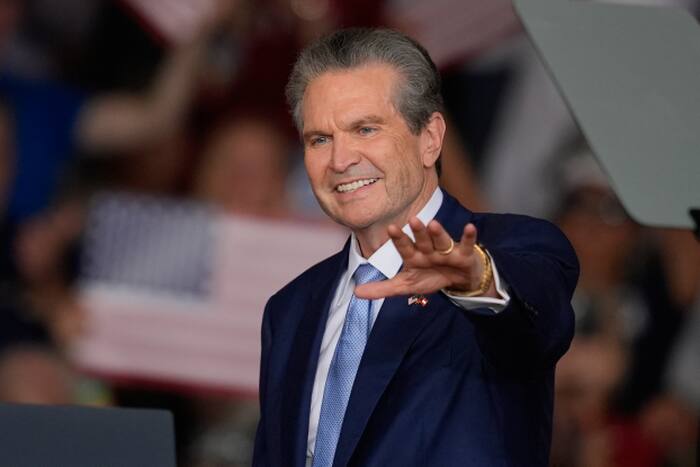
ATLANTA – Rick Jackson, a Republican candidate running for governor of Georgia, is distinguishing himself in the political landscape by leveraging both his personal story and significant financial resources. The healthcare magnate has previously compared himself to former President Donald Trump, aiming to attract working-class voters while managing a unique narrative centered around his challenging upbringing.
Jackson, 72, spent his early years in foster homes after enduring familial hardships. He describes his background starkly: “My father left me at nine months old. My mother was a sixth-grade educated waitress with a severe alcohol problem,” he recounted during a recent debate. This personal history informs his campaign promises centered on socioeconomic issues.
In his bid for office, Jackson has spent nearly $200 million, marking him among the most substantial self-funders in American election history. He describes this fortune as “God’s money” and states his intention to use it to help the state’s residents, claiming, “The reason I have spent so much money to do this is to help 11 million Georgians.”
Throughout his campaign, Jackson has sought to balance his image as a billionaire executive with an accessibility often associated with populist politics. He plans to join Trump at a rally in Perry shortly, indicating an ongoing alignment with the former president, despite acknowledging he was not Trump’s initial pick during the Republican primary.
Jackson’s platform includes traditional Republican stances, such as pledging to cut taxes and reduce regulations. He has promised to cut the state income tax in half over four years and improve healthcare without expanding Medicaid, asserting that he can secure funding through partnerships with private insurers. He also advocates for balanced budgets and increased spending on education, though critics argue he has not provided comprehensive plans.
His opponent, Democratic nominee Keisha Lance Bottoms, contends that Jackson is attempting to “buy this election.” She argues that his remarks about economic issues reveal a disconnect with the realities faced by everyday Georgians. At a debate, for instance, Jackson faced criticism for his comments on job wages, particularly in reference to the state’s minimum wage, which stands at $7.25.
As the campaign progresses, Jackson continues to fine-tune his messaging while maintaining a connection to Trump’s brand of conservatism. He has expressed hopes of presenting a “Southern tone” to Trump-like policies, while also being mindful of the broader Georgia electorate that may be wary of extreme rhetoric.
With the election date set for November 3, Jackson’s approach aims to appeal to both conservative base voters and moderates who are seeking alternatives to national partisan tensions.
